
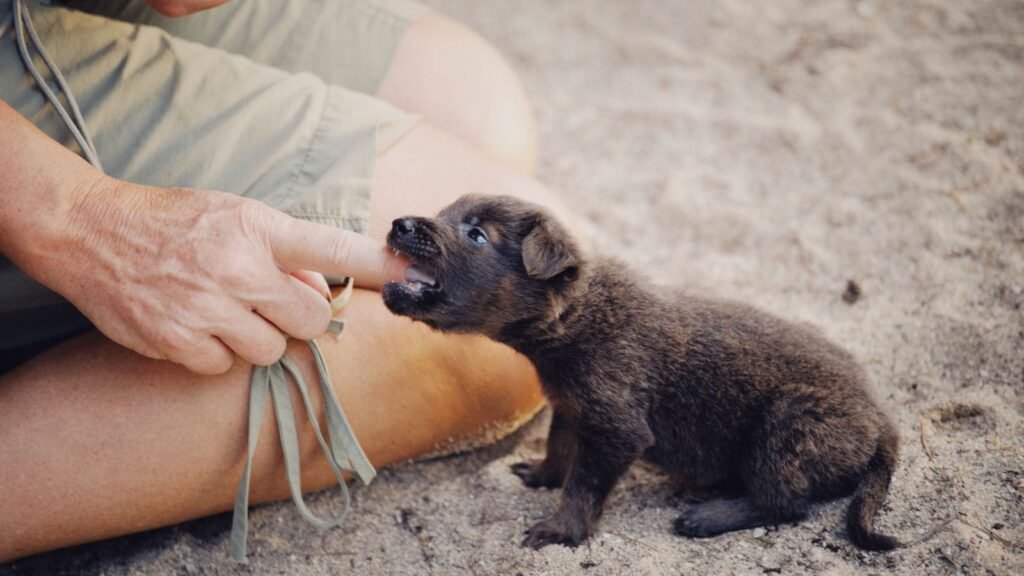
“Why Is My Puppy Biting Me So Much What’s Normal?” is often the question behind a familiar new-owner moment: you sit down to pet your puppy, and they grab your sleeve; you walk through the kitchen, and they chase your ankles; you try to play, and their little teeth land on your hand. Puppy mouthing is common, especially when a puppy is excited, tired, teething, or trying to start play. But common does not mean you have to simply endure it. Your puppy needs a calm, repeatable lesson that skin, clothes, and feet do not keep the game going.
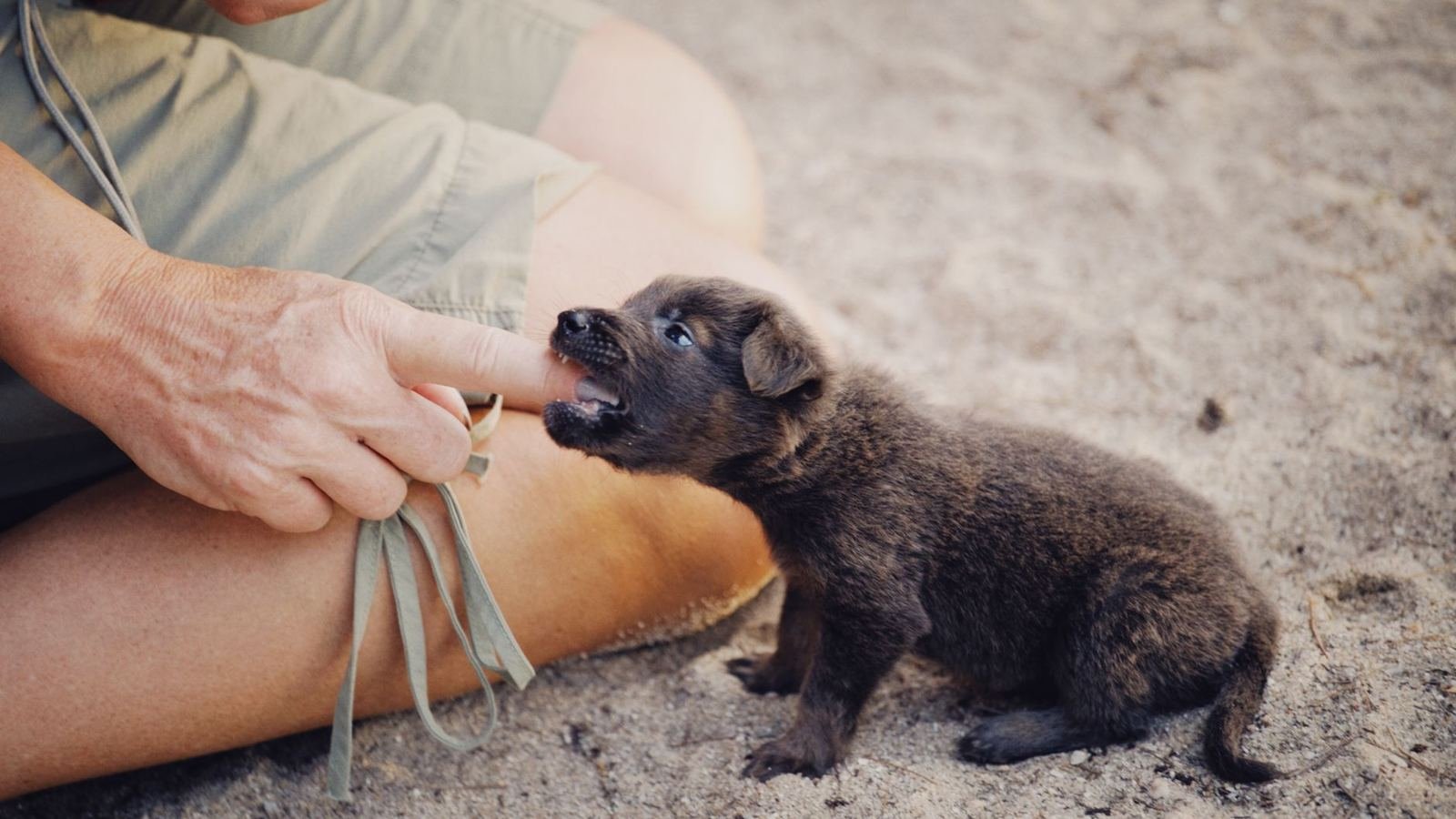
A useful first distinction is pressure and context. A puppy who bounces toward your hand, mouths briefly during play, and can be redirected to a toy is showing a behavior that can usually be shaped with consistent practice. A bite that repeatedly breaks skin, leaves punctures, happens alongside a stiff body or intense guarding, appears suddenly, or makes anyone feel unsafe deserves prompt input from a veterinarian or a qualified force-free trainer. No one needs to diagnose the reason at home before asking for help.
For the ordinary grab-at-your-hands moment, make your response boring and predictable: freeze your hand, quietly stand up or turn away for a few seconds, then offer an appropriate chew or toy once your puppy has paused. Avoid waving your hands, pushing the puppy away, or continuing rough play; even negative attention can feel like a fun continuation to an excited puppy. The goal is not punishment. It is a clear pattern: teeth on people end interaction; teeth on an appropriate item restart calm engagement.
Make that response easy to carry out by placing a small chew-and-toy station where biting most often happens—perhaps a low basket near the sofa and another by the kitchen doorway. Keep only a few puppy-appropriate items there, rotating them rather than scattering toys across every room. Choose chews suited to your puppy’s size and chewing style, inspect them regularly, and supervise use; no chew item is right for every puppy or guaranteed to stay safe as it wears down.
For example, if evening zoomies lead to ankle nipping, do not search through a crowded cabinet while your puppy races around. Pause movement, take one toy from the nearby basket, and guide the next burst of energy toward that item instead. The consistent response matters more than having a large collection of gear, and a simple setup helps every person in the home react the same way.
Why Puppies Bite Hands, Clothes, and Feet
Why Is My Puppy Biting Me So Much What’s Normal? Most young puppies use their mouths to explore, play, respond to movement, and cope with excitement. Sleeve-grabbing during petting, chasing ankles as you walk away, and mouthing hands during play are common puppy behaviors—especially when the puppy is tired, overstimulated, or has not yet learned that human skin and clothing are not play items. Normal mouthing should be addressed consistently, even when it is not meant to hurt.
What to do first: The instant teeth touch skin or clothing, calmly stop the interaction. Make your hands still, stand up if needed, and remove your attention for a brief moment. Then offer an appropriate chew or toy when your puppy is calmer. This teaches a simple pattern: people are not for biting; chew items are. Avoid squealing, pushing the puppy away, waving your hands, or wrestling with them. Those reactions can feel like an exciting game, particularly for a puppy who is already revved up.
- Hands during petting: Pause petting before your puppy becomes grabby. If they mouth your fingers, quietly end the petting session and give them a moment to settle. Resume only when their mouth is off you.
- Feet and pant legs: Freeze rather than stepping quickly away, which can trigger more chasing. Once your puppy pauses, redirect them to a chew item or ask for a simple, familiar behavior such as sitting before you continue walking.
- Play biting: Keep toys between your hands and your puppy’s mouth. Tug, toss, and retrieve games give the puppy an acceptable target without teaching them that sleeves are part of the game.
- Chew access: Keep a small, tidy basket with a few supervised chew options near the couch, entryway, or kitchen—where biting happens most often. Rotate only a few items at a time so the floor does not become another source of clutter. Check chew items regularly and supervise use; no chew item is suitable for every puppy or indestructible.
A common example is the evening “zoomies” period: you carry laundry through the living room, your puppy attacks your socks, and you hurry away. Instead, stop moving, calmly place the laundry down, and wait for a brief pause. Offer a chew item from the nearby basket, then guide your puppy to a calmer activity. The tradeoff is that this takes a little more time than reacting sharply, but the response is clearer and less likely to turn biting into a chase game.
Adjust the plan when the biting is getting harder or more frequent despite calm, consistent redirection. Repeated hard bites, punctures, stiff body language, sudden behavior changes, or any situation where someone feels unsafe deserve prompt help from a veterinarian or a qualified force-free trainer. The AKC’s new-puppy guidance also emphasizes preparing safe spaces and appropriate outlets before problems become daily routines. Review AKC’s puppy-preparation guidance for broader home setup ideas, and use your puppy’s behavior—not a fixed age or breed expectation—to decide when extra support is needed.
Set Up a Grab-and-Go Chew Station
If you are asking, “Why is my puppy biting me so much—what’s normal?”, a chew station will not answer every part of that question, but it makes the helpful response much easier to repeat. Puppy mouthing is often most manageable when a safe alternative is within reach before teeth land on hands, trouser legs, or slippers. The goal is not to fill the room with toys. It is to create one small, tidy place near the moments when biting usually starts.
Choose the spot based on your puppy’s patterns. If feet get chased while dinner is prepared, use a kitchen-adjacent station. If sleeve-grabbing happens during evening sofa time, place it beside the sofa. Keep chew items supervised and inspect them regularly; no chew or toy is safe for every puppy or indestructible. The ASPCA also advises choosing toys appropriate to a dog’s size and chewing habits and replacing damaged items.
-
Map one high-biting zone: For two days, notice where and when teeth most often meet skin or clothing. Write a short note such as “6:30 p.m., living room, after walk,” or “morning, kitchen, while filling food bowl.” Set the station within a few steps of that location, not in a closet across the home.
Why: Redirection only works when it happens quickly. Walking away to hunt through a toy bin can turn a simple mouthy moment into a chase game or leave you reacting with your hands.
Done looks like: An adult can reach the station without leaving the puppy unsupervised, and it does not block a walkway, door, or child’s play area.
Pitfall: Do not put every puppy item there. A station overloaded with grooming tools, treats, leashes, and ten toys becomes another clutter pile and makes the right item harder to grab.
-
Use one contained, puppy-proof container: Place a low basket, lidded bin kept open during supervised time, or small handled caddy on a stable surface. If your puppy raids baskets, choose a container that stays out of reach and is opened by an adult.
Why: The container creates a predictable home for chew items, so everyone responds the same way instead of offering random household objects.
Done looks like: The station holds only the current rotation of chew options and can be reset in under one minute at the end of the day.
Pitfall: Avoid leaving loose packaging, broken pieces, or items intended for a different pet in the bin. A chew station should reduce, not create, scavenging opportunities.
-
Stock a small rotation: Keep two to four age- and size-appropriate chew or toy options that your puppy can safely use with supervision. Include different textures only if your puppy uses them appropriately. Offer one item at a time rather than dumping the full selection onto the floor.
Why: A fresh option can redirect a puppy more effectively than the same item that has been ignored all day, while a limited rotation keeps the room calmer and easier to clean.
Done looks like: You can name the available items, check their condition quickly, and remove any item that is cracked, torn, small enough to swallow, or shedding pieces.
Pitfall: Do not use hands, sleeves, or old socks as “play toys.” That blurs the rule that people and clothing are not chew items.
-
Follow the same order every time teeth touch skin: The instant your puppy mouths your hand during petting or grabs a trouser leg, calmly stop the interaction. Keep hands still, stand up or step behind a gate if needed, then offer a station item once your puppy has a moment of calm. Resume gentle attention only when the puppy is engaged with the appropriate item or has settled.
Why: This makes the outcome clear: biting ends access to hands and play, while chewing the right item keeps the interaction moving in a calmer direction.
Done looks like: Every household member can state the sequence: stop, create space, redirect, then resume only when calm.
Pitfall: Avoid waving the chew around, pulling it away repeatedly, or squealing and wrestling with the puppy. Those reactions can make the biting episode more exciting.
-
Prepare for the predictable evening burst: Before the usual after-dinner zoomies, take one chew item from the station and set up a calm supervised activity near you. For example, after a toilet break, bring your puppy to the living-room mat with the chew before you sit down to watch television. If the puppy starts targeting ankles, pause movement, guide the puppy away from feet, and redirect to the ready item.
Why: Preventing a rehearsal of ankle-chasing is usually easier than trying to interrupt it after everyone is already moving, laughing, or frustrated.
Done looks like: The chew is ready before the busy period begins, and the family knows not to start fast floor-level games when the puppy is already overexcited.
Pitfall: Do not assume more activity always solves evening biting. If arousal rises with vigorous play, switch to a quieter supervised routine rather than escalating the game.
-
Use the station as part of a safety check, not a substitute for help: Keep a simple note beside the bin or on your phone: what happened, how hard the bite was, body language, and whether redirection worked. Normal mouthing can be addressed with consistent management, but seek prompt guidance from a veterinarian or qualified force-free trainer for sudden behavior changes, repeated hard bites, punctures, stiff body language, or any situation in which people or pets do not feel safe.
Why: Notes give you a clearer pattern than memory alone and help distinguish routine puppy overexcitement from behavior that deserves individual support.
Done looks like: You can describe the pattern clearly: “It happens during fast evening play and stops after we pause and offer a chew,” or “It is getting harder and occurs around handling.”
Pitfall: Do not wait for a serious bite to start tracking. Early, calm records make it easier to respond consistently and ask for appropriate help if needed.
For broader preparation and chew-management guidance, the AKC’s new-puppy preparation guidance and the ASPCA’s chewing guidance are useful starting points. The practical standard at home is simpler: keep one safe option close, make your response boring and consistent when teeth touch people, and keep the station small enough that it stays usable every day.
Worked Example: Handling Evening Puppy Zoomies
If you are asking, “Why Is My Puppy Biting Me So Much What’s Normal?”, the evening rush is a useful time to spot habits that accidentally make mouthing worse. A puppy who grabs ankles, sleeves, or hands during a burst of energy is often overstimulated or looking for play, but the response still needs to be clear and repeatable. These common mistakes can turn a manageable routine into a daily struggle.
- Continuing the game after teeth touch skin: A puppy races around the living room, catches your hand during tug, and everyone laughs or keeps moving. What happens is that the puppy may learn that using teeth keeps the exciting game going. This fails because the consequence is inconsistent: sometimes biting ends play, and sometimes it makes play more fun. The better move is to calmly stop movement and attention the moment teeth touch skin or clothing. Stand up, tuck hands away, and pause for a few seconds. Then offer an appropriate toy before restarting only if your puppy is calmer.
- Using hands, sleeves, or feet as play objects: Wiggling fingers under a blanket or nudging a puppy away with a foot can invite chasing and grabbing. Even if it begins as harmless play, it blurs the rule that people are not chew toys. The better move is to keep one long toy or soft, puppy-appropriate toy within reach in the rooms where evening play happens. Move the toy instead of your hands, and avoid wrestling games that put skin close to your puppy’s mouth.
- Searching for a chew only after the biting starts: During zoomies, owners often open several drawers, step over scattered toys, and return after the puppy has already escalated into ankle chasing. That delay fails because redirection works best when it is immediate. The better move is a small, contained chew-and-toy station near the sofa, kitchen doorway, or other frequent biting zone. Keep only a few options there, rotate them, and put damaged items away. The ASPCA advises choosing chew items carefully and supervising use, since no toy is suitable or safe for every dog in every situation.
- Trying to “wear out” an already frantic puppy: Adding faster chase games when your puppy is spinning, jumping, and grabbing can raise excitement rather than settle it. The better move is to lower the activity level: guide the puppy away from moving feet, offer a suitable chew or toy, and give a brief calm pause behind a gate or in another safe, familiar resting area. This is not punishment; it is a chance to reset the environment.
- Ignoring the intensity or a sudden change: Normal mouthing can still be uncomfortable, but repeated hard bites, punctures, stiff body language, growling paired with safety concerns, or a sudden major behavior change deserve prompt support. Do not try to diagnose the cause at home. Contact a veterinarian and, if training help is needed, a qualified force-free trainer. Clear safety concerns are a reason to get individualized guidance rather than simply adding more chew toys.
For the next evening episode, make the sequence simple: pause when teeth land, become still, redirect to a ready toy if your puppy can take it calmly, and reduce the excitement instead of escalating it. Consistency from every person in the home matters more than having a large pile of puppy gear. For chew-item safety and management ideas, review the ASPCA’s guidance on destructive chewing.
When Biting Needs a Trainer or Veterinarian’s Input
If you are still asking, “Why is my puppy biting me so much—what’s normal?”, look at the pattern rather than expecting one age or breed rule to answer it. Ordinary puppy mouthing often happens during exciting play, when hands move quickly, when clothing swings, or when a puppy is tired and overstimulated. It should become easier to interrupt when every person responds in the same calm way: stop the interaction, remove attention briefly, and redirect to an appropriate chew item once your puppy has settled.
For the coming week, keep the routine simple:
- Keep hands, sleeves, and feet out of wrestling-style games.
- When teeth touch skin or clothing, become still and quietly end the game or petting for a short moment.
- Offer a suitable chew or toy after the pause, rather than waving it around as a new chase game.
- Use the same response during play, couch time, leash setup, and the busy evening period.
- Return chew items to one small, open station near the places where biting most often starts, such as the living-room entry or kitchen doorway.
For example, if your puppy catches your ankle while you prepare dinner, avoid scolding, running away, or repeatedly pushing them off with your hands. Stop moving, guide the moment toward a brief reset behind a gate or with you stepping away, then offer a chew from the nearby station when the puppy is calm enough to take it. The tradeoff is that this response may feel less dramatic than correcting the puppy, but it avoids turning ankles and hands into exciting moving targets.
Choose chew items sized for your puppy and inspect them regularly. Supervise use, remove damaged pieces, and do not assume any toy is safe or indestructible for every puppy. The ASPCA’s guidance on destructive chewing can also help owners think about safe management and appropriate outlets for chewing behavior.
Seek prompt guidance from a veterinarian or a qualified force-free trainer if biting is sudden or noticeably different from your puppy’s usual behavior; if bites are repeatedly hard, leave punctures or bruising, or are difficult to interrupt; or if you see stiff body language, freezing, guarding, growling around handling, or any situation where someone may be unsafe. A veterinarian can assess whether a behavior change needs medical attention, while a qualified trainer can observe the setup and teach a safe, tailored plan.
Next step: Before your next high-energy time of day, place two inspected chew options in one small basket near that room and agree on the same “pause, reset, redirect” response with everyone in the household.
What you’ll actually use
These are the pieces this setup actually uses. If one does not earn a place in your home, leave it off the list.
- Chew Toys: Keep this where why is my puppy biting me so much what s normal actually happens, and skip it if you already have a version that works.
- Food Mat: Keep this where why is my puppy biting me so much what s normal actually happens, and skip it if you already have a version that works.
- Toys And Chews: Keep this where why is my puppy biting me so much what s normal actually happens, and skip it if you already have a version that works.
- First Aid Kit: Keep this where why is my puppy biting me so much what s normal actually happens, and skip it if you already have a version that works.
- Dog Leash: Keep this where why is my puppy biting me so much what s normal actually happens, and skip it if you already have a version that works.
FAQ
Why Puppies Bite Hands, Clothes, and Feet?
Why Is My Puppy Biting Me So Much What’s Normal? Most young puppies use their mouths to explore, play, respond to movement, and cope with excitement.
What should I know about set up a grab-and-go chew station?
If you are asking, “Why is my puppy biting me so much—what’s normal?” , a chew station will not answer every part of that question, but it makes the helpful response much easier to repeat. Puppy mouthing is often most manageable when a safe alternative is within reach before teeth land on hands, trouser legs, or slippers.
What should I know about worked example: handling evening puppy zoomies?
If you are asking, “Why Is My Puppy Biting Me So Much What’s Normal?” , the evening rush is a useful time to spot habits that accidentally make mouthing worse. A puppy who grabs ankles, sleeves, or hands during a burst of energy is often overstimulated or looking for play, but the response still needs to be clear and repeatable.