
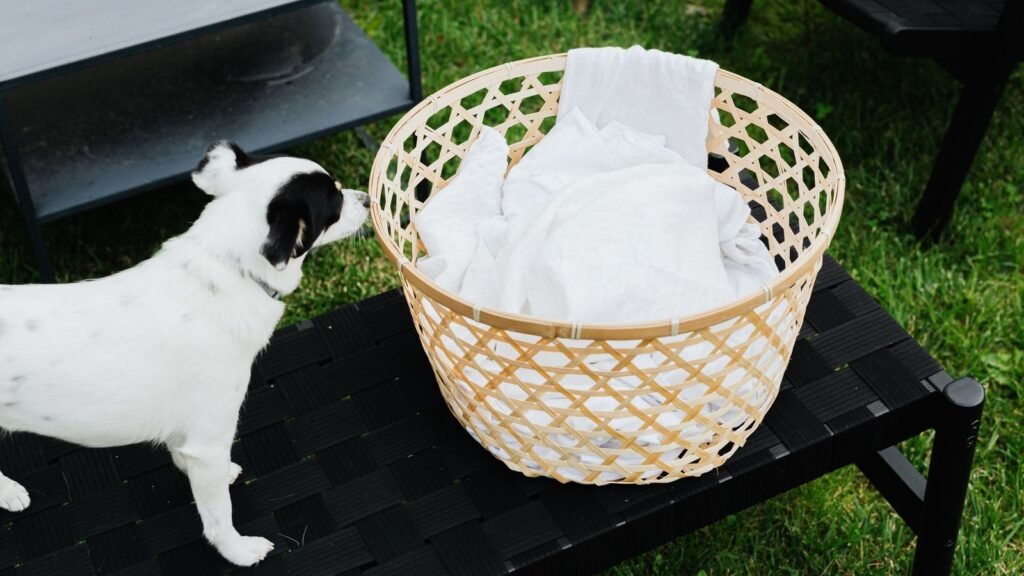
Fixing puppy gear storage in a laundry room often starts with a familiar scene: a leash is hooked over the washer handle, damp puppy towels sit beside the hamper, a bag of food is on the floor, and cleanup spray has been pushed behind the detergent. The room may be the most convenient place to deal with muddy paws and laundry, but it cannot safely work as one big puppy-supply pile. Wet fabrics, limited standing room, and the need to open machine doors all make a simple, separated setup more useful than adding another basket.
Keep the laundry room for items that are used there or grabbed on the way out: a small number of clean towels, a leash or two, a waste-bag roll, and the current cleanup cloths. Everything else needs a deliberate home. Laundry detergent, pods, stain removers, dryer sheets, and cleaning chemicals should stay securely out of a puppy’s reach, rather than sharing a shelf or open bin with toys and towels. Food, medication, and bulk supplies are also better stored in a separate secured spot, especially when the laundry room gets humid, busy, or crowded.
A quick reset can make the room easier to use today: clear the floor in front of the washer and dryer completely. Move the food bag, toy basket, and spare supplies out first, then leave only a lidded towel bin or a wall-mounted hook zone where it will not interfere with appliance doors, controls, hoses, or vents. If there is one shelf and one cabinet, use the shelf for dry, daily-use walking gear and clean towels; reserve the closed cabinet for household laundry products, secured according to the cabinet and your puppy’s access.
The tradeoff is straightforward: daily gear should be easy for you to reach, but not every puppy item belongs near water, chemicals, or active appliances. A small walk-and-cleanup zone keeps the useful essentials close without turning laundry day into an obstacle course, or giving the room another place for supplies to disappear into a damp, mixed-up stack.
Separate Puppy Supplies From Detergent and Cleaning Products
For fixing puppy gear storage in a laundry room, separate items by risk before you sort them by size. Start by removing every puppy item from the detergent shelf, washer top, dryer top, and floor beside the machines. Put laundry detergent, pods, stain removers, dryer sheets, disinfectants, and other cleaning chemicals in a closed cabinet or on a high shelf that your puppy cannot reach. The ASPCA advises keeping potentially harmful household items secured and out of pets’ reach.
Next, give puppy gear its own clearly defined storage spot that is physically separate from laundry products. A leash, clean towel, poop-bag roll, and one or two daily-use toys can stay in an open bin or on hooks near the room entrance, as long as they do not interfere with the door swing or access to the machines. Keep food, treats, medication, and anything your puppy might chew or eat out of this room when possible; humidity, spills, and frequent laundry activity make the laundry room a poor catch-all for those supplies.
- Do first: Empty the shared shelf or cabinet, then assign one closed area only to chemicals and one separate area only to puppy gear. A visible gap between the two is better than alternatives when daily maintenance and space constraints are considered placing bins side by side.
- Avoid: Storing supplies on top of the washer or dryer, hanging leashes from appliance handles, or placing baskets near vents, hoses, controls, or doors. These spots make routine laundry harder and can leave gear unstable or in the way.
- Adjust when needed: If puppy towels stay damp after a walk, use a designated hook or drying spot away from clean laundry and chemicals. Once dry, return them to the puppy bin instead of leaving them in a heap.
For example, in a narrow laundry room with one upper cabinet and one open shelf, reserve the cabinet for detergent and cleaning products, with the door kept shut. Use the open shelf for a small labeled puppy basket containing a spare leash, dry towel, and cleanup cloths only. Keep the food container and bulk toy supply in a kitchen cabinet, entry closet, or another secured area. This tradeoff keeps the items needed after a muddy walk close by without turning the laundry room into a mixed storage zone.
If the room has no safe shelf outside the chemical area, reduce what lives there. A single washable towel and walk kit are more useful than trying to store every puppy supply beside the machines. The goal is easy access for daily routines while keeping hazardous household products and puppy belongings distinctly separate.
Use Wall Space Without Blocking Machines or Vents
When fixing puppy gear storage in a laundry room, wall space can keep the floor clear without turning the washer, dryer, or utility sink into storage. The goal is not to fill every open patch of wall. It is to create a small, reachable home for dry, daily-use puppy items while leaving appliance doors, controls, vents, hoses, and laundry tasks easy to access.
-
Mark the appliance clearance first: Before adding hooks, shelves, or bins, run a load of laundry and note where the washer and dryer doors swing, where you stand to load them, and where hoses, vents, and controls are located. Use painter’s tape to mark a clear working strip on the floor and avoid placing wall storage directly above controls or beside a vent opening. This comes first because a neat hook rail is not useful if you have to lean around it every time you move wet laundry. Done looks like: both appliance doors open fully, the lint area and controls are visible, and an adult can stand in front of each machine without bumping a basket or wall bin. Pitfall: mounting storage based on an empty room, then discovering that open machine doors or a rolling hamper need the same space.
-
Choose one dry wall for puppy items: Pick the wall farthest from the utility sink splash zone and away from detergent shelves or cabinets. In a narrow laundry closet, this may be the side wall just inside the doorway; in a larger room, it may be the wall opposite the machines. Reserve this spot for leashes, a clean towel, poop-bag rolls, and one or two frequently used toys, not food, medication, or cleanup chemicals. Make the decision after marking clearance, not before. Done looks like: the puppy zone is visually separate from laundry products, and no puppy item sits on top of either appliance. Pitfall: using the wall nearest the machines simply because it is convenient, even though warm damp laundry or appliance access makes it a poor everyday location.
-
Install a short, limited hook row: Use only enough hooks for the current walking routine: for example, one leash, one harness, one rain towel, and one bag dispenser for a puppy that goes out several times a day. Place the hooks at adult hand height if the puppy can reach lower items, and make sure hanging gear does not brush the floor or extend into the machine-door path. This keeps the departure routine quick without creating a dangling wall of unused collars and bags. Done looks like: one person can grab the leash and harness in a few seconds, while the puppy cannot easily mouth or tug the hanging items. Pitfall: adding a hook for every old leash, coat, and accessory; the rail quickly becomes another catch-all.
-
Add one shallow container for clean, dry supplies: Above or beside the hook row, use a securely mounted, shallow wall bin or small shelf with a lipped tray for items such as folded clean puppy towels, grooming wipes kept in their original container, and unopened poop-bag rolls. Keep the container narrow enough that it does not project into the room’s main route. In a worked example, a household with one shelf and one cabinet could use the shelf for two folded clean towels and walk supplies, while the cabinet remains for secured laundry products. Done looks like: the shelf holds only dry items used during the week, and nothing can fall behind the washer or dryer. Pitfall: treating an open shelf as a place for loose treats, kibble, or cleaning products. Those items need separate, secured storage or another room.
-
Create a separate return point for damp gear: Put a small washable tray, hanging mesh bag, or towel bar near the sink only if it does not interfere with the sink, machine doors, or vents. Use it for a leash wiped after a rainy walk or a puppy towel that needs to air briefly before laundering. Move damp items to the wash within 24 hours or at the next planned laundry load, rather than leaving them on the wall indefinitely. Done looks like: wet towels have one temporary landing spot, while clean towels stay on the dry wall shelf. Pitfall: hanging a soaked towel over a machine handle or placing it on top of the dryer, where it can slide, block access, or blur the boundary between laundry and puppy storage.
-
Run a two-minute access check each week: After the busiest laundry day, open both appliance doors, reach the detergent cabinet, check the vent and hose areas, and take the puppy outside using only the wall zone. If any item catches, swings into a door, or has migrated onto the machines, remove it before the next load. Keep laundry detergent, pods, stain removers, dryer sheets, and cleaning chemicals securely out of the puppy’s reach, separate from the accessible puppy zone. Done looks like: the wall holds only the few items needed for walks and towel changes, while bulk supplies and hazardous household products remain secured elsewhere. Pitfall: assuming a high shelf alone is enough protection when a puppy may gain access through an open door, nearby furniture, or an unattended laundry routine.
The tradeoff is deliberate: the laundry room can support a fast walk-and-cleanup routine, but it should not become the permanent home for every puppy supply. Keeping only a few dry daily items on the wall preserves floor space and makes laundry easier, while food, medications, bulk towels, extra toys, and household chemicals stay in appropriate separate storage.
Worked Layout: A Laundry Room With One Shelf and One Cabinet
When fixing puppy gear storage in a laundry room, a simple setup usually works better than alternatives when daily maintenance and space constraints are considered trying to fit every puppy item into the room. Picture a narrow laundry room with a washer and dryer on one wall, one open shelf above a side wall, and one lower cabinet beside the utility sink. The shelf is for clean, daily-use puppy items; the cabinet is for secured household products. Everything else either moves to another room or stays out of the laundry area until needed.
- Mistake: Treating the laundry room as the puppy supply headquarters. What happens: food bags, toy bins, spare bedding, grooming tools, and training supplies slowly fill every open surface. The room becomes harder to use for laundry, and daily items are buried behind things used only occasionally. It fails because the laundry room has competing jobs and limited clear floor space. The better move is to keep only walk and cleanup essentials here: one leash, a small towel set, waste bags, and a designated container for used towels. Store bulk food, extra toys, medication, and backstock elsewhere.
- Mistake: Leaving puppy items beside detergents because both are “cleanup supplies.” What happens: towels, wipes, and toys end up mixed with detergent bottles, pods, stain removers, dryer sheets, or cleaning sprays. That arrangement makes grab-and-go moments confusing and puts household products too close to puppy gear. It fails because similar-looking containers and busy routines make it easy to return an item to the wrong place. The better move is to reserve the cabinet for laundry and cleaning chemicals only, with its closure secured and positioned out of a puppy’s reach. The AKC’s new puppy preparation guidance also emphasizes puppy-proofing household spaces rather than assuming a room is safe because it is small.
- Mistake: Using the washer or dryer as a storage surface. What happens: leashes, treat pouches, folded towels, and bottles collect on top of the machines. They may slide off when a machine runs, get knocked down while loading laundry, or block access to controls. It fails because appliance tops are temporary work surfaces, not stable storage. The better move is to keep the machine tops clear and place one small open basket on the shelf for the leash, harness, and poop-bag roll.
- Mistake: Keeping damp puppy towels in the clean-supply basket. What happens: a towel used after a rainy walk is dropped in with clean towels, wipes, or the leash. The basket starts to smell musty and clean items no longer feel clean. It fails because “used but not ready to wash” needs its own destination. The better move is a small washable hamper or hanging bag near the laundry hamper, but outside the path to the machine door.
In this layout, the open shelf holds two clearly separated containers: a small walk basket for the leash and bags, plus a clean-towel bin with only two or three folded towels. The lower cabinet holds detergents and cleaning products, not puppy supplies. Keep cabinet contents secured; a closed door alone is not a guarantee if a puppy can open it.
The tradeoff is intentional: daily-use towels and walking gear remain easy to reach, while food, medication, bulk supplies, and chemicals do not compete for the same small space. If the shelf begins collecting toys, mail, or unopened packages, remove those items at the next laundry load rather than adding another basket. That keeps the laundry room useful for both routines without turning it back into a catch-all.
Set a Weekly Reset That Prevents the Room From Becoming a Drop Zone
For fixing puppy gear storage in a laundry room, try one short reset at the same time each week, after the last load of laundry on Sunday, for example. The goal is not to make the room look perfect. It is to keep the laundry area usable when you need to start a wash, grab a leash, or handle a muddy-towel cleanup without stepping around bags, toys, and supplies.
In a small shared room, clutter usually returns when an item has no quick return spot. A damp towel gets left on the floor, a leash lands on the washer, and an extra toy or unopened pack of pads joins the pile. Your reset should move those items back to their assigned zones before they become the room’s new normal.
- Clear the appliance area: Remove anything resting on the washer or dryer and anything on the floor in front of the doors. Keep access to machine controls, doors, hoses, and vents open so laundry tasks stay simple.
- Handle damp items first: Hang puppy towels where they can dry, then place fully dry towels back in their designated bin or shelf space. Do not mix wet towels with clean laundry or stored puppy supplies.
- Return daily gear: Put leashes, harnesses, and waste-bag rolls back in the walk zone. Return the few cleanup items you use regularly to their labeled spot rather than leaving them beside the sink or hamper.
- Remove overflow: Move extra toys, unopened bulk packs, food, and any item you have not used that week out of the laundry room. The tradeoff is worthwhile: daily-use gear remains easy to reach, while backstock stops taking over limited floor and shelf space.
- Check the separation line: Confirm that detergent, pods, stain removers, dryer sheets, and household cleaning products are secured out of your puppy’s reach and separate from puppy gear. The ASPCA advises keeping potentially harmful household products safely stored away from pets.
For example, if the week ends with two damp towels, a leash, a chew toy, and a partly used pack of training pads near the washer, do not create a larger “temporary” pile. Hang the towels, hook the leash in the walk zone, move the toy to the puppy’s main living area, and put the pads back with the cleanup supplies or bulk storage. If a supply does not fit its zone, it belongs in another room, not on the laundry-room floor.
A weekly reset keeps this room from becoming a catch-all while preserving what makes it useful: quick access to a clean towel and walking gear, without mixing puppy items into wet laundry or chemical storage.
Next step: Set a 10-minute reminder for the end of your next laundry day, then clear only the floor and the tops of the machines before putting each remaining puppy item back in its zone.
FAQ
What should I know about separate puppy supplies from detergent and cleaning products?
For fixing puppy gear storage in a laundry room , separate items by risk before you sort them by size. Start by removing every puppy item from the detergent shelf, washer top, dryer top, and floor beside the machines.
What should I know about use wall space without blocking machines or vents?
When fixing puppy gear storage in a laundry room , wall space can keep the floor clear without turning the washer, dryer, or utility sink into storage. The goal is not to fill every open patch of wall.
What should I know about worked layout: a laundry room with one shelf and one cabinet?
When fixing puppy gear storage in a laundry room, a simple setup usually works better than alternatives when daily maintenance and space constraints are considered trying to fit every puppy item into the room. Picture a narrow laundry room with a washer and dryer on one wall, one open shelf above a side wall, and one lower cabinet beside the utility sink.