
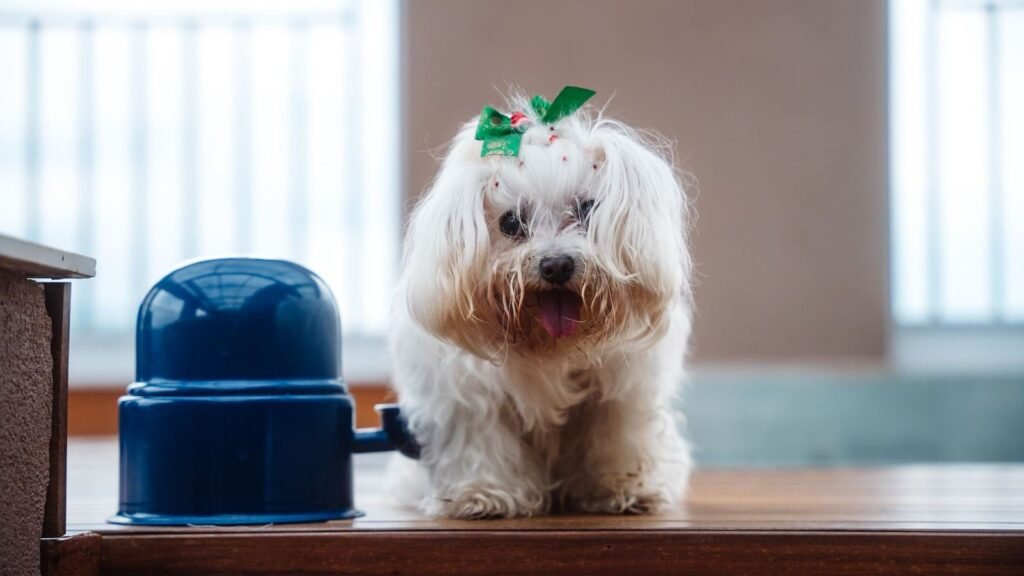
At breakfast, it is easy for a small kitchen to turn into a puppy-supply pile: the kibble bag leaning against a cabinet, bowls drying by the sink, treats on the counter, a scoop wandering into a drawer, and paper towels tucked wherever they fit. The best puppy feeding supply storage is not necessarily a large station or a special piece of furniture. It is one contained setup near the feeding area that keeps the items you use every day together while moving food, treats, and cleaning products out of easy puppy reach.

The practical problem is balancing speed with safety. You need to fill a bowl without crossing the kitchen three times, but a curious puppy should not have open access to a food bag, treat pouch, or bottle of cleaner. A feeding station also has to fit around real kitchen traffic: cabinet doors, the refrigerator, a trash can, and the spot where people walk through while the puppy is waiting for dinner.
Start by dividing supplies into two groups. Keep only the daily-use items close to the bowls: a measured portion container or small food bin, scoop, clean bowls, feeding mat, and a washable cloth for water drips. Put bulk kibble, treat refills, toppers, and cleaning supplies behind a closed cabinet door or higher up. This prevents the feeding zone from becoming a crowded catch-all and reduces tempting items left at nose level.
A simple small-kitchen setup might use one lower cabinet shelf for a lidded food container and bowl bin, with the scoop clipped or stored inside rather than left on the counter. Place a shallow tray beside the feeding mat for the clean bowl set and cloth. Store cleaning spray separately in an upper cabinet or another secured area, not beside food. The tray gives each item a return spot after meals, even when the counter is busy.
A cabinet shelf uses no visible floor space and keeps supplies out of sight, but it can be inconvenient if the cabinet is far from the bowls. A lidded food bin is quick to access and easy to move, though it still needs a location that does not invite chewing or knocking over. A rolling cart can hold bowls and towels in a narrow kitchen, but its open shelves are usually a poor choice for kibble, treats, or cleaners when a puppy can reach them. Choose the option that makes the safe routine the easiest routine to repeat twice a day.
Separate daily feeding tools from bulk food storage
The best puppy feeding supply storage setup uses two zones: one small, easy-to-reach station for each meal and one closed storage area for food, treats, and anything a curious puppy may chew. Start by choosing a spot close to where your puppy eats, such as the lower end of a kitchen counter, a cabinet beside the bowls, or a narrow section of pantry shelf. Keep only the tools you use at breakfast and dinner there: bowls, a measured scoop, feeding mat, and a washable cloth.
Put the large kibble bag or a sealed food container in a higher cabinet, latched pantry area, or other location your puppy does not normally access. Store treats separately from everyday kibble so they do not become counter clutter or get mistaken for training supplies. Keep dish soap, disinfectant, and other cleaning products away from food supplies; a nearby upper shelf or a separate closed cabinet is a clearer, safer division than placing them beside the bowls.
- Cabinet shelf: Best for a small kitchen with one available lower cabinet that can stay closed. Use the shelf for bowls, scoop, and mat, but move kibble and treats to a higher shelf if your puppy can nudge cabinet doors open.
- Lidded food bin: Best when the food bag is bulky or pantry space is limited. Place it inside a cabinet or against a wall out of the puppy’s usual path, rather than leaving it beside the feeding bowls.
- Rolling cart: Best for homes where the feeding area changes between rooms. Keep only bowls and non-food meal tools on the open top; place food and treats in a closed upper cabinet or secured container, and roll the cart away after meals.
A simple worked setup for a compact kitchen is a cabinet shelf holding two clean bowls, a silicone mat stored upright, and one scoop in a small washable cup. Bulk kibble sits in a closed container on a pantry shelf above, treats go in a separate closed container, and the cleanup cloth hangs to dry near the sink. This keeps meal setup to one cabinet and one pantry stop instead of spreading supplies across the counter.
Avoid keeping an open bag of kibble, treat pouch, chewable topper, or cleaning spray at floor level. Even a normally calm puppy may investigate food smells or chew an interesting package. Adjust the arrangement when your puppy starts reaching a new height, learns to open a cabinet, or when the feeding routine changes. If bowls keep collecting on the counter after washing, add a dedicated drying spot near the station; if the cart becomes a catch-all, return it to meal tools only.
Set up a simple puppy-safe feeding station
The best puppy feeding supply storage is not a large collection of organizers. It is one small, repeatable setup that keeps the items needed at mealtime together while moving edible and chemical items out of easy puppy reach. In a compact kitchen, that usually means placing the serving area near the feeding spot and using a closed cabinet or elevated storage area for everything that should not stay out.
Use this six-step setup in order. Plan for about 20 minutes the first time, then two to three minutes after meals to reset it.
-
Choose the feeding location first: Put the puppy’s bowls on a washable mat in a low-traffic edge of the kitchen, such as beside the refrigerator or at the end of a cabinet run. Keep it away from the stove, dishwasher door, and the narrow path people use to carry hot food.
Why: The storage station should support the place where meals happen, rather than creating a second pile across the room. A consistent bowl location also makes it easier to notice spills and empty water bowls.
Done looks like: You can set down both bowls without blocking a cabinet, walking route, or appliance door.
Pitfall: Do not place bowls directly beside a pantry door or under a hanging towel. The puppy may be underfoot whenever someone reaches for food.
-
Measure one nearby storage zone: Before buying or moving a container, measure the inside of the cabinet, pantry shelf, or narrow space beside the feeding area. Allow room for the door to close and for an adult hand to lift out the food container.
Why: In a small kitchen, the most useful spot is often a lower cabinet with a secure latch or an upper pantry shelf, not an attractive container that must sit in the walkway.
Done looks like: The zone holds the kibble container, a treat container, and a small cleanup caddy without stacking loose items on top.
Pitfall: Avoid choosing a deep back corner where the scoop disappears behind bulky food bags. If you cannot reach the daily tools in one motion, they will migrate to the counter.
-
Assign each item a single home: Store kibble in its chosen closed container or the original bag placed inside a larger closed bin, according to the food manufacturer’s directions. Keep treats in a separate labeled container. Place the scoop in the food container or clip it to the inside of the cabinet door if it stays clean and dry.
Why: Separating food, treats, and tools prevents the common “meal pile” of open bags, crumbs, and scoops on the counter. It also makes it obvious when a container is nearly empty.
Done looks like: At feeding time, you open one storage area, take out food and scoop, then close it before filling the bowl.
Pitfall: Do not use the kibble bin as a catch-all for medication, supplements, or cleaning products. Those items need their own clearly separated, secured storage.
-
Build a tiny cleanup kit: Put a washable cloth, pet-safe surface cleaner used according to its label, and a small roll of paper towels in a handled caddy on a high shelf or inside the same latched cabinet. Keep the caddy separate from food containers.
Why: A spill can be handled before it dries or gets tracked through the kitchen, without leaving cleaners under the bowl stand or on an open counter.
Done looks like: You can wipe a splash, return the cloth for washing, and put the kit away before the puppy starts investigating it.
Pitfall: Do not store cleaning spray loose on a rolling cart at puppy height. The ASPCA notes that chewing and destructive behavior can involve household objects, so reducing access to tempting items is a practical precaution.
-
Set the meal sequence: Bring out the bowl, measure food, close the food storage, serve the meal, then return the scoop immediately. After the puppy finishes, lift the bowl, wipe the mat if needed, and reset the empty bowl in its drying spot.
Why: This order limits the time kibble, treats, and scoops are exposed during a busy morning. It also prevents the open-container moment when a puppy noses into a bag while you answer the door or refill water.
Done looks like: Nothing edible or chewable remains on the floor or counter when you leave the feeding area.
Pitfall: Do not refill bowls from an open bag while the puppy is jumping nearby. Pause, move the puppy behind a gate or into another safe area, and finish the reset calmly.
-
Do a weekly station check: Once a week, wash the mat and bowls, wipe the cabinet shelf or bin exterior, remove crumbs, and check that latches and labels still work. Refill the cleanup caddy before it runs out.
Why: A feeding station stays useful when it is easy to clean and when every item remains visible. This is also a good time to discard empty treat packaging rather than letting it accumulate.
Done looks like: The station contains only current feeding supplies, with no mystery packets, old receipts, or spare toys taking up space.
Pitfall: Do not turn the feeding cabinet into general puppy storage. Leashes, grooming tools, and training gear quickly crowd out the items needed twice a day.
For a small-kitchen example, use a cabinet shelf above the puppy’s reach for kibble and treats, place bowls on a mat beside the refrigerator, and keep a slim cleanup caddy on the upper shelf beside the food storage. At breakfast, open the cabinet, portion food, close the door, serve the bowl, and return the scoop before the puppy begins eating. The counter stays clear because it never becomes the station.
- Cabinet shelf: Best when you have a nearby cabinet that closes securely. It uses no floor space and reduces puppy access, but the shelf must be tall enough for the food container and easy to reach without lifting heavy bags overhead.
- Lidded food bin: Best when the kibble bag is awkward or tears easily. Use it inside a cabinet or pantry when possible; a bin left on the floor may still be attractive to a determined puppy.
- Rolling cart: Best only for kitchens with no usable cabinet space and an adult who can move the cart away after each meal. It offers quick access, but low shelves are a poor place for food, treats, or cleaners when a puppy can reach them.
For broader puppy-proofing ideas, the ASPCA’s guidance on destructive chewing is a useful reminder to manage access to chewable household items rather than relying on a puppy to ignore them. A calm, closed feeding station makes daily meals easier while reducing the clutter that builds up in a small kitchen.
Keep bowls, mats, and storage areas easy to clean
The best puppy feeding supply storage should make the post-meal reset quick. If wiping the mat, washing bowls, and putting supplies away takes too many steps, clutter tends to collect around the feeding spot. A few common setup mistakes create that extra work, especially in a compact kitchen.
- Leaving the food bin beside the bowls: This can seem convenient, but loose crumbs and splashes land on the bin, floor, and nearby cabinet fronts. It also puts a food-smelling container at puppy level. Keep the daily bowl-and-mat area open for wiping, and store the kibble container on a higher cabinet shelf or behind a closed door. Bring it out for meals, then return it after measuring.
- Using a fabric mat that stays damp: A soft mat may look tidy at first, but it can hold water drips and food residue when it is not washed promptly. That makes a small kitchen feel messier because it cannot simply be wiped between meals. Choose a mat with a smooth, wipeable surface, or keep two washable mats so one can dry while the other is in use. Pick it up once a day to wipe underneath rather than only cleaning the visible top.
- Storing cleaning supplies with treats or kibble: Keeping everything in one caddy feels organized, but it mixes food-related supplies with products that should stay separate. It also makes the caddy less suitable for a low shelf where a curious puppy may investigate it. Put a small cloth or paper towel roll near the feeding station, but keep cleaners in a latched cabinet or another adult-accessible area. The ASPCA notes that chewing and exploring are common puppy behaviors, so reducing access to tempting household items is a practical part of setup.
- Choosing bowls that are hard to dry and put away: Deep, bulky bowls or several mismatched dishes can crowd the sink and then remain on the counter. The problem is not the bowls themselves; it is that the storage spot does not include a drying plan. Reserve one narrow tray, a section of a dish rack, or a clean towel area for washed bowls. Once dry, return spare bowls to one defined drawer or cabinet section rather than stacking them beside the sink.
For example, in a small kitchen, a puppy owner might keep two bowls on a wipeable mat beside the fridge, a dedicated drying tray in the dish rack, and a microfiber cloth in a high drawer. The food container and treats stay in a closed upper cabinet, while stronger cleaning products remain elsewhere. After dinner, the routine is simply: lift the bowls, wipe the mat and floor, wash the bowls, and return the food container to its closed storage spot.
- Cabinet shelf: Best when kitchen space is tight and you want food, treats, and a scoop out of puppy reach. It keeps the floor clear, but choose a shelf you can reach without moving several other items.
- Lidded food bin: Useful for keeping a measured supply together near mealtime. It needs a stable, clean location and is better placed inside a cabinet or pantry than left beside the feeding mat.
- Rolling cart: Helpful only when there is enough floor space to park it out of the kitchen traffic path. It offers easy adult access, but lower tiers may be too easy for a puppy to investigate, so reserve them for washable bowls or mats rather than food, treats, or cleaners.
A cleanable setup does not need to be elaborate. It works best when every item has a wipeable surface, a drying spot, and a storage location that reduces tempting access between meals.
Know when a cabinet, bin, or cart is the better fit
The best puppy feeding supply storage is the setup that makes each meal easy without turning a small kitchen into a collection of loose bags, bowls, and wipes. This week, try a simple routine: keep only the items you use at each meal close to the feeding area, store food and treats behind a closed barrier, and reset the station as soon as the bowls are washed.
For example, a puppy owner in a small apartment kitchen might keep two clean bowls and a washable mat in a low drawer near the feeding spot. The kibble bag stays inside a lidded container in an upper cabinet or pantry shelf, with treats beside it in a separate closed container. A scoop can live inside the food container if it is clean and dry. Keep cleanup spray and paper towels in a higher cabinet, not beside food or within easy puppy reach.
- Cabinet shelf: Choose this when you have an available upper cabinet or a pantry shelf and want the clearest counter. It is usually the best option for kibble, treats, toppers, and cleaning supplies because those items are out of the puppy’s normal reach. Use a small tray or bin on the shelf so loose packets and measuring tools stay together.
- Lidded food bin: Choose this when the original food bag is awkward, tears easily, or takes up too much room. Place the bin inside a cabinet, pantry, or other protected area when possible. A lid helps reduce spills and casual access, but it is still wise to avoid treating any container as completely puppy-proof.
- Rolling cart: Choose this only when cabinet space is limited and you need supplies to move between a kitchen and another feeding area. Keep bowls, a mat, and a towel on the cart; reserve the higher or closed sections for food and treats. Avoid leaving cleaning products, chewable treats, or an open food bag on a cart where a curious puppy may investigate.
The goal is not to own more organizers. It is to give every feeding item one dependable home: food together, meal tools together, and cleanup supplies stored separately. That routine reduces the rushed search for a scoop at breakfast and helps prevent kibble, treats, and cleaners from lingering on low counters or floors.
Next step: Before the next meal, clear one cabinet shelf or choose one closed bin for kibble and treats, then place the bowls and mat in their assigned nearby spot.
FAQ
What should I know about separate daily feeding tools from bulk food storage?
The best puppy feeding supply storage setup uses two zones: one small, easy-to-reach station for each meal and one closed storage area for food, treats, and anything a curious puppy may chew. Start by choosing a spot close to where your puppy eats, such as the lower end of a kitchen counter, a cabinet beside the bowls, or a narrow section of pantry shelf.
What should I know about set up a simple puppy-safe feeding station?
The best puppy feeding supply storage is not a large collection of organizers. It is one small, repeatable setup that keeps the items needed at mealtime together while moving edible and chemical items out of easy puppy reach.
What should I know about keep bowls, mats, and storage areas easy to clean?
The best puppy feeding supply storage should make the post-meal reset quick. If wiping the mat, washing bowls, and putting supplies away takes too many steps, clutter tends to collect around the feeding spot.