
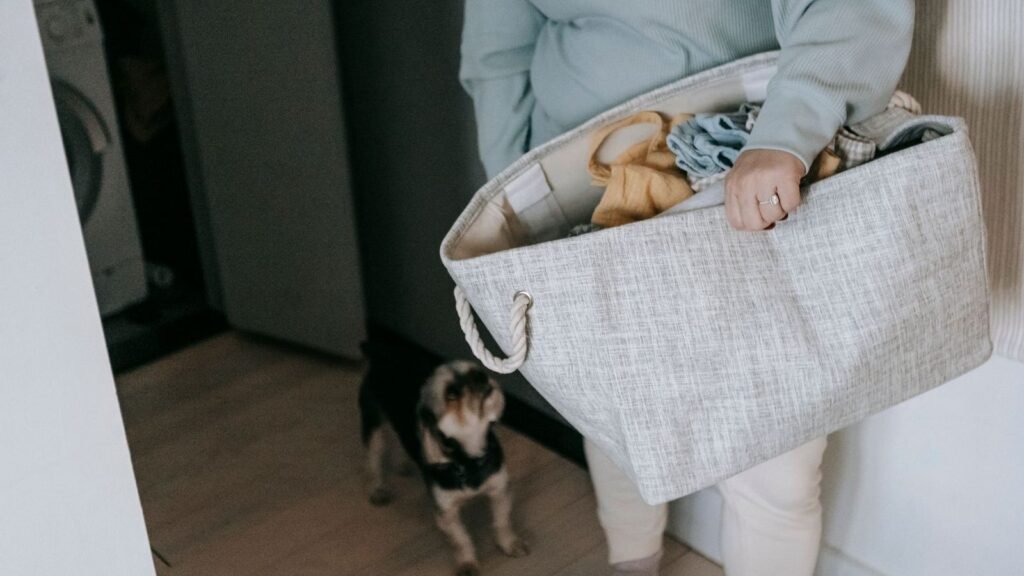
When a puppy comes home, one damp towel by the door can quickly become a small pile of bedding, blankets, washable toys, and cleanup cloths waiting for “later.” Learning how to create a puppy laundry routine is less about doing extra laundry and more about giving those items a clear place between uses. A manageable system keeps the wet paw towel off the bathroom floor, the crate blanket out of the family laundry basket, and the emergency cleanup cloths easy to grab without becoming a forgotten, smelly bundle.
How to create a puppy laundry routine: what matters
Use decision criteria tied to how to create a puppy laundry routine: space, upkeep, how it fits your routine, and everyday usability.
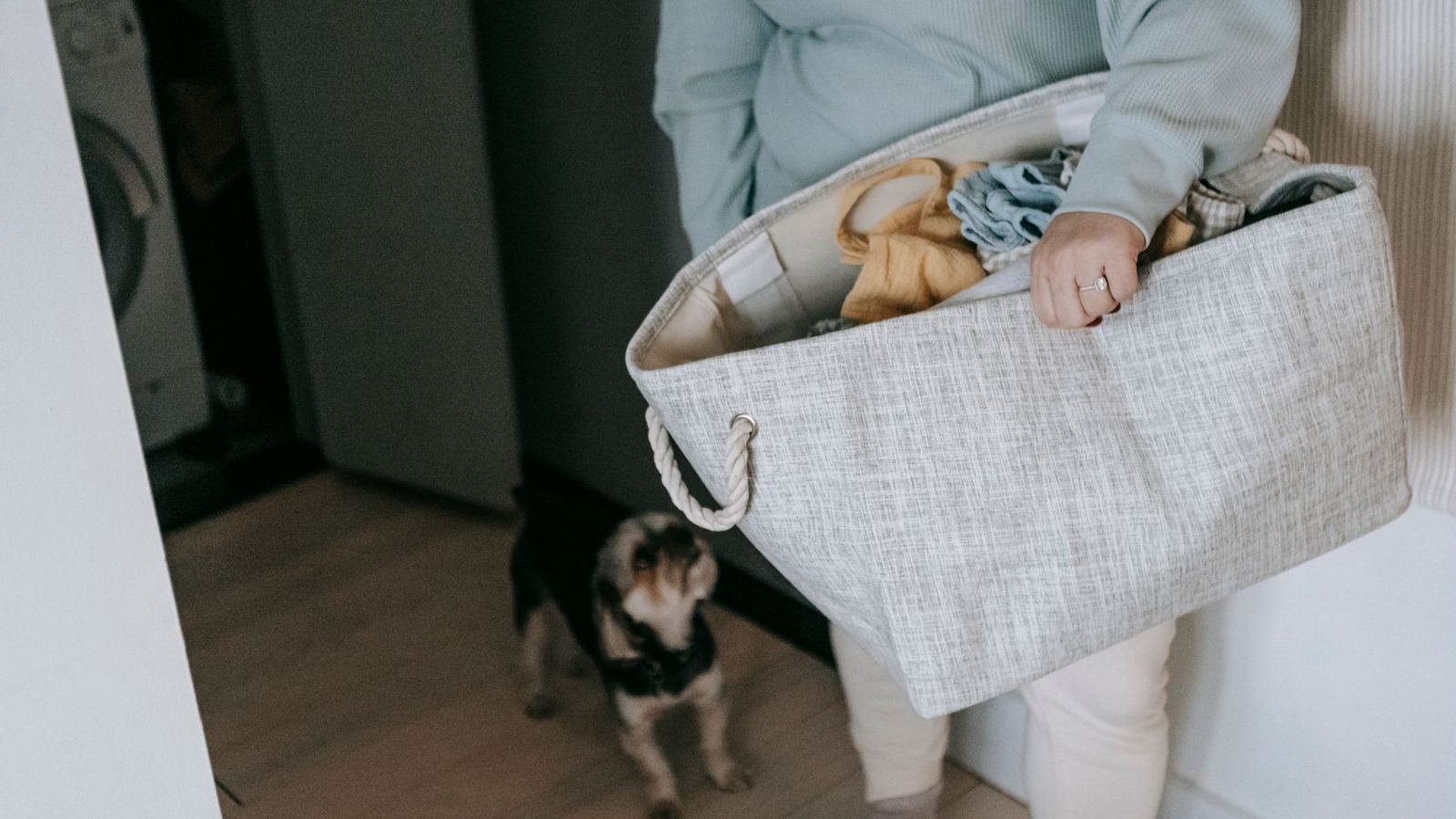
The basic problem is simple: puppy textiles get used at unpredictable times. Rainy walks, muddy paws, crate accidents, bath days, and enthusiastic chewing can all create a load before your usual wash day. If every item goes into one closed hamper while still damp, the result is clutter, odors, and a last-minute search for a clean towel when you need one. Separating puppy laundry does not require a dedicated laundry room or a complicated schedule; it requires a small holding system that matches the space you actually have.
Start today with two places: one bin for dry, ready-to-wash puppy items and one spot where damp items can air out first. In a small apartment, that might mean a lidded, ventilated bin beside the washer or in a utility closet for dry bedding and blankets, plus two hooks or a folding drying rack near the bathroom for wet towels and cleanup cloths. The bin contains visual clutter and keeps puppy linens separate, while the drying spot prevents you from sealing moisture into the pile. The tradeoff is a little wall or floor space, but it avoids needing a large open hamper in a narrow room.
Keep the system narrow enough to maintain: designate a few puppy-only towels, one or two spare bedding sets, and a washable cloth bag or small basket for fabric toys. After an accident or muddy outing, hang or spread damp textiles until they are no longer wet to the touch, then place them in the puppy bin for the next appropriate load. Check the care labels on beds, blankets, harnesses, and toys before washing or drying, since materials and removable covers can have different instructions. A routine that contains the mess first is far easier to keep than one that depends on immediately running a full load every time a puppy has a messy moment.
Separate Bedding, Towels, and Cleanup Cloths From Day One
For how to create a puppy laundry routine that stays manageable, begin by giving each washable item a clear category before the first pile appears: bedding and blankets, drying towels, and accident-cleanup cloths. Keep the categories physically separate, even if your space only allows for two containers. The goal is not to wash every item immediately; it is to know what is clean, what needs to air-dry, and what is waiting for the next appropriate load.
First, choose one home base near your laundry area or puppy zone. Put clean bedding and blankets in a shelf, drawer, or covered bin, and reserve a separate washable bag or bin for used dry items. Hang wet towels over a drying rack, shower rod, or sturdy hook until they are fully dry enough to place in the laundry bin. This small pause prevents a damp towel from being buried under blankets, where it can make the whole pile unpleasant to handle.
- Bedding group: Keep crate pads, blankets, and bed covers together. Fold clean backups in the same spot so a replacement is easy to grab after an accident or muddy outing.
- Towel group: Assign a few towels only to puppy use, such as paw towels and post-rain drying towels. Return dry, clean towels to one visible stack rather than mixing them into household bath linens.
- Cleanup-cloth group: Store reusable cloths apart from bedding, ideally in a small labeled container or washable bag. This keeps a quick cleanup from turning into a search through the puppy’s clean blankets.
- Washable-toy group: Keep fabric toys in a small mesh bag or separate basket until you are ready to check their labels and wash them with compatible items.
A small-apartment setup can be especially simple: use a lidded, ventilated bin under a utility shelf or beside the washing machine for dry used bedding and cloths, while wet towels hang in the bathroom to dry first. The tradeoff is that the bin holds less, so it prompts smaller, more regular loads instead of one overwhelming pile. Do not use the lidded bin as a place to hide soaking towels or heavily soiled items; deal with those promptly according to the item’s care instructions.
Check the care label on each bed, blanket, harness, and washable toy before choosing a wash or dry setting. If one item needs gentler handling, keep it with its own category instead of tossing it into the next towel load. Adjust the system when your puppy’s routine changes: add a second towel hook during wet weather, move the cleanup-cloth container closer to the puppy’s main room during house-training, or increase your clean bedding backup if accidents leave you without a dry place for your puppy to rest.
Handle Damp and Soiled Items Before They Reach the Hamper
A manageable answer to how to create a puppy laundry routine starts with one rule: do not put anything wet, muddy, or heavily soiled straight into the main laundry hamper. A closed pile of damp towels, bedding, and cleanup cloths is hard to sort later and can make the whole laundry area unpleasant to use. Give those items a short stop between use and wash day instead.
- Hang wet towels first: After a rainy walk, bath, or muddy-paw cleanup, spread the towel over a drying rack, shower rod, or sturdy hook before it goes into the puppy laundry bin. Give it enough space to dry rather than folding it over itself. In a small apartment, a towel can dry overnight on a rack in the bathroom; in a larger home, a utility-room hook may be more convenient. Once it is dry, move it to the towel section of the bin until the next load. Timing: Hang it up as soon as you come inside. Pitfall: Leaving the towel on the floor while you attend to the puppy makes it easy to forget, and it may become a tempting item to chew or drag away.
- Remove solids before storage: If a blanket, crate pad, or cloth toy has visible dirt, grass, food, or a mess from an accident, take it to the trash or outdoor bin first and remove what you can with paper towel or a designated brush. Then place the textile in its appropriate temporary spot: a dry-item bin if it is dry, or a hanging area if it is damp. This keeps loose debris from transferring onto clean-looking bedding in the same container. Timing: Do this before bringing the item to the laundry zone. Pitfall: Shaking a dirty blanket inside the living room spreads debris into the space you just cleaned; take it outside or hold it over a trash bag instead.
- Use a short-term “wash next” container: Keep one small, clearly marked bin or handled basket for items that need washing soon, such as an accident-cleanup cloth or a muddy towel that has dried. This is not meant to hold a week’s worth of laundry. It is a visible holding point that prevents one urgent item from getting mixed into everyday bedding. A lidded, ventilated bin can work for dry soiled items in a tight space, provided it is emptied regularly. Timing: Check the container each evening or whenever you start a household load. Pitfall: Using a fully sealed container for damp items traps moisture; dry those items first rather than closing them away.
- Keep cleanup cloths separate from soft bedding: Store washable cloths used for puppy messes in their own small bucket, zippered wash bag, or divided section of the laundry zone. Keeping them apart makes load-building faster: bedding and blankets can wait until there is enough for a practical load, while cleanup cloths can be washed sooner when needed. Timing: Return clean cloths to their assigned cleanup supply spot immediately after laundering, rather than leaving them in a mixed clean-laundry basket. Pitfall: Letting cleanup cloths blend into kitchen towels or bath towels makes it harder to locate them during an accident.
- Follow the item’s label before adding it to the wash plan: Check care labels on puppy beds, blankets, harnesses, and washable toys before washing or drying them. A removable bed cover may be washable while the foam insert needs a different approach, and some toys or gear may not belong in the washer or dryer at all. Put a small note on the laundry-zone bin if an item has special instructions, such as air dry or gentle cycle. Timing: Read the label when the item first enters your home, not when you are already rushing to start a load. Pitfall: Treating every fabric item as machine washable can leave you with damaged gear and no clean backup for bedtime.
- Build a small-apartment reset into one daily moment: In a one-bedroom apartment, place a slim drying rack in the bathroom and a lidded ventilated bin beside the washer area or inside a hall closet for dry puppy laundry. After the evening walk, hang the damp paw towel, return dry blankets to the bedding side of the bin, and place used cleanup cloths in their separate container. On laundry day, bring only the dry stored items to the machine, then wipe out the empty bin before restocking it. Timing: Pair this five-minute reset with the puppy’s last potty trip or your evening kitchen cleanup. Pitfall: Choosing a large hamper “just in case” can encourage overfilling; a smaller container creates a useful prompt to wash before the pile becomes overwhelming.
The goal is not to wash every puppy item immediately. It is to make the next step obvious: hang damp textiles, contain dry soiled ones, keep cleanup cloths separate, and check special-care items before a load begins. That order prevents last-minute searching for a clean towel when the weather turns or the puppy needs an unexpected cleanup.
Worked Example: A Small-Apartment Puppy Laundry Setup
When learning how to create a puppy laundry routine, many problems come from making the system either too loose or too complicated. In a small apartment, the goal is not to create a separate laundry room for puppy items. It is to make the next right step obvious: dry damp items, contain dry dirty items, wash a realistic load, and return clean pieces to one dependable spot.
Imagine a puppy owner with a combined bathroom and laundry closet. They keep one small lidded, ventilated bin beside the washer for dry bedding and blankets, a washable hanging bag for cleanup cloths, and two hooks over the tub for wet towels. A clean-linen basket sits on the closet’s top shelf with one spare bed cover, two towels, and a few cloths. This takes little floor space, but it avoids mixing every puppy item into one overfilled hamper.
- Putting wet towels straight into a closed bin: A rainy walk towel or post-bath towel gets tossed in with dry blankets, then the whole bin feels damp and must be dealt with at once. This fails because a closed container is useful for containing clutter, not for drying wet fabric. Better move: Hang wet towels over the tub, a drying rack, or sturdy hooks until they are dry enough to place in the laundry bin. The tradeoff is that the towel stays visible for a few hours, but it prevents the bin from becoming a damp holding area.
- Using one hamper for every puppy textile: Bedding, washable toys, muddy towels, and accident-cleanup cloths become a single mixed pile. When laundry day arrives, sorting feels unpleasant and easy to postpone. Better move: Give cleanup cloths their own small washable bag or clearly marked container, while bedding and blankets go into the main puppy-laundry bin. Check each item’s care label before washing or drying, especially beds, blankets, harnesses, and toys with attached parts.
- Keeping the clean supply too small: With only one bed cover or one usable towel, a single accident or wet walk creates an immediate, last-minute load. This fails because the routine has no buffer for ordinary puppy messes. Better move: Keep a modest backup set that fits your storage space: one extra cover or blanket, two clean towels, and several cleanup cloths. Store these together in a clean bin rather than scattered through bathroom drawers and closets.
- Waiting for a “perfect” full load: Owners may leave puppy laundry sitting until there is enough to fill the machine, even when the items are taking over the bathroom or entryway. This fails because puppy laundry is often bulky rather than heavy; one bed cover and several towels may already be a sensible load. Better move: Use a visual limit instead of a strict calendar rule. Wash when the designated bin is about three-quarters full, when you are down to the backup set, or after an unusually messy day.
- Returning clean items wherever there is space: Fresh towels end up in the linen closet, blankets go on a chair, and cloths remain in a laundry basket. The next cleanup then starts with a search. Better move: Make “put back” part of the load: return all clean puppy textiles to the same labeled basket before starting another household task. A simple inventory list can help if supplies keep disappearing; this puppy gear inventory guide offers a practical way to track what you have.
The small-apartment setup works because each category has a temporary home without requiring more furniture: hooks for wet items, a contained bin for dry dirty items, and one basket for clean replacements. If your washer is shared or laundry happens off-site, use a tote with a lid for transport only after towels and cloths have dried. That keeps the routine manageable without turning puppy laundry into a constant project.
Restock the Clean Puppy Linen Bin After Each Load
The simplest way to make how to create a puppy laundry routine work long term is to treat the clean-linen bin as the finish line for every puppy load. Once towels, bedding, blankets, and washable cloths are dry, put them straight back into the place where you use them. A clean pile left on top of the dryer is still a future chore—and it leaves you without the supplies you need when the next muddy walk or accident happens.
Keep one small, clearly defined bin, shelf, or drawer for clean puppy textiles. It does not need to hold every blanket you own. Its job is to hold a practical backup: a few dry towels, a spare bed cover or blanket, and several cleanup cloths. When an item is used, it moves into the dirty-item system. When a load is finished, the clean bin is refilled before anything else is folded.
- Store by job: Keep walk towels together, sleeping items together, and cleanup cloths in their own small stack or pouch. This makes it easy to grab the right item without emptying the whole bin.
- Keep only the backup you can manage: In a small home, two towels and one spare bedding layer may be enough. More extras can reduce urgent washing, but they also take up valuable storage space and can become an unseen pile.
- Check labels before resetting the bin: Review care labels on beds, blankets, harnesses, and washable toys before washing or drying them. Some pieces may need air-drying or a different wash approach.
- Make the empty space visible: If the clean towel section is empty, that is your signal to run a puppy load soon—not after you need a towel at the door.
For example, in a small apartment, a lidded, ventilated bin can hold dry dirty laundry beneath a hallway console or beside the washer. Wet towels should be hung over a drying rack, shower rod, or towel bar first rather than sealed in the bin. The tradeoff is a little temporary visual clutter while towels dry, but it prevents damp fabric from sitting in the storage container and keeps the rest of the puppy supplies contained.
This routine solves the everyday problem of puppy laundry spreading across the home: damp items have a drying spot, dry dirty items have a contained waiting spot, and clean replacements have a reliable home. You do not need a perfect schedule or a large laundry room. You need enough clean backups to cover normal puppy messes and a clear path for each item after use.
Next step: Today, choose one basket, drawer, or shelf for clean puppy linens and place two towels, one spare bedding layer, and a small stack of cleanup cloths inside it.
FAQ
How to create a puppy laundry routine: what matters?
Use decision criteria tied to how to create a puppy laundry routine: space, upkeep, how it fits your routine, and everyday usability. Photo by Sarah Chai on Pexels The basic problem is simple: puppy textiles get used at unpredictable times.
What should I know about separate bedding, towels, and cleanup cloths from day one?
For how to create a puppy laundry routine that stays manageable, begin by giving each washable item a clear category before the first pile appears: bedding and blankets, drying towels, and accident-cleanup cloths. Keep the categories physically separate, even if your space only allows for two containers.
What should I know about handle damp and soiled items before they reach the hamper?
A manageable answer to how to create a puppy laundry routine starts with one rule: do not put anything wet, muddy, or heavily soiled straight into the main laundry hamper. A closed pile of damp towels, bedding, and cleanup cloths is hard to sort later and can make the whole laundry area unpleasant to use.