
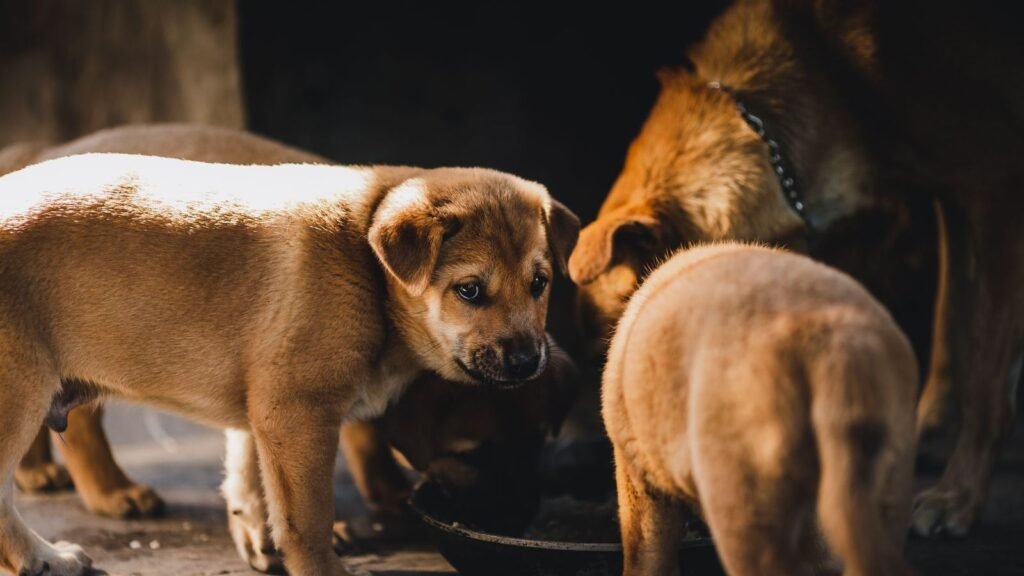
Learning how to organize puppy feeding supplies starts with one familiar kitchen moment: you are trying to fill a bowl while the food bag is slumped beside the counter, the scoop has disappeared into a drawer, treats are within nose reach, and a damp towel from the last water spill is still on the floor. A feeding zone gives each of those items a dependable home, so meals take minutes instead of becoming a small search-and-cleanup project.
The goal is not to turn the kitchen into a pet-supply room. It is to keep the things you use at every meal close together while moving backup food, treats, and cleanup products out of a curious puppy’s reach. A low open basket may look convenient, but it also makes food bags, treat pouches, and cloths easy for a puppy to grab. Closed cabinets, elevated shelves, and secured food-storage containers can reduce that access, though no storage choice should be treated as completely puppy-proof.
Start today by clearing a space about the width of one cabinet shelf or one small section of counter-adjacent floor. Keep only the daily setup there: the food bowl, water bowl, a washable mat or tray, the scoop, and one small cloth for fresh spills. Put the cloth in a lidded bin or high drawer after use rather than leaving it beside the bowls, where it can become another tempting item to carry away.
Then separate the rest into three simple groups: meal-time items, refill supplies, and cleanup supplies. For example, a kitchen cabinet can hold the food bag, scoop, and treats on an upper shelf, with a wipeable bin of spare bowl-cleaning items below. The cabinet keeps visual clutter down, but it needs to stay dry and leave enough room for the door to close without crushing a food bag. Food can remain in its original bag when practical; if you use a secondary food-storage container, keep the package information with it and use a container intended for food storage.
A rolling cart can make supplies easy to reach in a larger kitchen, but it is less suitable if your puppy can nudge, reach, or move it. The best feeding zone is usually the boring one: close to the bowls, simple to reset, and arranged so you can serve a meal, wipe a splash, and put everything away before your puppy finds something to investigate.
Sort Supplies Into Meal-Time, Refill, and Cleanup Groups
For how to organize puppy feeding supplies, begin by emptying the feeding-related items from the counter, pantry shelf, and nearby drawers. Put each item into one of three groups: what you need at every meal, what you use only to restock, and what handles spills. This keeps the daily routine small while still giving every supply a dependable home.
- Meal-time group: Keep the current food bag or food container, scoop, bowls, water bowl, and a small portion of training treats together. This is the only group that needs to be quick to reach twice a day. Place it in a closed lower cabinet only if your puppy cannot access it, or use a higher cabinet if your puppy is already investigating doors and handles.
- Refill group: Store backup food, unopened treats, spare bowl parts, and extra water-filter supplies away from the feeding spot. A high pantry shelf or closed cabinet prevents the kitchen from looking like a pet-supply aisle. Keep food in its original bag when practical; if you use a secondary food-storage container, retain the package information with it and use a container intended for food storage.
- Cleanup group: Assign one small spot for a washable feeding mat, pet-safe cleanup cloths, a towel for drips, and a handheld brush or dustpan for scattered kibble. Keep this group near the bowls, but not loose on the floor where a puppy can grab or chew it.
A simple small-kitchen setup might use one cabinet: the meal-time group sits at the front, while cleanup cloths are in a small bin behind it. Backup food stays on a higher pantry shelf. The tradeoff is that a cabinet hides visual clutter, but it needs to stay dry and have enough room for the door to close without crushing a food bag or bowl. A rolling cart can make meals convenient in a larger kitchen, but skip it if your puppy can reach, tip, or push it.
Avoid leaving the food bag, treats, scoop, and cleaning supplies permanently on the counter. It creates more visual clutter and gives a curious puppy more chances to investigate items that are not meant for chewing. Closed cabinets, elevated storage, and secured containers reduce access, but no storage choice should be treated as completely puppy-proof. The ASPCA notes that destructive chewing is common behavior that can create hazards when dogs reach inappropriate household items.
Adjust the groups when the routine starts to feel crowded. If you are repeatedly carrying a towel from another room, move one into the cleanup group. If the daily cabinet is packed with unopened bags and seasonal extras, shift those items into refill storage. The goal is simple: every meal should require opening one location, filling the bowls, wiping the area if needed, and putting everything back without leaving supplies out.
Set Up a Simple Bowl and Water Station
For how to organize puppy feeding supplies, make the bowl area the visible end point of the system: it should hold only what your puppy needs during a meal, while food, treats, and cleaning supplies stay put away nearby. A simple station reduces the familiar kitchen scramble of carrying a full bag across the floor, hunting for a clean bowl, then leaving a wet towel on the counter after your puppy splashes the water.
Choose a spot that is easy for you to wipe, does not block a busy walkway, and gives your puppy a calm place to eat. In a small kitchen, the end of a cabinet run or a wall beside the kitchen table often works better than alternatives when daily maintenance and space constraints are considered the center of the room. Keep the station separate from the stove, dishwasher door swing, and any place where dropped utensils or hot pans are common.
-
1. Mark the everyday feeding footprint. Place the empty food bowl and water bowl on the floor where you expect your puppy to eat, then stand where you normally prepare meals. Leave enough room to set the bowls down without stepping over them. This matters because a station that interferes with opening the refrigerator or walking past the sink will soon migrate into the middle of the kitchen.
Timing and order: Do this before choosing a mat, shelf, or nearby cabinet. Watch the area through one breakfast and one dinner period if possible.
Pitfall: Do not choose a corner solely because it is hidden if the bowls are hard to reach or the corner collects crumbs and moisture.
Done looks like: You can walk from food storage to the bowls, fill them, and return the supplies without moving chairs, laundry baskets, or your puppy’s toys.
-
2. Put down one defined, washable base. Use a wipeable feeding mat or tray that is wider than both bowls, with extra space on the water side. The base creates a clear boundary for drips, kibble, and crumbs, so the floor does not become a second storage zone for towels and cleaning spray.
Timing and order: Set the base down after confirming bowl placement, then place the bowls on it for a full day. Shift it before it becomes a permanent habit if your puppy repeatedly bumps it in a narrow passage.
Pitfall: Avoid a base so small that the water bowl sits at its edge; splashes will still land on the floor, and the mat will not simplify cleanup.
Done looks like: All normal bowl drips land on the base, and you can lift or wipe that one surface after meals.
-
3. Give each bowl a fixed job and position. Keep the food bowl and water bowl in the same places every day, with the water bowl positioned where it is least likely to be kicked or brushed by cabinet doors. If your puppy tends to push a bowl around, choose a more stable bowl or place it where the mat and wall help limit sliding.
Timing and order: Position the water bowl first, since it needs the most spill clearance, then set the food bowl beside it. Recheck the arrangement after your puppy has used it for several meals.
Pitfall: Do not add extra bowls “just in case.” A spare bowl belongs in a designated backup spot, not on the kitchen floor collecting dust and making it unclear which bowl is clean.
Done looks like: Anyone in the household can refill water or serve a meal without asking which bowl is which or rearranging the station.
-
4. Assign one nearby owner-only access point. Reserve a closed cabinet shelf, high drawer, or latched utility area within a few steps of the bowls for the scoop, meal-time treats, and a small supply of cleanup cloths. Keeping these items close supports a fast routine while reducing the chance that a curious puppy reaches a loose treat pouch or chews a scoop left on the counter. The ASPCA notes that chewing can be destructive, so limiting access to tempting household items is a sensible home-management step.
Timing and order: Set this up after the bowls are placed, so the access point supports your actual path rather than forcing you to cross the kitchen during every meal.
Pitfall: A low open basket may look tidy but is not a good choice for treats or tools if your puppy can investigate it.
Done looks like: The scoop, approved meal-time treats, and one clean cloth are available in one reach, while the puppy cannot casually access them.
-
5. Build a short cleanup sequence into every meal. After your puppy finishes, pick up stray kibble, wipe the bowl base, and return the scoop and treat container to their assigned place before leaving the kitchen. Keep this sequence in the same order each time: bowls, floor or mat, tools away. It prevents the common buildup of crumbs under cabinets, damp towels on counters, and open treat bags after a rushed morning.
Timing and order: Allow about one minute immediately after each meal, rather than saving all feeding-area cleanup for the end of the day.
Pitfall: Do not store a wet cloth in a closed container. Hang it to dry or replace it with a clean one, then keep the cleaning supply area dry.
Done looks like: At the end of the meal, only the two bowls and their base remain in view; no food bag, scoop, treats, or cleanup item is left out.
-
6. Test the station during a busy household moment. Try the setup when someone is unloading groceries, opening the dishwasher, or preparing dinner. This reveals whether the bowl location creates a trip point or whether the storage door cannot open fully with the bowls in place. In a compact kitchen, a cabinet-based setup saves visual space but needs protection from moisture and enough clearance for the door. A rolling cart can make supplies easy to access, but it may be unsuitable for a puppy that can reach, chew, or move it.
Timing and order: Test once after setup and again as your puppy grows or household routines change.
Pitfall: Do not assume a container or cart is fully puppy-proof. Closed cabinets, elevated placement, and secured containers reduce access but still need regular checks.
Done looks like: The station stays usable during ordinary kitchen traffic, and all feeding supplies return to their places without blocking doors or inviting puppy investigation.
A calm bowl station is not meant to hold the entire feeding supply inventory. It is the daily-use zone: bowls below, a washable surface underneath, and a small, closed owner-access point nearby. Keeping the rest of the food supply and replacement items elsewhere protects valuable kitchen space and makes the meal routine easier to reset every time.
Worked Example: One Small-Kitchen Puppy Feeding Cabinet
For how to organize puppy feeding supplies in a small kitchen, picture one lower cabinet near the feeding area but away from the sink’s splash zone. This setup keeps the counter clear and puts the everyday items in one predictable place. It also has tradeoffs: a cabinet saves visual space, but it needs to stay dry inside and must have enough room for the door to open without bumping bowls, a trash can, or a nearby chair.
Use the cabinet in simple zones. Keep the food bag on the bottom shelf, ideally inside a food-storage container only if the original bag can stay with it or its feeding and product details are retained. Put treats and the scoop in a small bin on the upper shelf, and reserve a shallow tray for a folded feeding mat, spare bowl, and clean cloth. Keep cleanup spray or other non-food supplies separate from food and treats, preferably in a higher closed cabinet if available.
- Leaving the food bag on the floor: The bag becomes a permanent kitchen obstacle, gets nudged during cooking, and may be easy for a curious puppy to investigate. It fails because the most-used supply has no defined home. Move it into the feeding cabinet or another elevated, closed storage spot that remains dry and easy for an adult to reach.
- Using one loose drawer for every feeding item: Scoops, treat bags, spare bowls, wipes, and clips slide together until meal prep means digging around. The drawer looks organized only when it is newly cleaned. Instead, give each small category a contained area: one bin for treats, one holder for the scoop and bag clip, and one tray for bowl-related extras.
- Keeping treats on the counter for convenience: Treats may be handy during a busy day, but the counter gradually turns into a drop zone for open bags, crumbs, and unrelated kitchen items. A better move is a closed, clearly marked treat bin inside the cabinet. Put only the amount needed for a walk or training session into a small temporary pouch, then return the rest.
- Storing cleanup items beside food: Wipes, cleaning cloths, and cleaning products can crowd the food area and make restocking confusing. Even simple cleanup supplies are easier to manage when they have their own zone. Keep a washable cloth and bowl mat nearby, but store stronger cleaning items separately and out of puppy reach.
- Choosing a rolling cart without considering the puppy: A cart can improve access in a tight kitchen, especially when cabinets are already full. However, a puppy may reach lower shelves, pull at hanging towels, or move a lightweight cart. Choose a cabinet first when possible; use a cart only when it can be positioned away from the puppy and cleared after meals.
A cabinet system stays manageable when nothing extra moves in. Do not use this space for unopened pantry groceries, human snacks, or random kitchen tools. After filling the bowl, return the scoop, close the food storage, wipe the prep surface if needed, and close the cabinet. That short finish keeps feeding supplies ready for the next meal without letting them take over the kitchen.
Reset the Feeding Area in Two Minutes Each Week
Once the feeding zone is set up, the goal is not to keep it picture-perfect. It is to make every meal easy: food is where you expect it, the scoop is clean and available, bowls are ready, and the small cleanup items have one home instead of spreading across the kitchen.
For a quick weekly reset, choose a consistent moment, such as after washing the puppy’s bowls on Sunday or before bringing home groceries. Stand at the feeding zone and work through the same short sequence:
- Put the food bag or food-storage container back in its assigned cabinet or elevated spot. If food is moved to a secondary container, keep the original package information with it and use a container intended for food storage.
- Return the scoop to its hook, bin, or container rather than leaving it on the counter or inside an open bag.
- Check the treat container and put loose training treats back inside with the lid closed.
- Wipe crumbs, water drips, and kibble dust from the bowl mat, nearby floor, and cabinet shelf.
- Restock the small cleanup supply, such as a dedicated cloth or paper towels, so it is ready for the next spill.
This small routine prevents the familiar kitchen buildup: a half-open food bag near the wall, treats on the counter, a missing scoop, and bowls that migrate around the room. Closed cabinets, elevated placement, and secured containers can reduce a curious puppy’s access, though no storage setup should be treated as completely puppy-proof. If your puppy can reach, chew, or move an item, choose a less accessible location.
A cabinet-based setup is often the calmest option for a small kitchen because it hides visual clutter between meals. It does need a dry shelf, enough space for the door to close without crushing the bag, and a quick wipe if water splashes nearby. A rolling cart can make supplies easier to reach, but it is a poorer choice for a puppy that can pull at it, tip it, or investigate the lower shelves.
Try this next: Set a two-minute timer this evening and reset only the feeding area, put away the food, treats, scoop, and cleanup cloth, then notice whether tomorrow morning’s meal requires any searching at all.
What you’ll actually use
These are the pieces this setup actually uses. If one does not earn a place in your home, leave it off the list.
- Chew Toys: Keep this where how to organize puppy feeding supplies actually happens, and skip it if you already have a version that works.
- Food Mat: Keep this where how to organize puppy feeding supplies actually happens, and skip it if you already have a version that works.
- Toys And Chews: Keep this where how to organize puppy feeding supplies actually happens, and skip it if you already have a version that works.
FAQ
What should I know about sort supplies into meal-time, refill, and cleanup groups?
For how to organize puppy feeding supplies , begin by emptying the feeding-related items from the counter, pantry shelf, and nearby drawers. Put each item into one of three groups: what you need at every meal, what you use only to restock, and what handles spills.
What should I know about set up a simple bowl and water station?
For how to organize puppy feeding supplies , make the bowl area the visible end point of the system: it should hold only what your puppy needs during a meal, while food, treats, and cleaning supplies stay put away nearby. A simple station reduces the familiar kitchen scramble of carrying a full bag across the floor, hunting for a clean bowl, then leaving a wet towel on the counter after your puppy splashes the water.
What should I know about worked example: one small-kitchen puppy feeding cabinet?
For how to organize puppy feeding supplies in a small kitchen, picture one lower cabinet near the feeding area but away from the sink’s splash zone. This setup keeps the counter clear and puts the everyday items in one predictable place.