
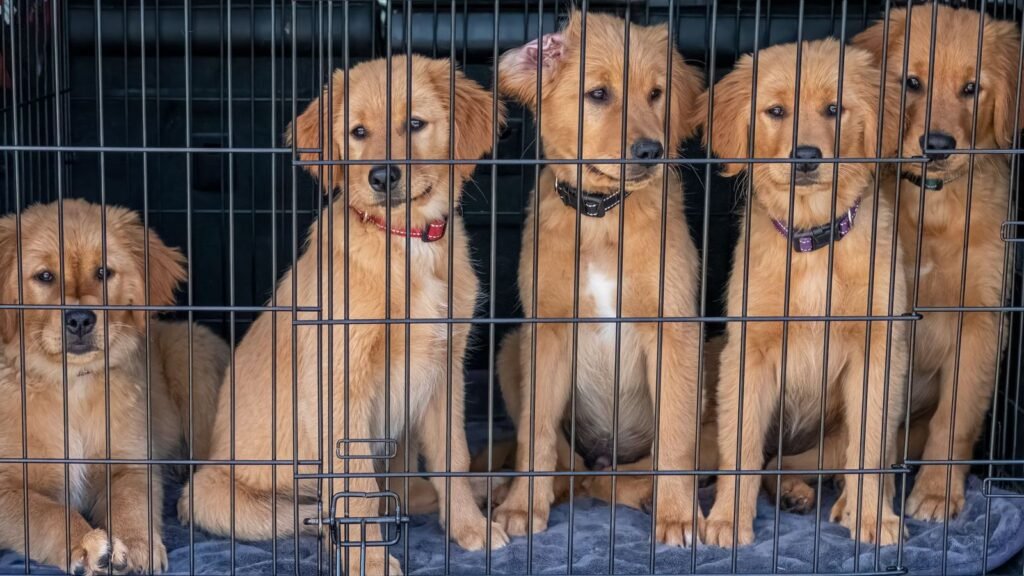
Puppy storage for puppies in training works best when it turns a scattered pile of supplies into a few small stations you can reach during the moment your puppy needs them. Picture a common evening: your puppy notices a shoe near the hallway, you want to redirect them, but the treats are in the kitchen, the clicker is under the sofa cushion, and the leash is still hanging by the back door. By the time everything is gathered, the short opportunity has passed, and the puppy may have found something more interesting to chew.
The goal is not to display every puppy item in one open organizer. It is to keep the tools you need together while keeping food rewards, chews, and small gear inaccessible to the puppy. Treats belong in sealed, clearly labeled containers on a high shelf or inside a closed cabinet. A clicker, short lead, cleanup bags, and a small notebook can stay in a portable caddy that comes out only for supervised practice. Near the exit, use a sturdy hook placed out of reach or a closed bin for the harness and walking leash, so leaving the house does not require a room-by-room search.
For a compact home, a simple setup might use one upper kitchen-cabinet shelf for labeled treat containers, one handled caddy stored on top of the refrigerator or in a closed closet, and one lidded entryway bin for walk gear. The caddy can hold a clicker, a few bags for cleanup, a spare leash, and training notes; refill it after the puppy is settled for the night. This creates quick access for the owner without leaving a tempting treat pouch, chewable toy, or loose harness on the floor.
Open baskets can look convenient, but they are usually better for items the puppy cannot safely reach or damage. Closed storage takes one extra step to open, yet it helps prevent supplies from becoming another thing for a curious puppy to grab. Keeping each station limited to the items used in that location also makes it easier to put gear back after a walk, crate break, or brief living-room practice session.
Sort Supplies by the Training Moment
For puppy storage for puppies in training, start by grouping supplies according to the moment when you need them, not by item type. A leash, harness, treat pouch, and cleanup bags belong together because they are used for the same quick exit. A clicker, a few toys, training notes, and session treats belong together because they support a short, supervised practice session. This cuts down on searching while your puppy is already waiting for your attention.
The tradeoff is simple: open storage is faster for you, but closed storage is safer around a curious puppy. Keep only non-chewable, non-food items visible at adult height. Store food rewards, chews, and anything your puppy could grab in sealed, clearly labeled containers inside a closed cabinet or on a high shelf. The ASPCA notes that managing access to tempting household items is an important part of preventing destructive chewing, so avoid leaving treat bags, toys, or loose gear on a low bench or floor.
- Supervised-session caddy: Put the clicker, a small notepad or training log, a pen, one or two session toys, and a small sealed treat container in a portable caddy. Bring it to the kitchen, living room, or patio only when an adult is present, then return it to its high shelf or cabinet afterward.
- Exit station: Near the door, assign one hook or closed bin to the leash, harness, cleanup bags, and a washable towel. Keep the harness hanging above puppy reach or inside the bin rather than on the floor, where it can become a chew target.
- Cleanup backup: Keep paper towels, pet-safe cleanup supplies, and a small laundry bag in a separate closed lower cabinet that the puppy cannot open. Do not mix these supplies with treats or toys; a rushed cleanup should not mean sorting through food items.
- Notes spot: Store training notes with the caddy, or clip a simple checklist inside the cabinet door. Record only useful details, such as the cue you practiced, the room, and what distracted your puppy, so every household member can use the same supplies and routine.
In a compact home, this might mean one closed upper kitchen cabinet for sealed treats and the training caddy, one hook by the exit for walking gear, and one small closed bin for cleanup supplies. Adjust the setup when you notice a repeated delay: if you keep carrying the clicker from room to room, the caddy needs to live closer to the area where supervised sessions usually happen. If your puppy begins reaching a hook, shelf, or open basket, move that station higher or switch it to closed storage rather than relying on a reminder not to touch it.
Create Separate Stations for Door, Crate, and Walks
For puppy storage for puppies in training, separate stations work best when each one supports a single short routine: greeting someone at the door, settling near the crate, or leaving for a walk. The goal is not to put every item on display. Keep the tools visible and reachable for people, while treats, chews, and anything tempting stay in closed storage that the puppy cannot open or reach. The ASPCA notes that puppies may chew accessible household items, so limiting access is a practical part of setting up each station.
-
Choose the three exact training locations: Start by standing in the places where rushed moments actually happen: beside the main exit, beside the crate or puppy pen, and where you normally clip on the leash. In a compact apartment, the exit and walk station may be the same small wall area; in a larger home, the walk station may be in a mudroom while the door station stays near the front entry.
Why: A station only saves time if it is within a step or two of the moment it supports. Keeping a clicker in a bedroom drawer does not help when the puppy hears the doorbell in the living room.
Timing and order: Do this before moving any supplies. Spend five minutes walking the route from crate to door, then door to outside, and note where you naturally stop.
Done looks like: You can point to one defined surface, hook area, or closed cabinet for each routine without crossing the room.
Pitfall: Do not create stations in places that look tidy but are not part of your real routine, such as a hallway closet you never open during a quick potty trip.
-
Build a closed treat-and-notes zone above puppy level: Put training treats in sealed, clearly labeled containers on a high shelf or inside a closed upper cabinet. Keep a small notebook, printed routine card, or pen there as well. Label containers by purpose, such as “indoor practice” and “walk rewards, ” rather than leaving several loose bags to sort through.
Why: This creates one dependable refill point while keeping food-based rewards and chewable packaging out of reach. Open access is convenient for adults, but closed storage is the better tradeoff when a curious puppy can nose open baskets, pull down bags, or chew lids.
Timing and order: Set up this high storage point first, then refill the smaller stations from it once each day or after a supervised session.
Done looks like: Treats are not sitting on counters, in coat pockets, or inside a floor-level caddy after use, and you can find the training notes in one place.
Pitfall: Avoid storing treats beside human snacks or loose mail. A crowded cabinet quickly becomes another place where notes, treat bags, and measuring scoops disappear.
-
Set a door station for brief arrivals and exits: Near the door, use a wall hook above puppy reach for the leash and a small closed bin or lidded cabinet for cleanup bags, a spare towel, and a backup harness. Place a single empty treat pouch on the hook or in the bin so it can be filled from the high treat cabinet before a planned outing.
Why: The door is where rushed moments happen: a delivery arrives, a neighbor passes, or the puppy needs to go outside immediately. A limited set of supplies prevents the entry from becoming a pile of toys, shoes, and half-used treat bags.
Timing and order: Put on the harness, clip the leash, check the cleanup bags, then fill the pouch if needed. Keep that sequence the same every time.
Done looks like: A household member can prepare to leave without searching another room for the leash or cleanup supplies.
Pitfall: Do not hang the leash low enough for the puppy to grab and tug. A hook that is convenient at puppy height can turn walking gear into a chew target.
-
Keep the crate station calm and minimal: Place a small lidded container or closed drawer near, but not inside, the crate area for a portable caddy, a washable cloth for quick cleanup, and one approved item used during supervised crate-related routines. Keep the main supply of treats in the high cabinet rather than next to the crate.
Why: The crate area should not become a dumping ground for every toy, leash, and bag of treats. PetMD’s crate-training guidance emphasizes making the crate a positive space; an organized nearby station helps you prepare without cluttering the crate itself.
Timing and order: Before a planned crate routine, bring out only the needed caddy and item. Return leftovers to closed storage immediately afterward.
Done looks like: The space around the crate has a clear walking path, and there are no loose treat bags, clickers, or chewable items on the floor.
Pitfall: Do not use the crate top as permanent storage if items can slide down, rattle, or be pulled off by the puppy.
-
Make one portable caddy the bridge between stations: Use a handled caddy for supervised indoor sessions. Keep the clicker, a filled treat pouch, a small cleanup cloth, and a simple note card inside. After the session, return the caddy to a closed cabinet or a high shelf rather than leaving it by the sofa.
Why: The caddy handles training moments that happen away from the door or crate, such as practicing a short routine in the kitchen while dinner cooks. It also prevents duplicates of the same tools from collecting in every room.
Timing and order: Fill the caddy from the high storage point, carry it to the session, then empty or secure food items before moving on to another task.
Done looks like: You can move from the living room to the kitchen with one hand-held container instead of gathering supplies from three drawers.
Pitfall: Do not treat the caddy as open floor storage. Its purpose is portability during supervised use, not all-day puppy access.
-
Run a two-minute closing check each evening: Walk the three stations in order: door, crate, then caddy storage. Hang the leash, close the cleanup bin, return treats to the labeled high container, and place the clicker and notes back in the caddy or cabinet.
Why: This short reset prevents tomorrow’s training moment from starting with an empty treat pouch, missing clicker, or puppy-accessible bag of food.
Done looks like: Before bed, every floor-level surface is free of treats, chews, packaging, and loose gear, while each adult-facing station is ready for the next routine.
Pitfall: Do not postpone the reset until morning. The items most likely to vanish into couch cushions or become chewable clutter are the ones left out after a busy evening.
A simple small-home setup might use one closed upper kitchen cabinet for labeled treat containers and notes, one portable caddy stored inside that cabinet, and one high hook with a closed bin by the exit for walking gear. It is a small amount of separation, but it gives every common training moment a clear starting point without turning the home into a wall of puppy supplies.
Store Treats and Chews Out of Puppy Reach
Good puppy storage for puppies in training balances two needs that can pull in opposite directions: you need supplies visible and quick to grab, but food rewards and chewable items need closed storage that your puppy cannot reach. The simplest answer is to keep the owner-facing part of a station open and the puppy-facing part shut.
In a compact home, that might mean a sealed, clearly labeled treat container on a closed high shelf or inside an upper cabinet; a portable caddy brought down only for supervised practice; and a hook or closed bin near the exit for the leash and harness. That setup adds one small step when you refill the caddy, but it prevents an open basket of treats, chews, and toys from becoming an all-day temptation.
- Leaving treats in an open basket: A basket beside the sofa or door makes it easy to reward a good moment, but it also leaves food accessible if your puppy noses through the room unsupervised. It fails because the station is convenient for everyone, including the puppy. Keep treats in a sealed, labeled container in a cabinet or on a shelf your puppy cannot access. Put only the small amount needed for a session into the caddy.
- Using one container for treats, chews, and toys: When everything is tossed together, you may grab the wrong item during a short training moment, and a puppy can quickly learn that the container is worth investigating. Separate food rewards from chew items. Use one closed container for treats and a different closed bin for chews, with a simple label such as “training treats” or “supervised chews.”
- Keeping the caddy on the floor between sessions: A floor-level caddy seems practical because it is always ready, but it invites rummaging, chewing, and scattered supplies. After a session, return the caddy to a counter, high shelf, or closed cabinet. Leave the clicker and training notes inside if helpful, but remove food rewards or keep them sealed within the caddy.
- Hanging all walking gear within puppy reach: A low hook may make departures faster, yet a dangling leash or harness can become a chew target. Place the everyday leash on an adult-height hook, and keep the harness in a lidded entry bin or cabinet. If household members need quick access, add a small label to the hook or bin rather than moving the gear lower.
- Saving cleanup supplies somewhere else: When bags, wipes, or a small towel are in another room, the training station stops working during real-life moments. Keep a closed cleanup pouch in the portable caddy and another near the exit. This keeps those supplies ready without placing them loose on the floor.
For example, a one-bedroom apartment can use an upper kitchen cabinet for labeled treat containers and chews, a caddy stored on top of the refrigerator or a high bookcase, and a closed entry bin for the harness and cleanup pouch. Before a supervised session, bring the caddy down, fill a treat pouch or small container, and return the food items to their closed storage afterward.
Chewing and exploring are common puppy behaviors, so keeping tempting items managed is a practical part of setting up the room. The ASPCA’s guidance on destructive chewing also emphasizes managing access to items a dog should not chew. Here, the goal is not to hide every supply; it is to make the right tools easy for you to reach while making food and chewable gear unavailable when no one is using them.
Reset the Training Station in Two Minutes
Puppy storage for puppies in training does not need to be complicated. The goal is simply to make the next short practice moment easy to start: the leash is where you expect it, the clicker is back in the caddy, cleanup supplies are together, and treats are available to you without being available to your puppy.
Try a two-minute reset after the last walk or supervised practice session of the day. Put the portable caddy in its usual spot, return the leash and harness to the exit station, and place toys that were used during the session back in their designated bin. Toss used cleanup bags, refill the bag dispenser if it is empty, and put any notes from the day in one small notebook or folder. A quick note such as “door greetings were busy” or “bring caddy to kitchen” is enough; the point is to keep the next session from starting with a search through several rooms.
For a compact-home setup, the arrangement can stay very simple:
- Closed treat shelf: Keep treats in a sealed, clearly labeled container on a high shelf or inside a cabinet that the puppy cannot reach.
- Session caddy: Store the clicker, a small treat container for supervised use, a toy, cleanup bags, and training notes in one portable caddy.
- Exit station: Hang the leash and harness on a hook out of reach, or place them in a closed bin near the door alongside the supplies needed for walks.
The tradeoff is worth accepting: open baskets and hooks are faster for people, but food rewards, chewable toys, and soft gear may need closed or elevated storage to stay out of a curious puppy’s reach. The ASPCA notes that dogs may chew household items, so limiting access to tempting objects is a practical part of setting up your space. See the ASPCA’s guidance on destructive chewing.
When treats, the clicker, and walking gear live in separate rooms, even a brief opportunity can turn into a hunt for supplies. A consistent reset keeps your home calmer and makes the tools for a supervised training moment easier to grab without leaving puppy-accessible clutter behind.
Next step: Tonight, choose one closed high shelf or cabinet for treats, then place an empty caddy directly below or beside it and add only the items needed for tomorrow’s first short session.
FAQ
What should I know about sort supplies by the training moment?
For puppy storage for puppies in training , start by grouping supplies according to the moment when you need them, not by item type. A leash, harness, treat pouch, and cleanup bags belong together because they are used for the same quick exit.
What should I know about create separate stations for door, crate, and walks?
For puppy storage for puppies in training , separate stations work best when each one supports a single short routine: greeting someone at the door, settling near the crate, or leaving for a walk. The goal is not to put every item on display.
What should I know about store treats and chews out of puppy reach?
Good puppy storage for puppies in training balances two needs that can pull in opposite directions: you need supplies visible and quick to grab, but food rewards and chewable items need closed storage that your puppy cannot reach. The simplest answer is to keep the owner-facing part of a station open and the puppy-facing part shut.