
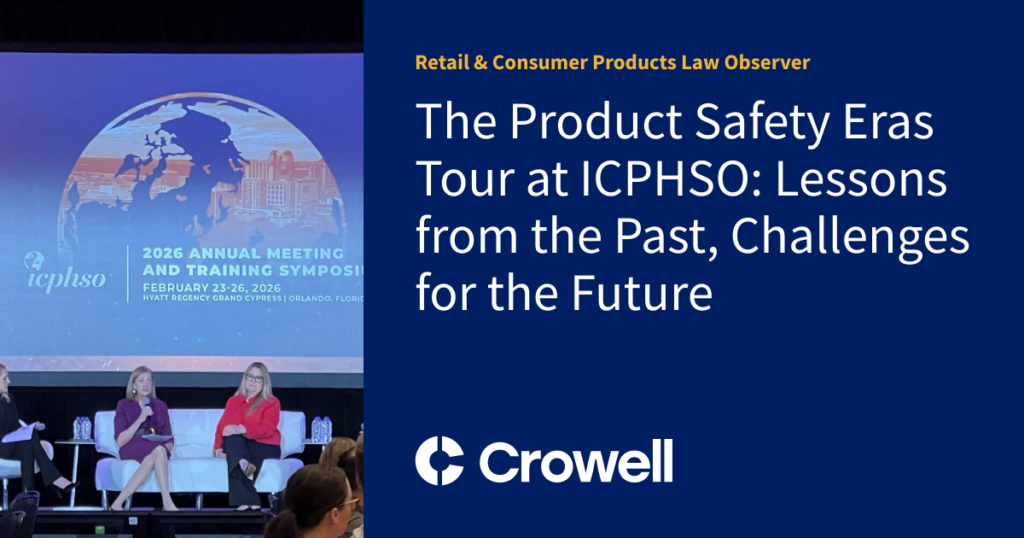
What does Taylor Swift have to do with product safety? According to the panelists who took the stage for the first plenary session at the ICPHSO Annual Meeting & Training Symposium, quite a lot. As the opening lyric reminded the room, looking backward may be the only way to look forward.
Moderated by Molly Lynyak of ASTM International and featuring Joan Lawrence of The Toy Association, Cheryl Falvey of Crowell & Moring, and Dana Baiocco of Clyde & Co., the panel walked through more than five decades of product safety history — and drew some sharp lessons for where the industry goes next.
The story of product safety in the United States begins in the 1970s — a time when, as the panelists noted, we were all relatively naive about the risks posed by everyday consumer products — and the eventual establishment of the Consumer Product Safety Commission (CPSC) in 1972. Through the 1980s, Congress amended several acts to allow the CPSC to rely on voluntary standards rather than mandatory ones — an approach grounded in the belief that industry would substantially comply.
That approach worked, until it didn’t. A series of high-profile recalls in 2007 involving pet food, infant formula, and toys with excessive lead paint exposed a critical breakdown in the global supply chain and set the stage for the next era.
The Consumer Product Safety Improvement Act of 2008 (CPSIA) marked a fundamental shift: Congress moved to mandate compliance rather than rely on voluntary standards, introducing mandatory testing and certification requirements and directing the CPSC to work with Customs and Border Protection to enforce those requirements at the ports.