
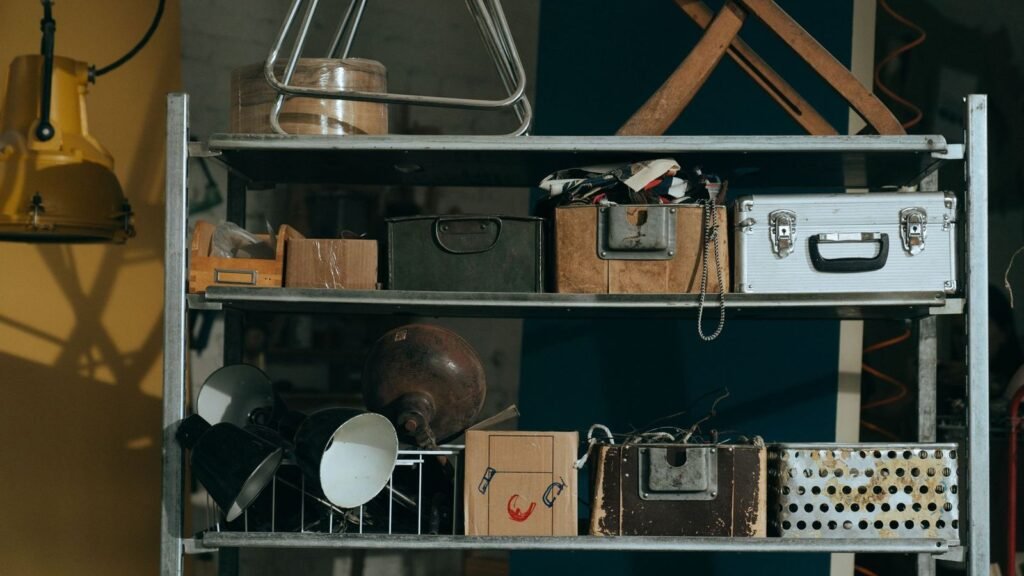
The best puppy storage rack for garages is not simply the tallest shelf unit that fits beside the car. Picture the usual after-walk drop zone: a muddy towel, a folded playpen, a bag of training pads, a hose attachment, a grooming tote, and a leash that needs to be ready again tomorrow morning. A garage rack can clear that pile from the floor, but it has to work around dust, damp shoes, temperature swings, tools, vehicle traffic, and anything a curious puppy could chew or knock over.
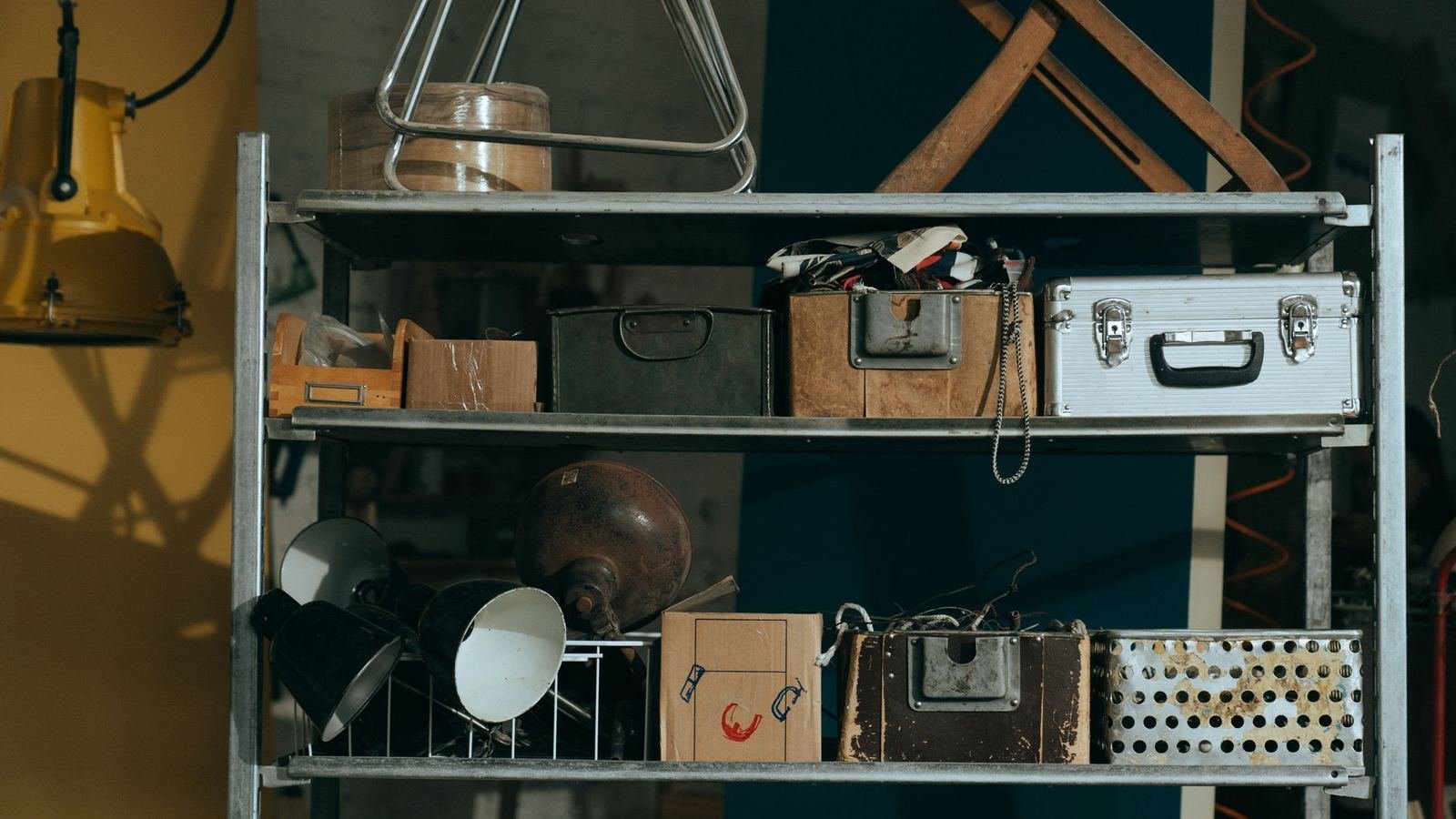
The goal is to move bulky outdoor and cleanup gear out of the house without turning the garage into a second, harder-to-manage clutter zone. Choose a rack with enough shelf depth for bins and folded equipment, then assign each level one job. Keep heavy items—such as a crate, unopened pad packs, or a water-filled paw-cleaning station—on the lowest shelf. Put the everyday leash, harness, poop-bag holder, and towel in one labeled grab bin at hand height, ideally near the door you use for walks.
Food and treats need a different plan. Do not leave bags on an open garage shelf where heat, moisture, pests, fumes, or nearby household chemicals could affect them. If garage conditions are consistently clean, dry, and moderate, use a tightly sealed container placed well away from chemicals; otherwise, keep food and treats indoors. Cleaning products, automotive fluids, paint, fertilizer, and loose tools should stay in a separate secured area that the puppy cannot reach.
Before buying a rack, measure the wall space with the garage door, vehicle doors, and walking path in mind. A useful starting layout is a narrow strip of floor tape marking the rack’s footprint plus enough room to lift out a bin without stepping into the car’s path. Freestanding wire shelving is easy to see through and dries quickly, while resin shelving is simpler to wipe down; enclosed utility shelving better contains visual clutter but can hide damp towels if they are put away wet. Follow the manufacturer’s instructions for placement or anchoring, and keep loose items inside lidded bins rather than directly on open shelves.
Choose Rack Size, Shelf Material, and Weight Capacity
For the best puppy storage rack for garages, start by measuring the usable wall space—not just the empty-looking area. Account for the car door swing, the path to the bins or lawn equipment, and at least a clear walking lane to reach the rack. Then list the bulky items you actually want to move: a folded crate or playpen, training-pad packs, towels, a portable gate, outdoor toys, and cleanup tools. Choose a rack that holds those items without stacking them so high that you must pull several things down to reach one leash.
Put the heaviest, least-used items on the lowest shelf. A folded metal crate, large pack of pads, or sealed bin of spare towels is safer near the floor than overhead. Reserve a waist-to-chest-height shelf for daily walk supplies in a handled bin: leash, harness, poop bags, towel, and paw-wiping cloths. Keep the rack away from the puppy’s reach, and do not use open shelving for food or treats if the garage is hot, damp, dusty, accessible to pests, or used for chemicals.
- Freestanding wire shelving: Choose this when airflow and easy cleaning matter. It suits dry towels in a bin, folded playpens, outdoor gear, and washable containers, but small items can tip through or collect dust unless they sit in solid-sided bins.
- Resin shelving: Choose this for a damp or messy garage corner. Solid shelves are easier to wipe after muddy outings and support bins well, though the shelf dimensions may be less flexible for a bulky crate or tall equipment.
- Enclosed utility shelving: Choose this when tools, cleaners, or loose items share the garage. Doors add a barrier, but check that the unit is stable, that latches work reliably, and that the puppy cannot open it or reach items through gaps.
A practical setup might use a rack about the width of one garage wall section: a bottom shelf for a folded playpen and pad packs; a middle shelf for two labeled bins, one for outdoor gear and one for cleanup supplies; and an upper shelf for replacement towels and seasonal items. Hang the current leash and harness on a hook beside the rack rather than burying them in a bin. This keeps the daily walk routine separate from the bulk-storage zone.
Avoid choosing by total shelf count alone. Compare the manufacturer’s stated load limit for each shelf and for the entire unit, then leave room below that limit rather than loading every shelf to its maximum. Follow the manufacturer’s instructions if anchoring is required or recommended when it matches your constraints. Adjust the layout when the puppy grows, the crate size changes, or a shelf becomes a catch-all: move frequently used gear down, contain loose supplies in lidded bins, and relocate food and treats indoors when garage conditions are not consistently cool, dry, clean, and chemical-free.
Best Rack Layout for Daily Gear and Bulky Supplies
The best puppy storage rack for garages gives each category a fixed place while keeping the puppy away from loose gear, damp supplies, and household chemicals. Treat the rack as a garage-only station for outdoor, cleanup, travel, and oversized items—not as the default home for food or treats. Garage heat, moisture, dust, pests, and nearby automotive or lawn products can make that a poor storage spot unless conditions are consistently clean, cool, dry, and separate from chemicals.
Set up the rack by frequency of use: items needed at the door go at hand height, heavy items stay low, and occasional bulky items go higher. If the manufacturer’s instructions call for anchoring, follow them. A rack that shifts when a crate or folded pen is pulled down is not a good daily setup.
- Grab-and-go middle shelf:
Grab-and-go middle shelf — shop optionsSee on Amazon
Reserve the shelf between knee and shoulder height for the items used on every walk: a small handled tote for leashes and harnesses, a lidded bin for poop-bag rolls and paw wipes, and a shallow tray for a drying towel. Choose a tote with solid sides rather than an open wire basket so small items do not fall through or collect garage dust. Put a hook rail or two individual heavy-duty utility hooks on the wall beside the rack for the current leash and harness; this prevents a rushed morning search through bins.
- Low heavy-duty shelf:
Low heavy-duty shelf — shop optionsSee on Amazon
Use the bottom shelf for bulky, stable supplies such as a folded exercise pen, travel crate, ramp, unopened training-pad packs, or a large waterproof tote holding outdoor toys. Shop for a rectangular, latching polypropylene tote with a flat lid that can support light stacking. Keep the tote fully on the shelf rather than extending into the car path. Heavy items are safer and easier to retrieve low down, and the closed tote keeps loose balls, fetch toys, and spare towels together.
- Wet-cleanup zone:
Wet-cleanup zone — shop optionsSee on Amazon
Assign one shelf or one side of a shelf to a removable plastic wash tub for muddy towels, a boot tray, and a small caddy of puppy-specific cleanup tools. A high-sided utility tray contains drips from rain gear until it can be brought indoors to wash. Do not store cleaning chemicals in this caddy. Keep chemicals in their original containers, separate from puppy supplies, and secured according to their labels—ideally in a locked cabinet away from the rack and the puppy’s reach.
- Upper seasonal shelf:
Upper seasonal shelf — shop optionsSee on Amazon
Place less-used items overhead: a spare crate cover, winter coat, car-seat cover, extra long line, or camping gear. Use clear, latching bins with large labels such as “CAR,” “RAIN,” or “PEN.” Avoid overfilling high shelves with dense bags or loose equipment. The goal is to lift down one contained bin, not to tug at a pile while standing beside a vehicle.
For a simple one-wall setup, picture a four-shelf resin or coated-wire rack near the garage entry: the middle shelf holds the walk tote and towel tray; the lowest shelf holds the folded pen and lidded outdoor-toy tote; the next shelf up handles cleanup tools; and the top shelf stores seasonal bins. A resin shelving unit is easy to wipe after muddy days, while wire shelving allows airflow around damp items but benefits from solid shelf liners or bins for small supplies. Enclosed utility shelving offers more dust protection, but only choose it if it does not encourage storing food beside garage chemicals or temperature-sensitive supplies.
Before buying extra containers, stand at the garage door with the leash in hand and check the route to the rack. Daily gear should take one step to reach. Bulky items can take a little longer, as long as they are contained, low, and clear of tires, tools, and the door swing.
When a Rack Is Not the Right Storage Solution
The best puppy storage rack for garages is only a good choice when the garage can keep the items dry, separated from hazards, and easy for an adult to reach during the daily routine. A rack is useful for bulky gear such as a folded playpen, spare towels, outdoor toys, an unused crate divider, and unopened cleanup supplies. It is not the right home for anything that could be affected by garage heat, dampness, pests, vehicle fumes, or nearby chemicals.
Keep puppy food and treats indoors unless you have a consistently dry, temperature-stable area and a sealed, pest-resistant container that is well away from chemicals. If the garage is also where you store paint, fertilizer, fuel, automotive fluids, or pest-control products, do not rely on an open rack to separate them from puppy belongings. A closed cabinet in another location, or a dedicated indoor food-storage area, is the safer and simpler choice.
For the coming week, try a short reset instead of moving every puppy item at once:
- Place only bulky, outdoor, and backup cleanup supplies on the garage rack.
- Keep the leash, harness, poop bags, and one clean towel in the spot you naturally pass on the way out, such as an entry hook or closed bin by the interior door.
- Put loose items into lidded containers so a curious puppy cannot scatter them if the garage door is open.
- Check that no puppy supplies share a shelf, bin, or spill path with household chemicals, tools, or car-care products.
- After one week, remove anything you did not use and return it to a more suitable room rather than letting the rack become a catch-all.
For example, a family with one puppy might store the folded exercise pen, spare training-pad packs, washable boot towels, and a sealed bin of backup poop-bag rolls in the garage. The puppy’s meal food stays inside, while the walk set remains by the door. That split prevents the garage rack from becoming the place where essential daily gear disappears behind larger items.
- Lidded utility bin: Use one for loose cleanup supplies and small outdoor accessories that would otherwise fall through wire shelving or collect garage dust.
- Indoor daily-gear station: Use hooks or a small closed container near the exit for the harness, leash, and refillable bag holder you need every day.
If a rack feels too exposed, crowded, or close to garage hazards, choose enclosed utility shelving or keep fewer puppy supplies in the garage. Your calm next step: stand at the garage door with one empty bin and collect only the bulky puppy items that are safe to store there; leave food, treats, and daily walking gear in their better locations.
What you’ll actually use
These are the pieces this setup actually uses. If one does not earn a place in your home, leave it off the list.
- Chew Toys: Keep this where best puppy storage rack for garages actually happens, and skip it if you already have a version that works.
- Food Mat: Keep this where best puppy storage rack for garages actually happens, and skip it if you already have a version that works.
- Portable Food Container: Keep this where best puppy storage rack for garages actually happens, and skip it if you already have a version that works.
FAQ
What should I know about choose rack size, shelf material, and weight capacity?
For the best puppy storage rack for garages , start by measuring the usable wall space—not just the empty-looking area. Account for the car door swing, the path to the bins or lawn equipment, and at least a clear walking lane to reach the rack.
What should I know about best rack layout for daily gear and bulky supplies?
The best puppy storage rack for garages gives each category a fixed place while keeping the puppy away from loose gear, damp supplies, and household chemicals. Treat the rack as a garage-only station for outdoor, cleanup, travel, and oversized items—not as the default home for food or treats.
When a Rack Is Not the Right Storage Solution?
The best puppy storage rack for garages is only a good choice when the garage can keep the items dry, separated from hazards, and easy for an adult to reach during the daily routine. A rack is useful for bulky gear such as a folded playpen, spare towels, outdoor toys, an unused crate divider, and unopened cleanup supplies.