
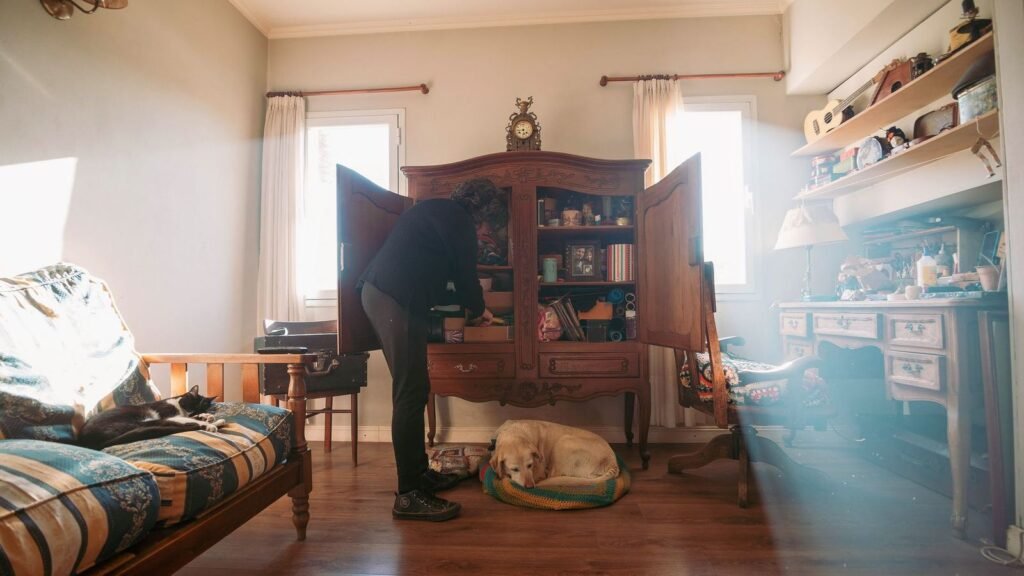
The puppy gear cabinet vs bookcase choice usually begins in a busy spot: the leash is draped over a chair, food scoops and training treats have taken over a kitchen counter, and a toy basket is slowly spreading into the hallway. You need one piece of furniture that can hold walk supplies, food accessories, toys, grooming tools, and cleanup items without making the room look like a permanent puppy staging area. The better option is not automatically the one with doors or the one with the most shelves. It depends on what you reach for every day, where the unit will sit, and what your puppy can reach, pull down, chew, or open.
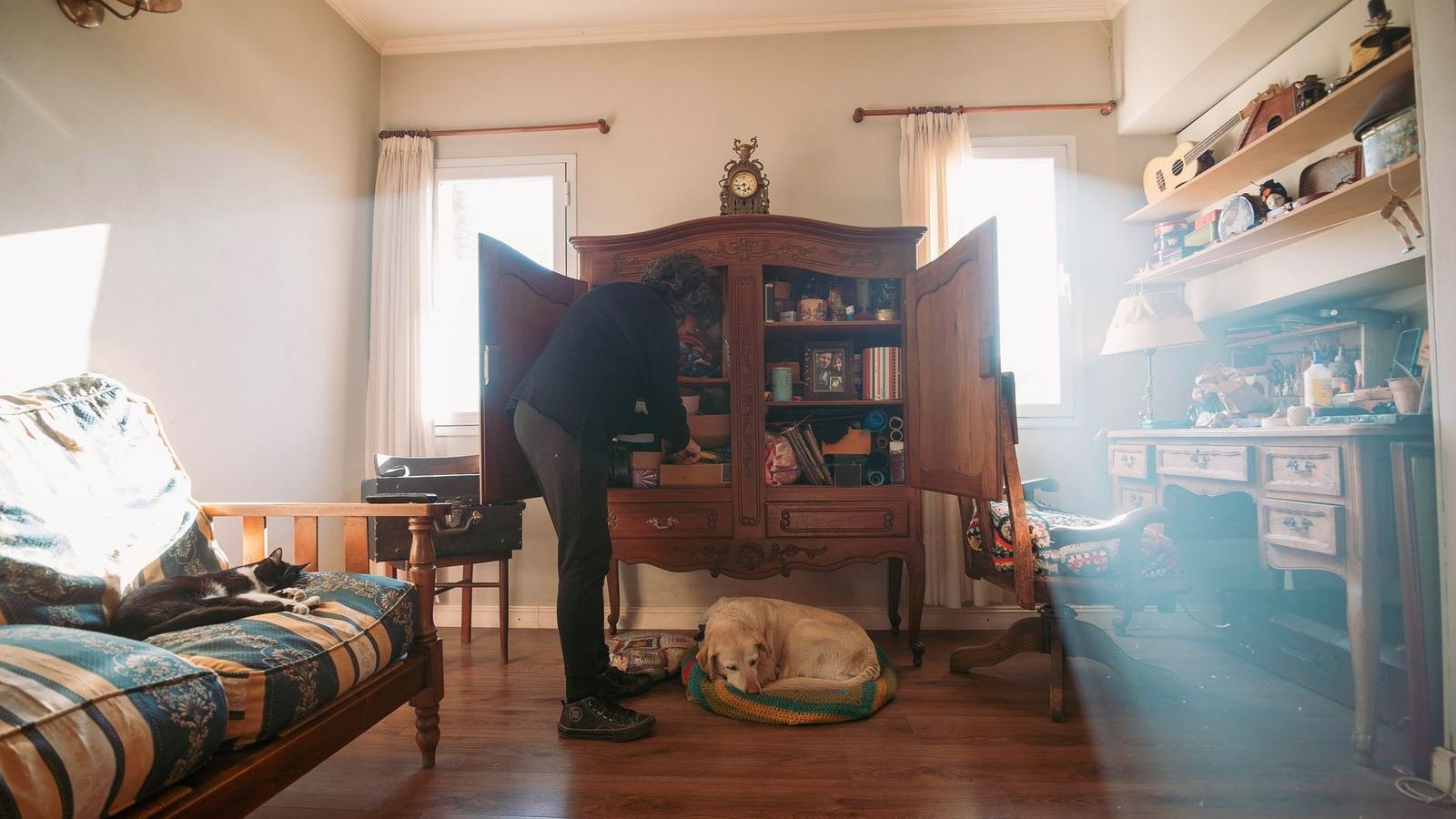
A closed cabinet creates a calmer visual boundary. It can hide spare towels, unopened waste-bag rolls, grooming supplies, and the less tidy backup items that tend to collect during the first months with a puppy. Doors are especially useful when the storage unit is in a living room, open-plan kitchen, or entryway where visible supplies quickly feel like clutter. But a cabinet only adds safety when its doors close securely, risky items are stored high or secured inside, and the furniture is stable. Cleaning products, medications, loose treats, sharp grooming tools, and small swallowable items should stay secured and out of puppy reach.
An open bookcase makes routine gear faster to grab. A hook, basket, or upper shelf can keep the leash, harness, poop bags, and a drying towel together near the door; lower bins can hold a small rotation of toys. The tradeoff is that every item remains visible, and a curious puppy may treat low shelves as a convenient place to investigate. A bookcase can work well when its lower shelves hold only puppy-safe, washable items and the unit is anchored if it is tall or could tip when pulled.
Start with a simple shelf test before loading either option: sit or kneel at your puppy’s height and look at the lowest two shelves. If you would not be comfortable leaving an item there while you answer the door or prepare dinner, it does not belong there. For a small entryway, for example, a cabinet might hold cleanup supplies and grooming tools behind closed doors, while one reachable upper area holds the harness and leash. A bookcase can serve the same routine if the low shelves contain only a toy bin and towel basket, with treats and tools stored well above puppy level.
The goal is not to hide every puppy item. It is to make the next walk, meal, or cleanup easy without leaving tempting or messy supplies within reach. Choose the unit that supports that daily rhythm in the room you actually use, then assign its lowest storage to the safest items first.
Choose by Room, Routine, and Puppy Access
For the puppy gear cabinet vs bookcase decision, start with the room and the supplies you reach for every day. Choose a closed cabinet when the unit will sit in a busy entryway, kitchen, or living room and needs to hide visual clutter while keeping potentially tempting items out of sight. Choose an open bookcase when an adult can maintain simple, visible zones and the shelves can stay clear of anything unsafe for a curious puppy.
First, gather the gear that must live in this one unit: walk supplies, feeding accessories, toys, grooming tools, and cleanup items. Then separate it into “adult-only” and “safe to leave visible” groups. Cleaning products, medications, loose treats, sharp grooming tools, and small items a puppy could swallow should be secured behind a closed door and placed high enough to be out of reach. The AKC also advises puppy-proofing accessible areas by keeping hazardous household items put away.
- Choose a cabinet: Use one if you want a calmer-looking room, need to contain several mismatched supply categories, or have a puppy that investigates shelves, mouths containers, or pulls at loose items. A cabinet is most useful when its doors close securely and the furniture is stable in its chosen spot.
- Choose a bookcase: Use one if quick grab-and-go access matters more than hiding supplies, such as beside the door used for walks. Keep only sturdy, low-risk items on reachable shelves: a washable toy bin, folded towels, an empty leash hook area above puppy height, or sealed containers that an adult can access easily.
- Avoid low open storage: Do not place chewable toys, treat bags, grooming scissors, poop bags, wipes, or food scoops loosely on bottom shelves. An open bookcase becomes inconvenient when every shelf needs to be cleared before the puppy is unsupervised.
For example, in a small apartment entryway, a closed cabinet can hold the leash and harness in an upper section, food scoop and sealed feeding accessories on a middle shelf, and cleanup supplies behind a door. Put a small, approved toy basket on top only if the puppy cannot reach it. In a larger mudroom where adults leave for several walks each day, a bookcase can work if the upper shelves hold walk gear and lower shelves contain only a single toy basket and folded towels.
Adjust the setup when your puppy grows, learns to open doors, reaches a new shelf height, or begins treating the unit as a chewing target. Neither furniture type is automatically safer or more convenient: a tall cabinet or bookcase can tip if it is overloaded or climbed, so anchor tip-prone furniture according to the manufacturer’s instructions and keep heavy items low. If maintaining open shelves starts creating daily piles, move to a cabinet or add closed storage for the adult-only categories.
What Works Best on Open Shelves
In the puppy gear cabinet vs bookcase decision, an open bookcase works best when the shelves hold items you use often, can identify at a glance, and can safely leave within reach. It is usually the faster option for morning walks and quick toy pickup, but it needs firmer category boundaries than a cabinet. Without bins, shelf limits, and a plan for puppy access, an open unit can turn useful gear into a tempting pile.
Use the bookcase for the visible, low-risk part of your setup, and reserve secured storage elsewhere for anything a puppy should not reach. The ASPCA notes that dogs may chew objects that are available to them, so do not treat a low open shelf as safe storage for small, sharp, edible, or chemical items.
- Daily walk shelf:
Daily walk shelf, shop optionsSee on Amazon
Dedicate the top shelf or an adult-height shelf to the harness, leash, collar, waste-bag rolls, and a small towel. A bookcase with a top shelf at least above your puppy’s standing reach makes these items quick to grab without leaving them on an entryway chair. Add a shallow, handled basket, roughly 10 to 12 inches deep, so spare bags and a light rain cover stay together instead of sliding behind the unit.
- Contained toy shelf:
Contained toy shelf, shop optionsSee on Amazon
Put a single open-front fabric bin or low-sided woven basket on one middle shelf for the small group of toys currently in rotation. This gives your puppy an appropriate place to retrieve a toy while keeping the rest of the collection out of sight. Skip loose piles of squeakers, tennis balls, and rope toys; a basket makes the shelf easier to reset and helps you notice when a toy needs to be removed because it is damaged.
- Food-accessory shelf:
Food-accessory shelf, shop optionsSee on Amazon
Use a lidded plastic bin or a rectangular handled caddy for clean bowls, a measuring scoop, placemats, and unopened accessories. Keep actual food and loose treats in closed, puppy-inaccessible storage rather than on an open shelf. A bookcase can still support the feeding routine, but it is better for the tools around meals than for anything edible that may draw chewing or scavenging.
- Grooming and cleanup zone:
Grooming and cleanup zone, shop optionsSee on Amazon
Choose a bookcase with at least one upper shelf that can hold two matching opaque bins with fitted lids. Put the brush, nail-care tools, and spare towels in one; keep cleanup supplies in the other only if the contents are secured and placed fully out of puppy reach. Cleaning products, medications, sharp grooming tools, and small swallowable pieces belong behind a latched cabinet door or in another locked location, not in a low open bin.
For example, a renter with a narrow entryway could use a 30- to 36-inch-wide, three- or four-shelf bookcase: walk basket on the top shelf, feeding caddy on the next shelf, toy basket on the third, and an empty bottom shelf for a washable paw towel basket. The grooming kit and cleanup supplies would move to a closed kitchen or utility cabinet. This arrangement keeps the visible unit calm while limiting what the puppy can investigate.
A bookcase is not automatically the more convenient choice. If the unit must hold every category, including treats, cleaning supplies, and grooming tools, a cabinet usually creates a cleaner boundary. Likewise, a cabinet is not automatically safer: doors left ajar, weak latches, or a tall unanchored unit can create their own problems. Whichever style you choose, anchor tall or tip-prone furniture according to its manufacturer’s instructions, keep heavy items on lower shelves, and avoid placing tempting items where your puppy can reach them. AKC puppy-preparation guidance also emphasizes puppy-proofing the home before your new dog explores it.
Safety Checks Before You Load Either Unit
For the puppy gear cabinet vs bookcase decision, safety comes from the complete setup, not simply from choosing doors or open shelves. A closed cabinet can still be easy for a puppy to open or pull against, while a bookcase can work well when it is stable, thoughtfully placed, and stocked only with safe, low-risk items.
- Stability first: Place the unit on a level floor and use the manufacturer’s anti-tip hardware when the furniture is tall, narrow, or likely to be bumped. Do not rely on heavy bins on lower shelves as a substitute for anchoring.
- Secure risky supplies: Keep cleaning products, medications, loose treats, sharp grooming tools, and small items that could be swallowed inside a secured cabinet or in a latched container placed well above puppy reach.
- Check door and shelf access: Test cabinet doors and drawers at puppy height. If a nose or paw can open them, add an appropriate child-resistant latch. On a bookcase, avoid leaving dangling leash clips, treat bags, or loose brush parts on low shelves.
- Leave a clear approach: Keep the floor in front of the unit open. A crowded entryway makes it easier to drop keys, poop bags, or grooming tools where a curious puppy can grab them.
Try one simple routine this week: load only the supplies you use during a normal seven-day stretch, then return each item immediately after a walk, meal, play session, or cleanup. For example, a small-entryway household might keep the harness and leash in a high closed compartment, place a clearly labeled toy bin on a low open shelf, and store grooming and cleanup supplies behind a latched door. If the open shelf becomes a catch-all by day three, a cabinet is likely the calmer fit. If you repeatedly leave cabinet doors open during rushed outings, an orderly bookcase with safe, limited contents may suit your routine better.
The goal is not to hide every puppy item. It is to give each necessary item a dependable home without turning your room into a pile of gear or leaving tempting supplies within reach. AKC’s new-puppy preparation guidance also emphasizes puppy-proofing the home before access expands, which includes putting potentially hazardous household items away.
Next step: Stand where you usually leash up your puppy tonight, choose the one unit location that is easiest to reach without blocking a doorway, and check whether it can be safely anchored before moving any supplies into it.
What you’ll actually use
These are the pieces this setup actually uses. If one does not earn a place in your home, leave it off the list.
- Chew Toys: Keep this where puppy gear cabinet vs bookcase actually happens, and skip it if you already have a version that works.
- Food Mat: Keep this where puppy gear cabinet vs bookcase actually happens, and skip it if you already have a version that works.
- Waste Bags: Keep this where puppy gear cabinet vs bookcase actually happens, and skip it if you already have a version that works.
FAQ
What should I know about choose by room, routine, and puppy access?
For the puppy gear cabinet vs bookcase decision, start with the room and the supplies you reach for every day. Choose a closed cabinet when the unit will sit in a busy entryway, kitchen, or living room and needs to hide visual clutter while keeping potentially tempting items out of sight.
What Works Best on Open Shelves?
In the puppy gear cabinet vs bookcase decision, an open bookcase works best when the shelves hold items you use often, can identify at a glance, and can safely leave within reach. It is usually the faster option for morning walks and quick toy pickup, but it needs firmer category boundaries than a cabinet.
What should I know about safety checks before you load either unit?
For the puppy gear cabinet vs bookcase decision, safety comes from the complete setup, not simply from choosing doors or open shelves. A closed cabinet can still be easy for a puppy to open or pull against, while a bookcase can work well when it is stable, thoughtfully placed, and stocked only with safe, low-risk items.