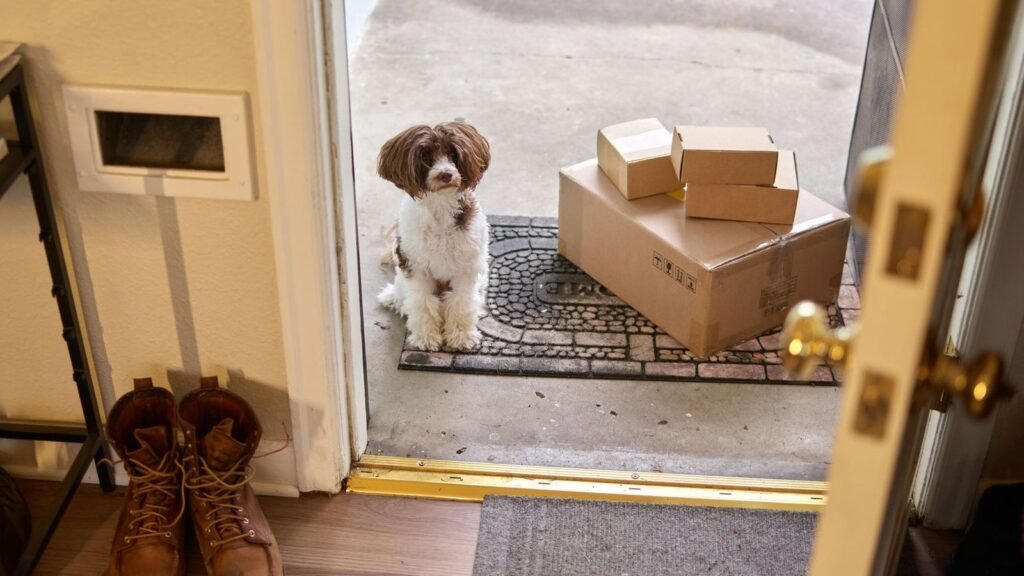
Fixing puppy supply storage near the front door starts with the moment that usually creates the mess: you are trying to get out quickly, the leash is under a shoe, the harness is draped over a chair, and yesterday’s damp towel is still sitting beside the mat. A useful entry station does not need to hold every puppy item you own. It needs to make one short routine easier: clip on, grab waste bags, head out, then contain the muddy or wet gear when you come back.
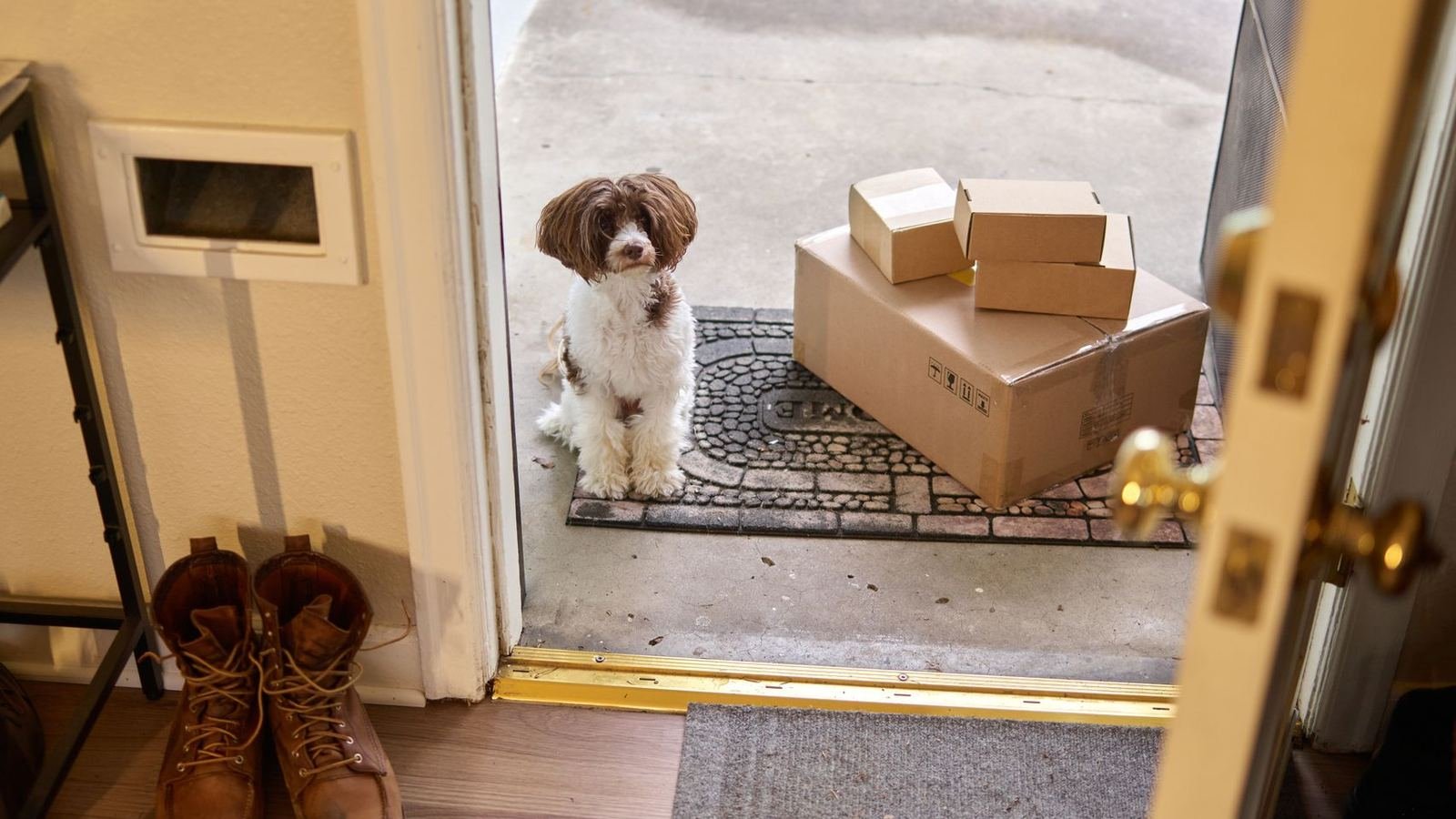
The pile grows because clean supplies and dirty walk supplies are being treated as one category. Leashes, harnesses, waste bags, and a small amount of securely stored training treats need to be easy for an adult to reach on the way out. Towels, paw wipes, rain gear, and a muddy leash need a separate landing place on the way in. Shoes add another complication, especially in a narrow hallway or shared apartment entry, where one loose harness or tipped basket can turn the doorway into an obstacle.
Begin by claiming one small zone beside the door rather than spreading supplies across the floor, bench, and nearest table. For example, use two sturdy wall hooks at adult height for the everyday leash and harness, then place a lidded bin or cabinet just below or beside them for the return-home items. Keep a washable towel inside the bin, not hanging where it brushes against coats or bags. Waste-bag rolls can stay in a small closed container or clipped to the leash; treats belong in a closed, puppy-inaccessible container rather than an open bowl or pocket-level basket.
This setup has a simple tradeoff: wall hooks keep departure gear visible and fast to grab, while the closed bin keeps damp towels, chewable accessories, and visual clutter out of the traffic path. If there is no safe floor space at all, an over-door organizer can hold lightweight adult-accessible supplies, but it is a poorer choice for wet towels or anything that could fall when the door moves. Cleaning products, medications, and loose treats should stay in a securely closed, puppy-inaccessible cabinet elsewhere, not in the quick-grab station.
Before adding a new basket or rack, clear the floor immediately inside the door. The station should support the doorway routine without asking people to step around it. That one boundary, gear on the wall or behind a lid, never in the walking lane, keeps the entry calmer even on rushed, muddy mornings.
Measure the Entry Before Choosing Storage
For fixing puppy supply storage near the front door, measure the usable space before moving gear into bins, baskets, or wall hooks. Start with the clear path from the door into the home: keep that route open when the door is fully open and when someone is carrying groceries, holding a leash, or wiping wet paws. In a narrow hall, the best puppy station is usually a small vertical setup rather than a deep floor-level pile.
First, use a tape measure to note three numbers: the wall width beside the door, the available depth without narrowing the passage, and the height you can safely use for hooks or a wall-mounted holder. Then place painter’s tape on the floor to outline any proposed bin or shoe tray. Live with that outline for a day. If it catches your foot, blocks a closet, or makes the door hard to open, the storage is too large for that spot.
- Leave-zone measurement: Reserve only enough room for the items needed to get out the door: one leash, one harness, a refillable waste-bag holder, and a small secured treat container. A pair of hooks or a narrow wall rail can hold the leash and harness above shoe level.
- Return-zone measurement: Set aside a separate, easy-to-clean area for damp towels and muddy-walk items. This may be a shallow lidded bin just inside the entry, provided it does not reduce the walking path. If there is no safe floor depth, use a washable bag on a hook until the towel can go to the laundry.
- Containment check: Keep loose treats, chewable gear, cleaning products, and medications out of open containers at puppy height. The ASPCA notes that puppies may chew household items, so secure storage and supervision matter around tempting objects such as bags, fabric, and plastic containers.
A workable example for a 36-inch-wide apartment entry is a 10- to 12-inch-wide section of wall with two hooks placed above the puppy’s reach, plus one small lidded bin tucked against the wall for a towel and used paw-wipe supplies. Shoes belong on the opposite side only if they do not crowd the route; otherwise, move everyday shoes to a closet or bedroom. The tradeoff is that this station holds only daily essentials, not every toy, grooming tool, or backup roll of bags. Keeping it intentionally small prevents the front door from becoming the household’s overflow shelf.
Avoid choosing storage based only on how much it can hold. A large open basket may look convenient, but it can invite dropped harnesses, loose treats, and wet towels to mix together. Adjust the setup when the return pile regularly stays out overnight, when the harness no longer fits comfortably on its hook, or when your puppy starts investigating the station. At that point, reduce what stays by the door, raise accessible items, and move extras to a closed cabinet or another supply area.
Keep Dirty Walk Gear Separate From Clean Supplies
When fixing puppy supply storage near the front door, give every walk item a direction: clean gear moves out with you, while wet or muddy gear comes back to a contained return zone. This simple split prevents a damp leash from landing on the treat pouch, a used towel from covering spare waste bags, or a muddy harness from becoming tomorrow morning’s surprise. The goal is not to make the entry completely puppy-proof; it is to keep tempting, chewable, and unsafe items secured while making the walk routine easier to reset.
-
Separate the supplies into “leave” and “return” groups before installing anything. Set aside the items you need at the start of a walk: leash, harness, filled waste-bag holder, keys, and a small sealed treat container if you use treats outdoors. Make a second group for items that may come home dirty or damp: used towel, rain jacket, paw-wipe cloth, muddy leash, and emptied treat pouch.
Why: A single hook or basket turns into a mixed pile because clean and dirty items have no assigned destination. Sorting by the direction an item travels creates a routine that still works when you return tired, carrying mail, or managing a wiggly puppy.
Done looks like: You can point to every entry item and place it in either the departure group or the return group without creating a third “not sure” pile.
Timing and pitfall: Do this once when the puppy is resting, before buying bins or hooks. Do not classify all towels as clean supplies; a towel used for paws should be treated as return gear until it reaches the laundry.
-
Create one elevated departure point for dry, ready-to-use gear. Use two or three sturdy wall hooks, positioned away from the door swing and high enough that your puppy cannot mouth the hanging straps. Assign one hook to the everyday leash and harness, one to a backup leash or rain layer, and leave one hook empty for temporary use.
Why: Hanging dry gear lets it stay visible without spreading onto the floor, shoe rack, or door handle. An empty hook matters on rainy days because it gives a just-used item a short-term landing place instead of forcing it into the clean setup.
Done looks like: You can clip on the leash and pick up the harness in under a minute, with no searching under shoes or moving a pile from the entry chair.
Timing and pitfall: Add the hooks only after deciding where people naturally reach while leaving. Avoid hanging a full treat bag, loose waste bags, or a chewable toy on low hooks; puppies may grab dangling items, and loose treats can spill.
-
Place a lidded return bin beside, not in front of, the exit route. Choose a small, wipeable bin with a secure lid for the damp towel, used paw cloths, and muddy-walk accessories. Put it against a wall or under a narrow console only if the lid can open without blocking the path. The bin is a temporary stop, not permanent storage.
Why: Wet fabric and muddy gear need containment before laundry, especially in a shared apartment entry where there may be no utility sink nearby. A lid also keeps a puppy from investigating a smelly towel or chewing a wet strap when unsupervised.
Done looks like: After a wet walk, every damp item can go into one closed bin in about 30 seconds, and the floor is clear enough for the door to open fully.
Timing and pitfall: Empty the bin after the last walk of the day, or immediately if the contents are especially wet. Do not use this bin for cleaning sprays, medications, or other household chemicals; store those securely elsewhere and out of puppy access.
-
Give shoes their own closed or separated zone. Keep household shoes on a tray, behind a cabinet door, or in a dedicated shoe compartment that is not also the puppy station. If the entry is narrow, place the shoe storage on the opposite side of the doorway from the return bin.
Why: Shoes carry outdoor dirt, and loose laces, insoles, and straps can be appealing to a puppy that is waiting for a walk. The ASPCA notes that destructive chewing can involve household objects, so reducing access to tempting loose items is a practical part of an organized entry routine.
Done looks like: Shoes do not share a basket with the harness, treats, towels, or waste bags, and there are no loose laces trailing into the puppy’s reach.
Timing and pitfall: Reset shoes as soon as you come in, before removing the puppy’s harness. Avoid relying on an open shoe pile behind the door; it often becomes the first thing a curious puppy reaches while you are unlocking or answering the door.
-
Keep treats and refill supplies closed, dry, and away from the dirty zone. Store a small amount of walking treats in a tightly closed container on a high shelf, inside a latched cabinet, or in a closed pouch that is removed after each walk. Keep bulk waste bags, spare batteries for lights, and replacement accessories in a separate upper cabinet or closet rather than at floor level.
Why: Treat crumbs attract attention to the entry station, while refill supplies quickly become clutter when mixed with daily-use gear. Clean supplies stay cleaner and are easier to count when they are not sharing space with wet towels.
Done looks like: The departure point holds only today’s ready-to-use gear; refills and food-related items are closed and stored separately.
Timing and pitfall: Refill the waste-bag holder and treat pouch once a week, rather than leaving an open package by the door. Do not keep loose treats in an open bowl or basket, even if it seems convenient for quick departures.
-
Use a two-minute return reset after every walk. Bring the puppy inside, secure the leash and harness in the return spot if damp, place the towel in the lidded bin, return shoes to their zone, then hang only fully dry gear on the departure hooks. Once the puppy is settled, move wet items to laundry or hang them in an appropriate drying area.
Why: The return reset is what keeps a useful station from becoming another front-door pile. It also prevents dirty items from quietly migrating onto the clean hook area over several busy days.
Done looks like: Before you leave the entry, the floor has no leash, towel, pouch, or shoe blocking the route, and tomorrow’s walk gear is easy to identify.
Timing and pitfall: Follow this order immediately after each walk, especially after rain or muddy park visits. The common mistake is hanging a wet harness with the dry one “just for now”; that shortcut is usually how the clean-and-dirty boundary disappears.
For a narrow apartment entry, a workable layout might be two wall hooks beside the door, a slim lidded bin under the nearest wall, and a closed shoe cabinet on the opposite side. This uses very little floor space, but it requires taking damp gear to laundry daily. If there is no safe floor space at all, an over-door organizer can hold dry, lightweight departure items above puppy reach, while dirty towels go directly to a laundry area. The tradeoff is convenience: an over-door setup keeps the floor open, but it is less useful for wet gear and should not become a place for heavy items, loose treats, or chewable supplies.
Worked Example: A Narrow Apartment Entry Setup
When fixing puppy supply storage near the front door, the goal is not to fit every puppy item into the entry. It is to make the next departure and return simple while preserving a clear route through the doorway. Picture a narrow apartment hall with 30 inches between the door swing and the opposite wall: the station needs to use vertical space first and keep only one contained item on the floor.
In this setup, place two sturdy wall hooks just inside the door, high enough that a puppy cannot mouth the dangling leash or harness. Use one hook for the ready-to-go leash and harness, and reserve the second for the damp towel that is currently drying. Below the hooks, use one lidded bin tucked against the wall, not in the walking line, for a washable paw towel and a sealed roll of waste bags. Store treats in a closed container on a high shelf or in a latched cabinet, rather than in the bin. Cleaning products belong in a separate secure cabinet, away from this quick-grab station.
These common mistakes can make even a small setup harder to use.
- Turning the floor into the station: A basket, shoes, leash, towel, and muddy-walk supplies gradually spread across the threshold. This fails because every return adds one more item, and the pile becomes something to step around while carrying a puppy or groceries. The better move is to limit the floor to one closed bin with a fixed footprint. Everything else should hang, go behind a closed door, or live elsewhere.
- Using an open basket for every supply: Open baskets are convenient for an adult, but they mix clean items with damp gear and can leave chewable or edible items within reach. The better move is to keep only non-chewable, low-risk walk items accessible. Put loose treats, grooming items, cleaning products, and spare supplies in closed storage outside the puppy’s access area. The ASPCA notes that chewing is a common dog behavior, so reducing access to tempting household items is a practical part of setting up the space.
- Giving each person a separate pile: In a shared entry, one person’s leash, another person’s shoes, and a puppy towel on the bench may seem organized at first. It fails because the puppy supplies have no single return location after a rushed walk. The better move is one clearly assigned “puppy return” spot: hook the leash, place the used towel in the bin or laundry, and restock waste bags only when the current roll is low.
- Choosing bulky furniture to hide the clutter: A deep cabinet or bench can hold more gear, but in a narrow hall it may make the entry feel tighter and interfere with the door or closet. The better move is a shallow wall-mounted solution plus a small lidded bin. If there is no safe floor space at all, an over-door organizer can hold sealed waste-bag rolls and adult-access-only supplies, provided it does not interfere with the door closing.
- Leaving wet gear on the hooks for days: Hanging a leash and harness is useful for the next walk, but keeping muddy or damp items there indefinitely turns the clean departure zone into a messy holding area. The better move is to make a simple decision after each walk: dry enough to hang, or dirty enough to go to the laundry or cleaning area. A second towel can take the place of the one being washed.
The tradeoff in this apartment layout is that it holds fewer extras at the door. That is helpful, not limiting: backup waste bags, seasonal coats, spare harnesses, and unopened supplies can live in a closet or another storage area. The entry stays dedicated to the few items needed during the two busiest moments of the day, leaving with the puppy and coming home again.
Adjust the Station as Your Puppy Grows
Fixing puppy supply storage near the front door works best when the setup follows your puppy’s current routine rather than staying fixed forever. For this week, aim for a simple pattern: take only walk-ready items out of the station, bring damp or muddy items back to the dirty side, and reset the area after each return. The station does not need to hold every puppy supply. It only needs to make the next trip outside easier.
At the end of each day, spend two minutes putting the entry back in order. Hang the leash and harness where they can dry without touching shoes. Refill the waste-bag holder. Move clean towels back into a closed drawer or lidded bin, and put used towels in the laundry. Return treats to a securely closed container kept out of puppy reach. Cleaning products, medications, and anything chewable should stay in a latched cabinet or another secure storage area, not in an open basket by the door.
- When your puppy is small: Keep the setup lean. One harness, one leash, waste bags, and a towel are usually enough at the door. Extra toys and backup supplies can live elsewhere.
- When walks get muddier: Give the return side more room. A washable tray or lidded bin for wet gear may become more useful than extra hooks.
- When gear gets larger: Replace crowded hooks rather than adding more. A larger harness or longer leash can make a once-neat wall rail feel overloaded.
- When chewing increases: Recheck what is within reach. ASPCA guidance on destructive chewing emphasizes managing access to tempting items, so do not rely on an open entry basket to keep supplies safe.
Picture a narrow shared entry: two wall hooks hold the active leash and harness, while a closed floor bin holds the muddy towel and used paw-wipe cloth until laundry day. Shoes stay on their own tray beside the wall, not under the hooks. The tradeoff is that the bin takes a little floor space, but it prevents wet gear from spreading across the entry. If there is no safe floor space, move the dirty-gear container to a nearby laundry area and keep only the hooks and waste bags at the door.
The calm next step is to stand at your front door tonight and remove one item that does not help with leaving or returning from a walk. Put it in its proper home, then use the newly cleared space for the one item you reach for first tomorrow morning.
What you’ll actually use
These are the pieces this setup actually uses. If one does not earn a place in your home, leave it off the list.
- Chew Toys: Keep this where fixing puppy supply storage near the front door actually happens, and skip it if you already have a version that works.
- Food Mat: Keep this where fixing puppy supply storage near the front door actually happens, and skip it if you already have a version that works.
- Waste Bags: Keep this where fixing puppy supply storage near the front door actually happens, and skip it if you already have a version that works.
FAQ
What should I know about measure the entry before choosing storage?
For fixing puppy supply storage near the front door , measure the usable space before moving gear into bins, baskets, or wall hooks. Start with the clear path from the door into the home: keep that route open when the door is fully open and when someone is carrying groceries, holding a leash, or wiping wet paws.
What should I know about keep dirty walk gear separate from clean supplies?
When fixing puppy supply storage near the front door , give every walk item a direction: clean gear moves out with you, while wet or muddy gear comes back to a contained return zone. This simple split prevents a damp leash from landing on the treat pouch, a used towel from covering spare waste bags, or a muddy harness from becoming tomorrow morning’s surprise.
What should I know about worked example: a narrow apartment entry setup?
When fixing puppy supply storage near the front door , the goal is not to fit every puppy item into the entry. It is to make the next departure and return simple while preserving a clear route through the doorway.