
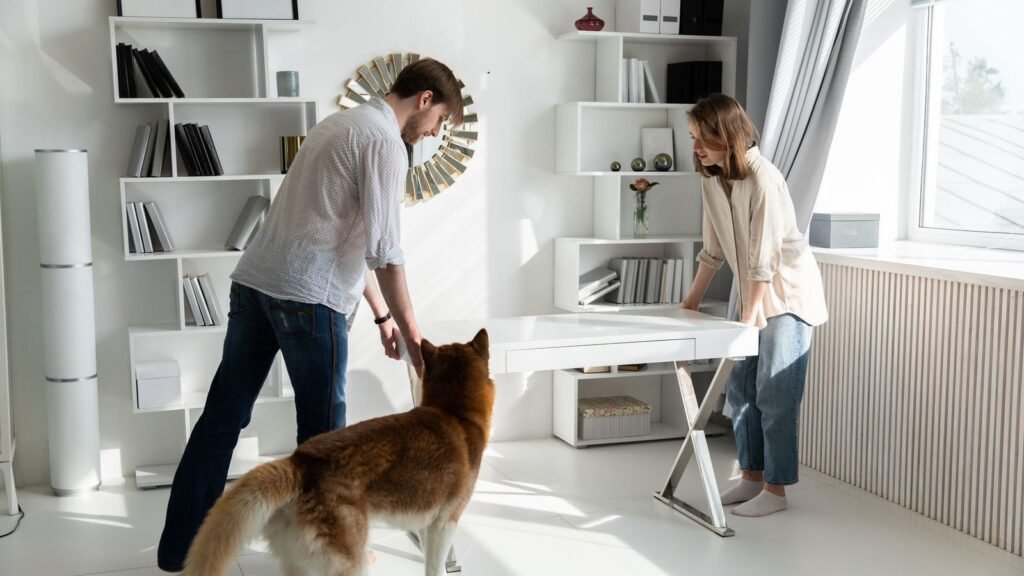
If you are working on best puppy gear organizer for living rooms, start with one practical change that improves day-to-day use in your actual space.
What to Look For in best puppy gear organizer for living rooms
Use decision criteria tied to best puppy gear organizer for living rooms: space, upkeep, how it fits your routine, and everyday usability.
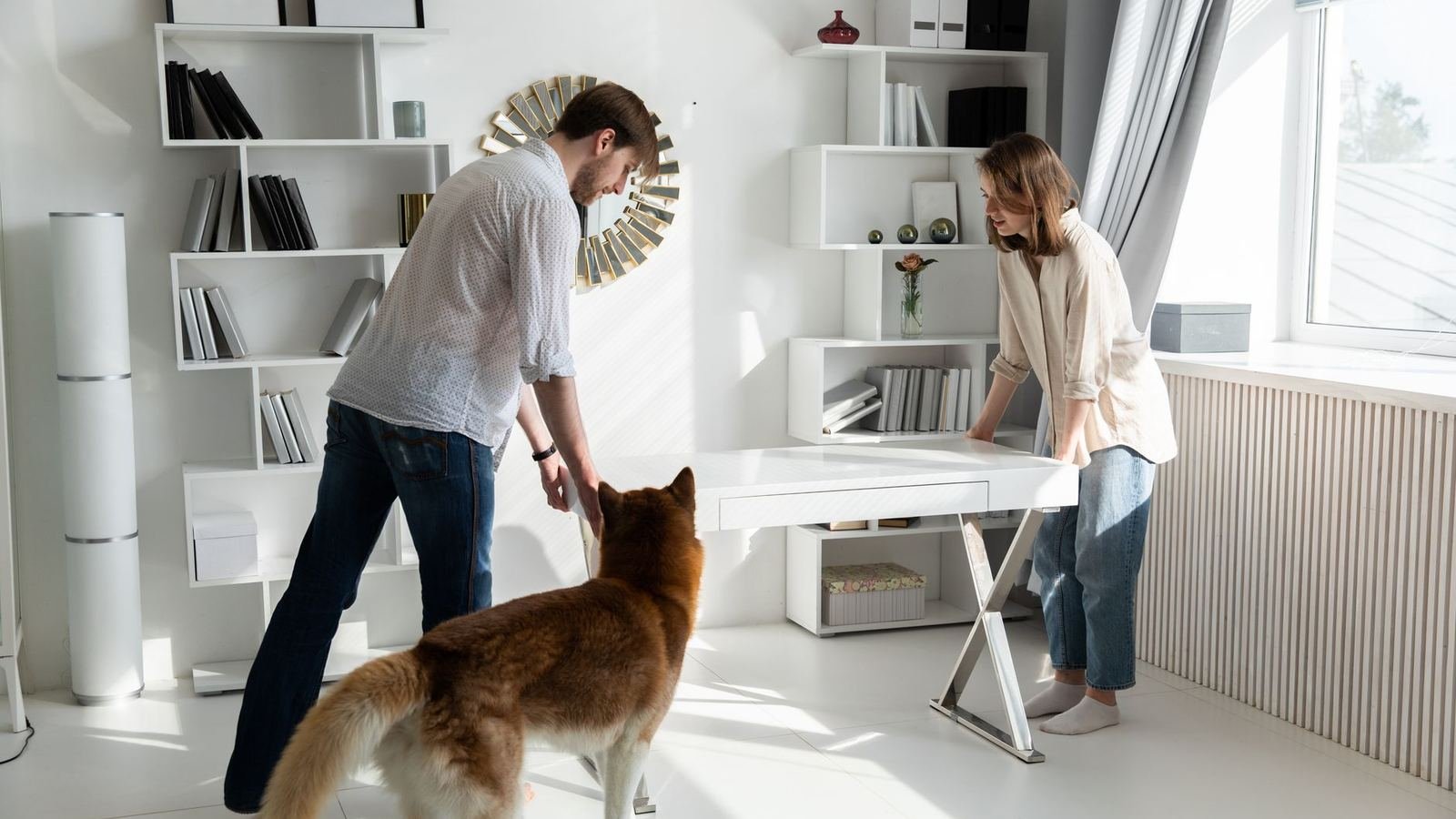
The practical goal is to give each type of gear a home based on how it is used. A limited selection of supervised toys can stay in an open basket near the puppy’s hangout. A folded blanket can live in a separate fabric bin or closed drawer, rather than becoming a catchall for toys and used towels. Walk gear belongs up high on a hook or in a shallow tray that an adult can grab on the way out. Cleanup supplies, grooming tools, and anything a puppy should not chew or spill need a closed compartment that is not treated as secure simply because it has a lid.
Start by standing where you normally sit and looking for the smallest useful footprint: the end of a media console, the space beside a sofa, or a narrow cabinet near the crate. Then use a simple three-zone setup: open for today’s supervised toys, raised for adult grab-and-go items, and closed for adult-only supplies. This prevents the common problem of putting everything at floor level just because the puppy spends time there.
For example, a compact organizer beside the sofa might hold three approved toys in one open basket, one clean blanket in a separate upper cubby, and a closed lower compartment for wipes, a brush, and cleanup items. Place the leash in a tray or on an adult-height hook above the unit. The tradeoff is intentional: fewer toys stay available at once, but the living room is easier to reset and you can see what needs washing, refilling, or putting away.
No basket, lid, or piece of furniture is automatically puppy-proof. A determined puppy may chew, tip, or reach storage that seemed out of the way. Keep hazardous items secured separately, and treat the living-room station as a daily-use organizer, not a place to leave every supply within reach.
Choose Open, Lidded, or Raised Storage
The best puppy gear organizer for living rooms uses more than one storage style: keep a small number of safe, supervised toys open and easy to reach; put blankets in a contained spot; and move cleanup supplies, grooming tools, and walk gear above puppy level or behind a closed door. Start by sorting everything currently left near the sofa or crate into three groups: puppy-access items, adult-use daily items, and adult-only supplies.
Avoid treating one large floor bin as the answer for every item. It quickly becomes a mix of dirty towels, chews, leash clips, brushes, and cleaning products, and it teaches a curious puppy that all living-room gear is available to investigate. Storage is not automatically puppy-proof: a determined puppy may chew a basket, tip a bin, or work at a lid. Keep anything hazardous or messy secured separately and out of reach. The ASPCA notes that chewing is common dog behavior and advises preventing access to items a dog should not chew.
- Open basket: Use this only for a limited rotation of currently supervised toys or one clean blanket. Choose a stable, low basket and reset it each evening. The tradeoff is convenience: your puppy can see the toys, but the contents can spread quickly if the basket is overfilled.
- Lidded bin: Use a closed bin for clean spare blankets, backup toy rotations, or less-frequent grooming basics. Put it beside the sofa only if the lid closes securely and the bin cannot easily be tipped. Do not rely on it for cleaning chemicals or other unsafe supplies.
- Narrow cabinet: Choose a cabinet with a closed lower compartment for adult-only cleanup items, lint rollers, wipes, and grooming tools. A cabinet keeps visual clutter down, but it needs to be stable, anchored when appropriate, and kept closed after each use.
- Elevated console storage: Reserve the top tray or adult-height hooks for the leash, harness, poop-bag holder, and a small towel for post-walk paws. This is the fastest option for adults leaving the room, but hooks must be high enough that dangling straps cannot become a puppy target.
For a simple beside-the-sofa setup, place a narrow closed cabinet against the wall. Store adult-only cleanup supplies in its lower closed compartment, keep the leash and harness on a high hook or in a shallow top tray, and set one open basket beside it with two or three supervised toys. Fold one clean blanket on the cabinet shelf or in a lidded upper bin rather than adding every blanket to the floor basket.
Adjust the layout when your puppy starts dragging items out, chewing the container, or when the nightly reset takes more than a minute. Reduce the open selection first, raise walk gear, and move tempting supplies to a more secure location. The goal is not to make every item permanently available; it is to keep the living room calm while adults can reach the next needed item without searching.
The best puppy gear organizer for living rooms is a small station that follows your actual routine: play on the rug, naps near the sofa, walks through the front door, and quick cleanup after an accident or muddy paws. The goal is not to keep every puppy item in the room. It is to keep a controlled set of daily essentials close to the adults using them, while storing messy, chewable, or unsafe supplies out of reach.
Worked Example: One Organizer Beside the Sofa
Picture a puppy whose crate sits near the far end of the sofa and whose main play area is the rug. Use a narrow cabinet, console, or stable organizer against the wall beside the sofa rather than placing a large basket in the middle of the room. The top surface becomes the adult grab-and-go area: a small tray holds the leash, poop-bag roll, and keys after a walk. A hook mounted high enough that the puppy cannot reach it holds the harness. Inside the closed lower compartment, keep cleanup cloths and other adult-only supplies in a separate secured container.
Set one small open basket beside, not inside, the main organizer. It should hold only two or three toys that are currently available during supervised time. Keep blankets folded in a separate shelf or fabric bin with a clear “clean” label; used blankets go directly to a laundry hamper elsewhere or into a washable, closed bag until laundry day. This prevents the sofa area from becoming a mixed pile of toys, damp towels, and walk gear.
A determined puppy may chew, tip, nose open, or pull items from ordinary furniture and bins. Treat every storage choice as an organizing aid, not as puppy-proof containment. Secure hazardous or chemical-containing supplies separately and out of the living room whenever possible.
- Start with the last stop in the routine: Before buying or moving any organizer, watch where you naturally drop the leash, towel, and toys after an evening walk. Set the organizer within a few steps of that spot, such as the sofa end nearest the entry hallway. Do this first, then assign compartments; otherwise, a beautifully organized station may be too far away to use. Pitfall: placing it beside the crate simply because there is space, even though everyone enters and exits from the opposite side of the room.
- Limit the open basket to the current play rotation: At the beginning of a supervised play period, place two or three appropriate toys in the open basket. Return them there when play ends, then rotate different toys in the next day or two. This keeps the living room visually calmer and makes it easy to notice a damaged toy before it disappears under furniture. Pitfall: using an open floor basket as permanent storage for every toy, chew, and partially used item; it quickly turns into clutter and invites unsupervised rummaging.
- Make walk gear an adult-height handoff point: After each walk, hang the harness and leash on a wall hook or place them in a raised tray immediately before dealing with shoes, mail, or the puppy’s paws. Keep the tray shallow so small items do not vanish under a pile of gear. This is especially useful in apartments where the living room doubles as the route to the front door. Pitfall: leaving the leash coiled on the sofa arm or floor “just for a minute, ” where it can be dragged away, chewed, or tangled with toys.
- Use one closed compartment for adult-only cleanup supplies: Stock that compartment after the open toy basket and walk zone are established. Keep a small washable cloth, waste bags, and other cleanup items together in a labeled inner bin so an adult can grab what is needed without emptying the cabinet. Close the compartment again as soon as cleanup is finished. Pitfall: mixing cleaning supplies with blankets or grooming items; a rushed cleanup can leave the wrong item out on the floor afterward.
- Separate clean soft goods from used ones immediately: When your puppy leaves a damp blanket on the sofa or comes in with muddy paws, move the used blanket to its designated laundry bag before putting out a clean replacement. Fold clean blankets in a higher cubby, covered bin, or cabinet shelf near the resting spot. Pitfall: returning a used blanket to the same basket as clean ones because it “doesn’t look dirty, ” which creates uncertainty at the next nap or bedtime.
- Reset the station during the final evening potty or walk routine: Once the puppy is settled for the night, return supervised toys to the basket, hang the walk gear, remove any used blanket, and check the floor around the sofa for loose pieces. This takes only a few minutes when every category has one home. Pitfall: saving the reset for the next morning, when a busy departure can leave cleanup supplies, chews, and walk gear scattered through the room.
For a compact comparison, an open basket works best for a small supervised toy rotation but does not suit cleanup items or loose walk gear. A lidded bin hides visual clutter, though it can slow down frequent access and should not be treated as secure containment. A narrow cabinet gives the clearest separation between toys, blankets, and adult-only supplies, but it needs a stable location and doors that stay closed. An elevated console creates a convenient adult drop zone for leash and harness storage, but the surface must stay sparse so it does not become another catch-all.
The most useful setup is the one your household can restore every day: a small supervised-toy basket, a raised walk-gear spot, and a closed place for adult-only items. That division keeps the living room ready for normal family use without turning puppy care into a constant search for supplies.
Separate Puppy-Access Items From Adult-Only Supplies
The best puppy gear organizer for living rooms does not make every item equally reachable. A useful setup gives adults a fast place to grab what they need while limiting what is left at puppy level. That distinction matters most in a room where your puppy plays, naps, and follows people from sofa to door.
Use the floor-level area only for a small selection of toys that are currently part of supervised play. Put grooming tools, walk gear, spare blankets, and cleanup supplies into separate adult-access zones. A determined puppy may still chew, tip, or reach storage furniture, so hazardous items should be secured separately rather than treated as safe simply because they are inside a bin or cabinet.
- Mistake: Putting all puppy supplies in one open basket. The basket quickly becomes a mix of toys, a brush, leash, wipes, and loose cleanup items. It fails because an adult has to dig through the pile, while a puppy can pull out objects that were never meant for play. Better move: Keep only two or three approved, supervised toys in the open basket. Move every non-toy item to a closed, raised, or otherwise adult-managed location.
- Mistake: Treating a lidded bin as secure storage. A loose lid can be nudged off, and a lightweight bin may be tipped during an enthusiastic play session. This fails when cleaning products, used towels, or grooming items are stored as though the container alone creates a firm boundary. Better move: Use a closed lower compartment for items you need during cleanup, but keep chemicals and anything hazardous in a properly secured location outside the puppy’s reach. The ASPCA notes that dogs may chew household objects, so reducing access is more reliable than expecting a puppy to ignore tempting items.
- Mistake: Leaving leash and harness gear on the floor near the entry path. Walk gear gets buried under blankets, stepped on, or carried off during play. It fails because the doorway becomes a clutter drop zone instead of a predictable handoff point. Better move: Place a small tray or hook at adult height beside the sofa-side station or near the living-room exit. Hang the leash after each walk and return the harness to the same tray once it is dry.
- Mistake: Storing clean and used soft items together. A damp towel, paw-wiping cloth, or recently used blanket can make the whole storage area feel messy and leaves adults unsure what is ready to use. Better move: Reserve one closed compartment or washable handled bag for used textiles, and keep clean blankets folded in a separate shelf, basket, or upper cabinet space.
- Mistake: Filling every available compartment. When the organizer is packed tight, routine returns stop happening. A brush ends up on the coffee table, a toy stays under the sofa, and the room gradually loses its clear purpose. Better move: Leave one small empty section for the items that are temporarily in use, such as the evening chew or a towel drying after a walk.
For example, a sofa-side unit can work well with a limited open basket on top for supervised toys, an adult-height hook for the leash, and a closed lower compartment for a towel and cleanup kit. Keep grooming basics in a higher drawer or cabinet rather than the toy area. This arrangement keeps the living room functional without pretending that one container can safely manage every kind of puppy gear.
Keep the Living Room Reset Simple Each Night
The best puppy gear organizer for living rooms is the one that still works at 9 p.m., when everyone is tired and the floor has collected toys, a blanket, and the day’s walk gear. Aim for a two-minute reset rather than a perfect-looking room. The goal is to return the living room to a usable family space while leaving tomorrow’s essentials easy for adults to find.
- Put away the supervised toys: Return only the toys used that day to the small open basket. If a toy is damaged, heavily soiled, or needs washing, move it to a separate adult-only spot instead of putting it back into the regular rotation.
- Fold or contain soft items: Shake out the puppy blanket, then place it in its assigned basket, drawer, or lidded compartment. This keeps the sofa and rug from becoming permanent blanket storage.
- Reset walk gear for the morning: Hang the leash and harness on the adult-height hook or place them in the tray near the door. Check that wet or muddy items are left to dry where they will not drip onto the floor or tempt a chewing puppy.
- Secure adult-only supplies: Put grooming tools, waste bags, stain-cleaning supplies, and any small loose items back into the closed compartment. The ASPCA notes that management matters for puppies who chew, so do not rely on a puppy simply ignoring tempting items left within reach. See the ASPCA’s guidance on destructive chewing.
For example, a sofa-side station can be reset with three motions: toys into the open basket, blanket into the contained soft-goods space, and cleanup supplies behind the closed door. The leash stays up on its hook, ready for the next outing. That layout keeps the things your puppy uses under supervision close by, without turning the coffee table, sofa corner, or floor into a mixed pile of gear.
No basket, lid, cabinet, or console is automatically puppy-proof. A determined puppy may tip, chew, or investigate storage, so hazardous cleaners and other unsafe items should be secured separately and kept beyond reach.
Tonight, stand where your puppy usually settles in the living room and choose one exact home for the items currently on the floor: one spot for toys, one for blankets, and one closed spot for adult-only supplies.
FAQ
What to Look For in best puppy gear organizer for living rooms?
Use decision criteria tied to best puppy gear organizer for living rooms: space, upkeep, how it fits your routine, and everyday usability. Photo by KATRIN BOLOVTSOVA on Pexels The practical goal is to give each type of gear a home based on how it is used.
What should I know about choose open, lidded, or raised storage?
The best puppy gear organizer for living rooms uses more than one storage style: keep a small number of safe, supervised toys open and easy to reach; put blankets in a contained spot; and move cleanup supplies, grooming tools, and walk gear above puppy level or behind a closed door. Start by sorting everything currently left near the sofa or crate into three groups: puppy-access items, adult-use daily items, and adul
What should I know about worked example: one organizer beside the sofa?
Picture a puppy whose crate sits near the far end of the sofa and whose main play area is the rug. Use a narrow cabinet, console, or stable organizer against the wall beside the sofa rather than placing a large basket in the middle of the room.