
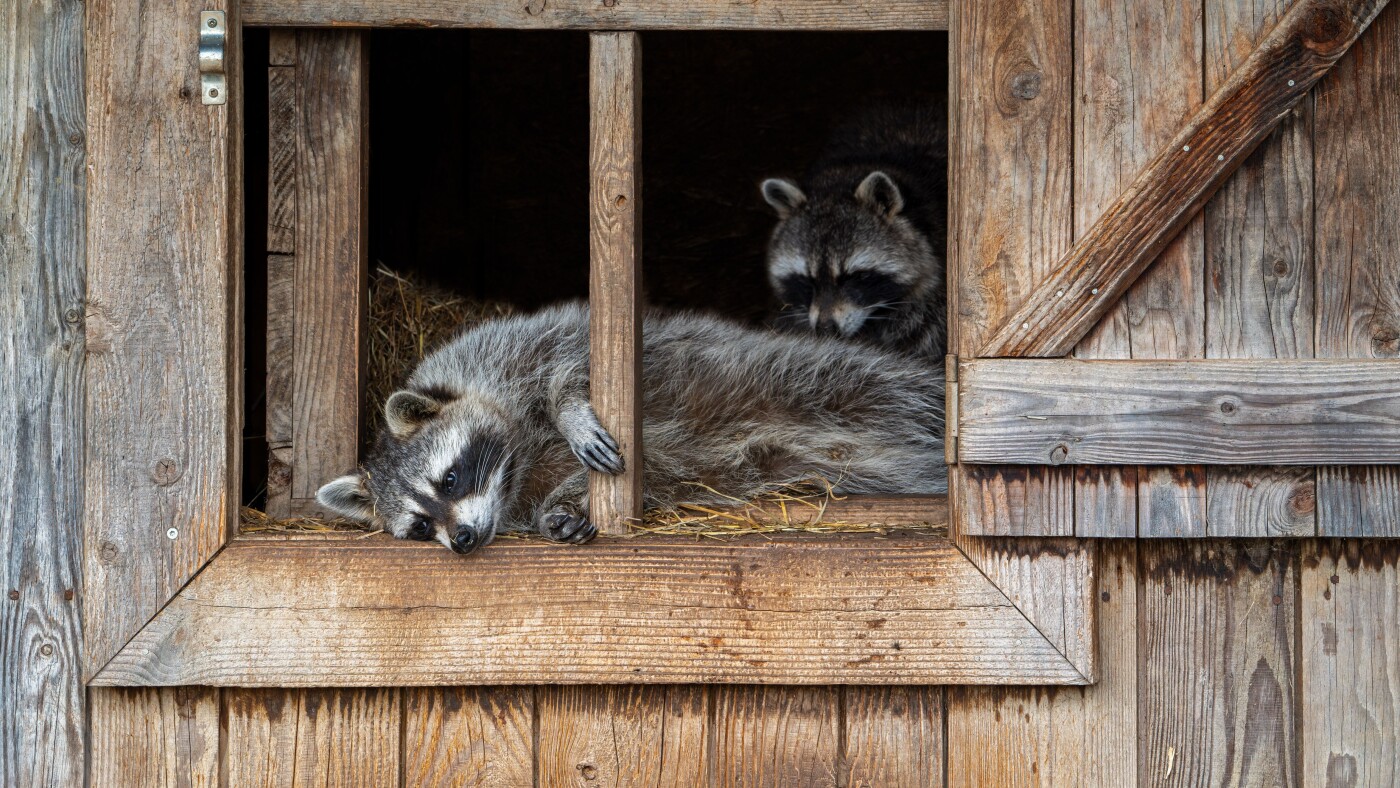
REGINA BARBER: You're listening to Short Wave from NPR. In North America, raccoons are everywhere. The common raccoon is native to forest habitats, but a lot of them live in urban areas close to humans, like the one that I'm pretty sure lives in my front yard and the one that fell through that ceiling in the Virginia liquor store, broke all those bottles, then was found passed out drunk next to a toilet– he's OK, he sobered up and was released. Not to mention how much they've invaded pop culture. They've been in cartoons.
BARBER: There's even a baseball team named after them. And they've collected a lot of nicknames over the years– night prowler, masked marauder, garbage goblin.
BARBER: This is Raffaela Lesch. She's a zoologist and assistant professor of biology at the University of Arkansas at Little Rock. And recently, Raffaela and her team published a study that is causing excitement because the findings may point towards raccoons beginning to domesticate themselves. When I think of domestication, my mind immediately goes to cats and dogs– mostly cats because I have four of them. And how these cute little angels became our pets is a long story, as in it happened millennia ago.
LESCH: Cats seem to have been attracted to human settlements because our trash had a lot of rodents around. And that was basically like an easy buffet– you know, like, there's so much food that you can hunt down, it's worth it to stick around. And then, again, if you're in close proximity to humans, you kind of have to adapt to be friendly enough to them that you're not getting removed from the breeding population, but also bold enough so you can make use of those rodents and trash heaps.
BARBER: Raffaela says that raccoons may be following in their footsteps. So today on the show, are urban raccoons becoming domesticated? Can we be sure? And does this mean that you might have a pet raccoon in your lifetime? I'm Regina Barber, and you're listening to Short Wave, the science podcast from NPR.