
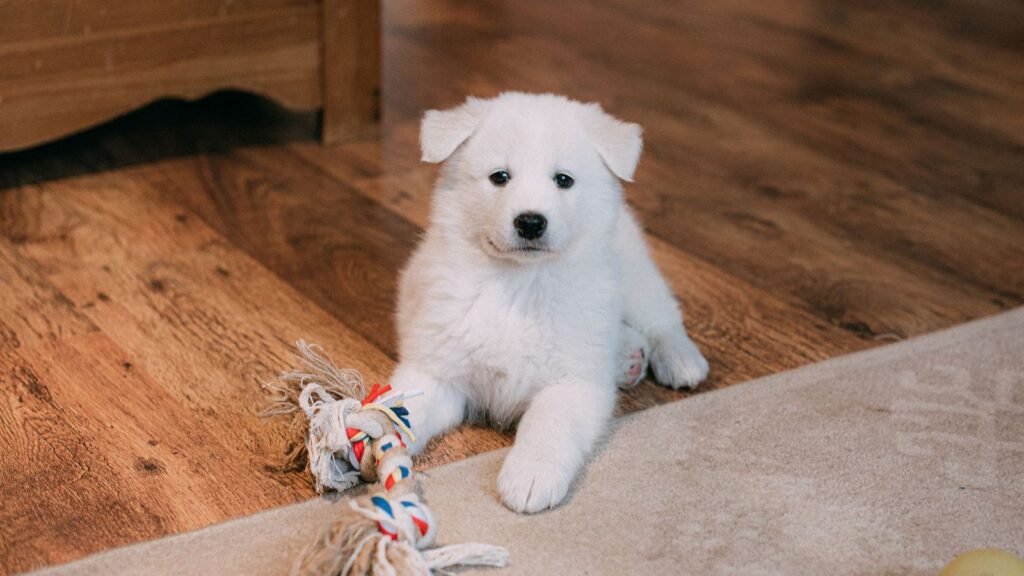
At the end of a busy day, puppy toys can quickly become one mixed pile: a tug toy under the sofa, a treat-dispensing toy in the kitchen, a half-chewed rubber toy by the crate, and a soft toy beside the coffee table. The practical answer to how to organize puppy toys by play type is to sort them by the job they do, not by color, size, or where they happened to land. When each toy has a clear purpose and a clear home, it is much easier to grab something suitable for a two-minute training session, a supervised chew break, a little indoor play, or a quieter settle-down period.
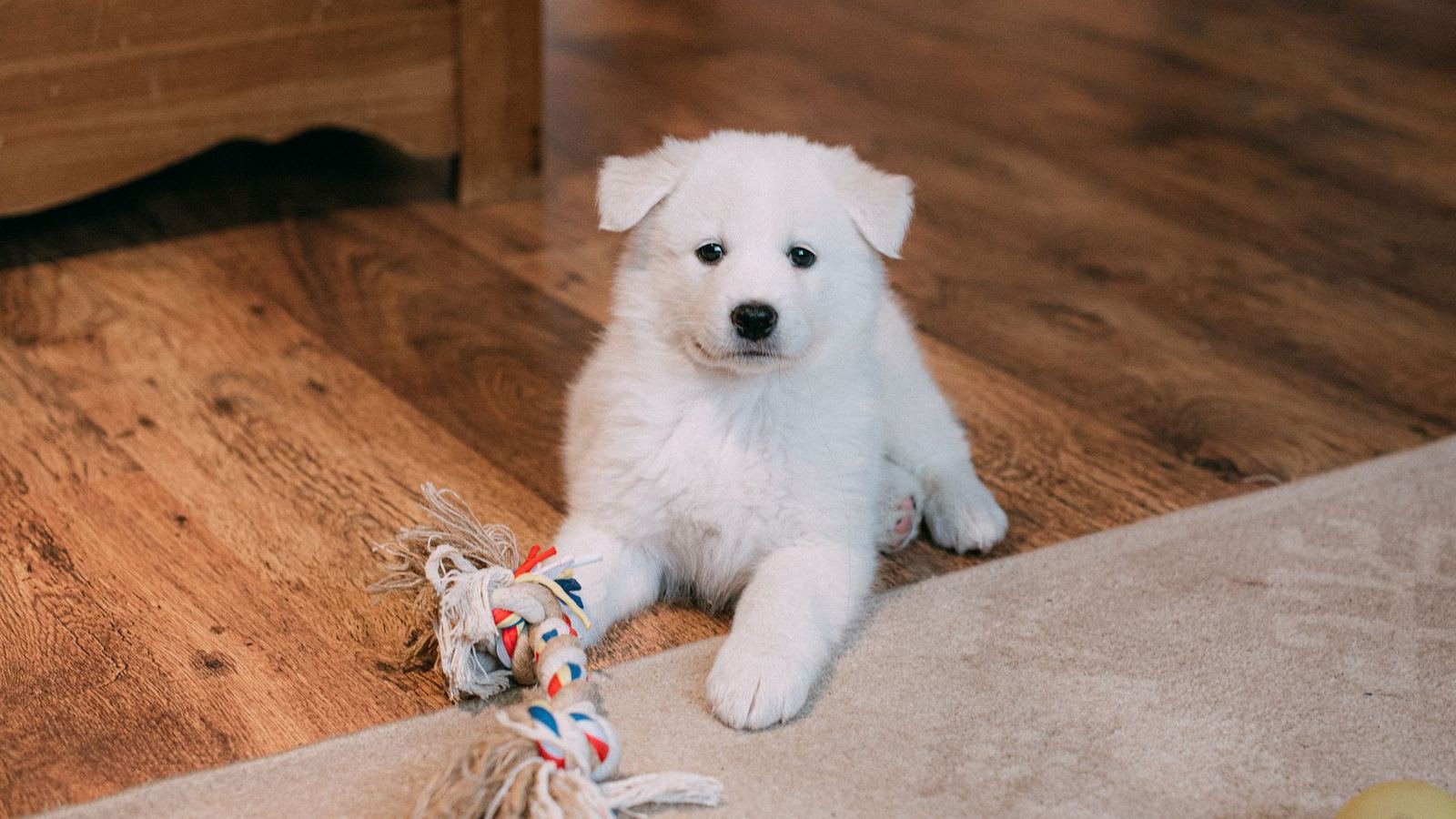
The problem is not usually a lack of storage. It is that one overflowing basket asks you to make a decision while your puppy is already waiting, excited, bored, or underfoot. You may know you own a useful training toy, but not be able to find it before the moment passes. Meanwhile, toys that need close supervision can end up mixed with everyday options, and damaged or loose-part toys may get tossed back into the pile instead of removed.
Start with the toys you already have and make four temporary groups on the floor: training, supervised chewing, active indoor play, and quiet play. A small treat toy or soft item used for short practice goes in training; a tougher item you only offer while watching goes in supervised chewing; balls, tugs, and chase toys go in active play; and owner-approved comfort or gentle solo-play toys go in quiet play. If a toy does not clearly fit one group, set it aside rather than forcing it into the daily selection.
Use one open, low bin for the few toys you are comfortable leaving available, and keep supervised-only toys in a closed bin or on a higher shelf. That tradeoff matters: open bins make cleanup faster and help a puppy toy station stay simple, but they should contain only toys you have chosen for easy access. Before any toy goes back into a bin, take a quick look for broken pieces, exposed stuffing, loose parts, or heavy wear. Remove questionable toys from the active system instead of saving them for later.
Choose four practical puppy toy categories
To organize puppy toys by play type, start by emptying the current toy pile onto the floor and sort each item by the job it does, not by color, size, or where it was found. Use four simple categories: training, supervised chewing, active play, and quiet play. Give each category one clearly marked home, then keep only a small selection available for the day. This makes it easier to grab the right toy for a two-minute practice session, a monitored chew break, or a rainy-day game indoors.
First, remove anything damaged, heavily worn, or missing a piece from the active system. Do not put questionable toys back into a bin “for later.” A toy with loose parts, torn fabric, exposed stuffing, or cracking material should be taken out of rotation. The ASPCA advises supervising chewing and choosing appropriate items to help prevent a dog from swallowing pieces of unsuitable objects. Toy needs also change as a puppy grows, chews differently, or loses interest, so revisit the categories when a bin starts collecting unused items.
- Training toys: Reserve small, easy-to-handle toys for short reward-based sessions, such as a soft tug kept for recall practice or a toy used after a simple cue. Store these near the place where training usually happens, such as a living-room shelf or kitchen drawer, so they do not disappear into general play clutter.
- Supervised chew toys: Put longer-lasting chew items and food-stuffable toys in a closed bin, latched cabinet, or container placed above puppy reach. Bring out one at a time when an adult can keep an eye on use, then inspect it before putting it away again.
- Active-play toys: Group items used for short indoor games, such as fetch, gentle tug, or rolling play. Keep just two or three in an open basket so cleanup is fast and the puppy is not surrounded by every exciting toy at once.
- Quiet-play toys: Keep calmer options together for settling near a crate, bed, or your work area. These should be owner-approved toys your puppy can use appropriately in that setting; avoid treating any toy as automatically safe for unsupervised access.
For a small living room, a workable setup might be one open basket beside the sofa holding two active-play toys and one quiet-play toy. A closed container on a higher shelf holds chew toys, while a small training pouch or drawer contains the special tug toy used during practice. The tradeoff is simple: open storage speeds up cleanup, but it should hold only toys you have chosen for easy access. Toys that need closer supervision belong in the closed or higher container.
Avoid creating too many categories or labeling a separate bin for every toy style. If you hesitate over where a toy belongs, ask, “What do I reach for this during?” If the answer is “only when I can watch, ” place it with supervised chewing. If your puppy ignores a category for several days, swap one item rather than adding more. That small adjustment keeps the daily selection useful without rebuilding the whole system.
Decide which toys stay out and which need supervised access
When learning how to organize puppy toys by play type, the key decision is not simply where each toy fits. It is whether your puppy can reach it without you. A small daily selection keeps the living room easier to reset, while toys that need closer watching stay visible to you but unavailable for unsupervised grabbing.
-
Start with a quick “can this stay out?” check. Set aside 10 minutes after your puppy is settled, and pick up each toy from the active pile one at a time. Put only toys you have already decided your puppy may use independently into the open, floor-level bin. Examples might include one intact soft comfort toy or a sturdy, appropriately sized rubber toy that your puppy has used safely under your household rules.
Why: An open bin should make a fast choice possible at 7 a.m. or when you are answering the door, not create a second safety decision every time your puppy reaches inside.
Done looks like: Your floor-level bin contains a small group of familiar, intact toys, and you would be comfortable seeing your puppy select one while you make coffee nearby.
Pitfall: Do not treat a toy as an always-out toy simply because it was expensive or marketed for puppies. Your puppy’s size, chewing habits, and the toy’s current condition matter more than the package label.
-
Move food-filled, long-chew, and easily damaged toys to supervised storage. Before the next planned chew session, place these items in a lidded container, a high cabinet shelf, or a closed drawer near the room where you supervise your puppy. This can include treat-dispensing toys, toys that hold spreadable food, rope toys that are beginning to fray, plush toys with loose seams, and any item your puppy tries to pull apart.
Why: These toys are useful for a focused activity, but they should not disappear behind the sofa or remain accessible after you leave the room. A closed container also keeps messy toys separate from clean fetch or training toys.
Done looks like: You can open one container and immediately choose a supervised chew or enrichment option, then close it again when the session ends.
Pitfall: Avoid storing these toys in an opaque box at the back of a closet. If you cannot see what is inside, unfinished food toys may be forgotten, and worn toys are more likely to return to use without a check.
-
Give each storage spot a single play-time purpose. Keep the open bin near the place where calm downtime happens, such as beside the crate or under an end table. Put the supervised container near the kitchen counter, desk, or sofa where an adult is usually present. Keep short training toys, such as a small tug or a toy reserved for reward-based practice, in a separate small basket by the door or training area.
Why: Location acts as a cue. A training toy near the leash makes a two-minute practice session easier to start, while a chew container near the sofa supports supervised settling time rather than random chewing around the home.
Done looks like: A family member can find the right type of toy without opening every bin: training near the routine, calm toys in the puppy’s rest area, and supervised toys where people sit.
Pitfall: Do not place the supervised-toy container on a low shelf just because it is convenient for adults. A curious puppy may learn to nose it open or drag it away.
-
Use a simple “out now” limit for the living room. At the beginning of the day, choose a manageable set: for example, one quiet toy, one active-play toy, and one training toy. Return the rest to their category homes. For a puppy in a small apartment, this might mean an intact comfort toy in the open basket, a ball for a short hallway game, and a small tug kept near the treat pouch.
Why: Fewer choices reduce visual clutter and make it obvious when an item is missing, damaged, or left under furniture. Rotation also gives you a reason to inspect toys instead of letting one pile build indefinitely.
Done looks like: The active selection fits in one small basket without toys spilling onto the floor, and you can name the purpose of every item in it.
Pitfall: Do not rotate toys by hiding every favorite at once. Keep at least one familiar, approved option available so cleanup does not turn into a frustrating search for a preferred toy.
-
Check toys before they return to any bin. Make this a one-minute reset after indoor play, training, or chewing time. Look for detached pieces, split rubber, exposed stuffing, unraveling rope, sharp edges, or a toy that has become small enough to be a concern for your puppy. Remove damaged, loose-part, or heavily worn toys from the active system rather than placing them back in storage for later.
Why: Storage should preserve ready-to-use toys, not hide toys that need to be discarded or evaluated. The ASPCA’s guidance on destructive chewing emphasizes managing access and providing appropriate outlets; an organized system makes that daily management easier.
Done looks like: Every toy put away is clean enough for its bin, intact enough for its assigned use, and in the correct category.
Pitfall: Do not create a “repair later” bag that sits within puppy reach. If you keep one temporarily, place it in a closed, high location and empty it promptly.
-
Use one small living-room station as a working example. In a one-bedroom apartment, place an open basket beside the sofa with two owner-approved quiet toys and one active toy. Put a labeled, lidded container on a high shelf with food toys, longer chew items, and anything that needs direct observation. Keep a small training pouch or handled basket in the entryway cabinet with the toy used for quick cues before walks.
Why: This setup separates three real moments: settling beside you, a brief indoor game, and a planned supervised session. Open bins make cleanup faster, but they should hold only your approved, lower-risk daily toys. The tradeoff is that supervised toys take one extra step to retrieve, which is worthwhile because they stay under your control.
Done looks like: After a 15-minute evening reset, the floor is clear, the open basket is not overflowing, and the supervised container is closed before you leave the room.
Pitfall: Do not turn the living-room station into permanent overflow storage. If a new toy enters, choose an older toy to rotate out, retire, or move to the supervised container.
For additional general guidance on preparing a safe puppy environment and managing chewing, consult the AKC’s new puppy preparation guidance and the ASPCA’s destructive chewing resource. The practical storage rule remains simple: open access is for the small selection you have approved for that moment; everything else has a clear, closed home until you are ready to supervise it.
Use toy rotation to make cleanup and play choices easier
A simple rotation is the part of how to organize puppy toys by play type that keeps the system useful after the first day. The goal is not to hide most of your puppy’s toys forever. It is to keep a small, purposeful selection available so you can choose quickly: one item for a two-minute training session, one for a supervised chew, one for active indoor play, and one quiet option for settling nearby.
New owners often run into a few predictable problems. Each one is easy to adjust without buying more storage.
- Keeping every toy in one open basket: Cleanup seems fast at first, but the basket soon becomes a mixed pile. A training toy may be buried under soft toys, while a supervised chew is easy for the puppy to pull out when no one is ready to watch. The better move is to keep only owner-approved, low-risk everyday toys in the open bin. Put supervised-access toys in a lidded container, cabinet, or higher shelf with a clear label such as “Chews, ask first.”
- Rotating by color or size instead of purpose: Matching bins may look neat, but they do not help when your puppy needs a specific kind of activity. You still have to search through several containers to find the right toy. Sort by the play the toy supports instead: training, chewing, active play, or quiet play. A small label on each bin makes the decision immediate, even when another family member is helping.
- Putting too many toys out at once: A large selection can create more cleanup and makes it harder to notice which toys are actually being used. It also turns each play choice into a longer search. Keep a modest daily set out, such as one active-play toy and one quiet toy in the living room, with the other categories stored nearby. Exchange a toy when it is dirty, temporarily uninteresting, or needed for a planned activity, not simply because the bin looks empty.
- Returning toys to storage without a quick check: A damaged toy can disappear into the bin and reappear during a rushed moment. Before putting a toy back, look for loose pieces, torn seams, cracks, sharp edges, or heavy wear. Remove damaged, loose-part, or heavily worn toys from the active system rather than saving them for later. The ASPCA advises supervising chewing and choosing items appropriate for the dog, which supports keeping your supervised-chew container separate from the everyday toy bin.
- Making rotation too complicated to maintain: A detailed calendar for every toy can become another chore. When the system takes too long, toys drift back into one pile. Use one simple reset point instead: after evening cleanup or once each week, return toys to their category homes, wipe or wash items as their care instructions allow, and choose the next small daily set.
For example, a small living-room station can use one open basket holding a soft quiet-play toy and an approved active-play toy. A labeled closed box on a nearby shelf holds chew items and training toys that come out only with an adult. The open basket makes cleanup fast, but its convenience comes with a tradeoff: it should never become the place for every toy. Keeping supervised items closed away preserves the speed of the system while giving you a clear choice when you need a short, focused activity.
Check toys before returning them to storage
A toy station only stays useful when each toy is checked before it goes back into its category. This takes less than a minute after play, and it prevents a damaged toy from disappearing into a bin until the next rushed moment. When you are learning how to organize puppy toys by play type, treat the return-to-storage step as part of the system, not as an extra chore.
After a short training session, indoor game, chewing break, or quiet rest period, pick up the toys that were used and do a quick visual check. Look for loose pieces, split seams, exposed stuffing, cracked rubber, frayed rope strands, or parts that are becoming detached. Remove anything heavily worn, damaged, or missing pieces from the active toy system instead of placing it back in a bin for later. The ASPCA notes that chewing items should be chosen and managed with care, particularly when a dog can break off or swallow pieces; supervision and regular inspection help you make safer decisions for your individual puppy.
- Training bin: Return only the small toy used for the session, so it is easy to grab again when you have five minutes to practice.
- Active-play bin: Put back the ball, tug, or chase toy after checking that handles, stitching, and surfaces are intact.
- Supervised chew container: Wipe off crumbs or residue if needed, inspect the toy closely, then place it in its closed or higher storage spot.
- Quiet-play bin: Return owner-approved comfort or gentle play toys only if they remain in good condition.
For example, a small living-room station might have one open basket with two soft, owner-approved quiet toys and one active-play toy. A lidded bin on a shelf can hold chew toys and food-filled toys that are brought out only when an adult is available. The tradeoff is simple: the open basket makes cleanup fast and helps you find an appropriate toy for a calm moment, but it should contain only toys you have decided your puppy may access. The closed container adds one extra step, while keeping supervised items from becoming part of unsupervised floor clutter.
This week, try a reset after each play period: choose the toy for the activity, supervise as needed, inspect it at pickup, and return it to its assigned home. That small loop solves the common problem of digging through one crowded pile when you need a training toy, a quick indoor-play option, or something for calm downtime.
Next step: Tonight, place a small discard bag beside your toy storage and inspect the toys currently on the floor before putting them away by play type.
FAQ
What should I know about choose four practical puppy toy categories?
To organize puppy toys by play type, start by emptying the current toy pile onto the floor and sort each item by the job it does, not by color, size, or where it was found. Use four simple categories: training, supervised chewing, active play, and quiet play.
What should I know about decide which toys stay out and which need supervised access?
When learning how to organize puppy toys by play type , the key decision is not simply where each toy fits. It is whether your puppy can reach it without you.
What should I know about use toy rotation to make cleanup and play choices easier?
A simple rotation is the part of how to organize puppy toys by play type that keeps the system useful after the first day. The goal is not to hide most of your puppy’s toys forever.