
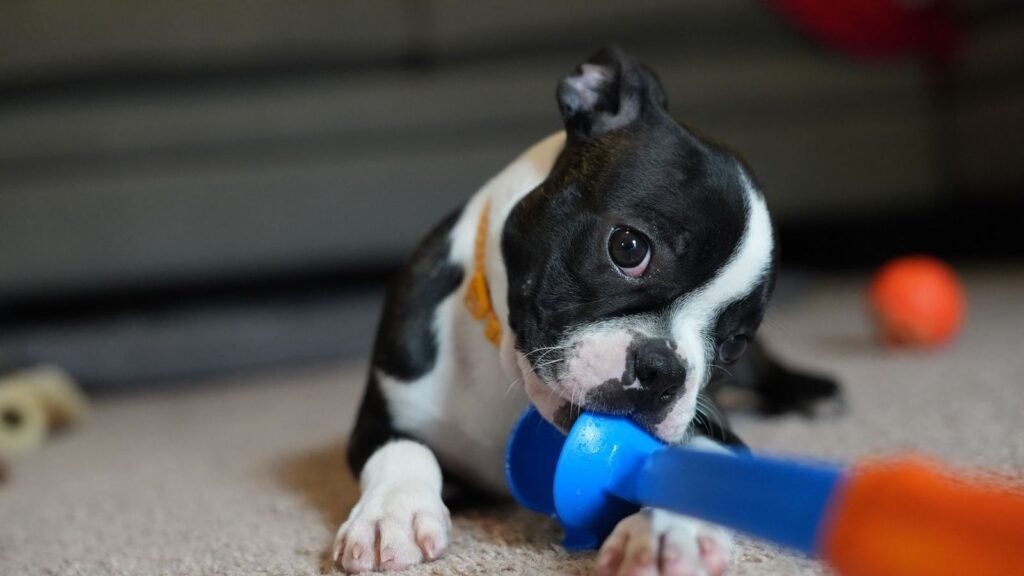
Fixing puppy toy storage in shared spaces starts with a small change in expectations: the living room does not need to hold every toy your puppy owns. When a rope toy is under the coffee table, a squeaky toy is on the sofa, and a chew has rolled into the walkway, the problem is usually not a lack of containers. It is that the room has no agreed place for the few toys currently in use, or an easy way for everyone to put them away.
What to Look For in fixing puppy toy storage in shared spaces
Use decision criteria tied to fixing puppy toy storage in shared spaces: space, upkeep, how it fits your routine, and everyday usability.
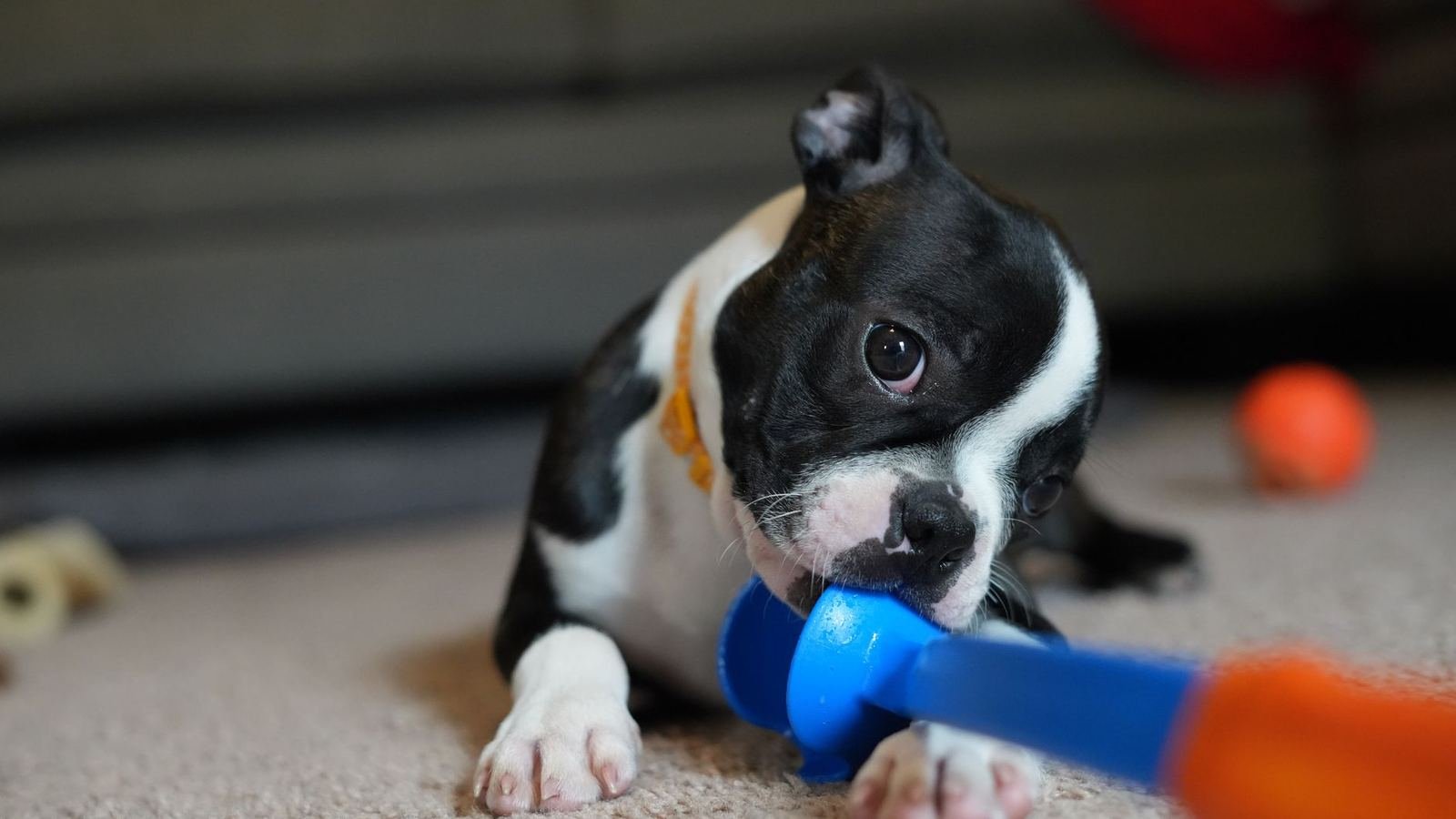
A shared living room, family room, or open-plan area has to work for the puppy and the people who use it. Your puppy needs a familiar, reachable selection for play and settling down. Housemates need clear floors, usable seating, and a reset that takes less than a minute before guests arrive, dinner starts, or someone wants to vacuum. A storage system works best when it limits what stays out instead of trying to neatly contain an overflowing collection.
Start today with one home base placed beside the puppy’s usual hangout, but outside the main walking path. For example, a household with two housemates might keep three active toys in a low basket beside the end of the sofa: one soft toy, one fetch toy, and one toy used during supervised play. The remaining toys go in a separate backup location, such as a labeled bin in a hall closet or on a high shelf. Three is not a rule; it is simply a manageable starting point. If the puppy needs more variety, swap one item rather than adding more to the room.
An open basket makes the evening reset quick because anyone can scoop up toys and drop them in. The tradeoff is that many puppies can empty it just as quickly. A lidded box or cabinet reduces visual clutter and makes toys less available between playtimes, but adults must take the extra step of opening it. Choose the option your household will actually use consistently, not the one that looks most organized on the first day.
A helpful shared rule is simple: when play ends, the active toys return to their home base before anyone leaves the room. Keep chews and any toy that needs supervision separate, follow the manufacturer’s guidance, and remove toys that are damaged or no longer suitable for your puppy. That leaves the room feeling like a room again, not a permanent puppy play zone.
Choose One Home Base That Does Not Block Daily Life
For fixing puppy toy storage in shared spaces, choose one obvious home base at the edge of the room, not the middle of it. Start by standing where people naturally enter, sit, and walk through the space. Rule out the paths between the sofa and door, around the coffee table, and beside frequently opened cabinets. The best spot is usually against a wall, beside a media unit, or at the end of a sofa where an adult can reach it without crossing the room.
Put only today’s small toy selection in that spot. For example, in a living room shared by three people, the household might keep four active toys available: one soft toy, one fetch toy, one tug toy, and one quiet activity toy. Everything else goes in a separate backup location, such as a closet shelf or a labeled bin in another room. This gives the puppy choices without turning every floor corner into toy storage.
- Do first: Pick a single location and agree that every loose toy returns there before bedtime, visitors arrive, or the room is used for another activity.
- Avoid: Keeping toys on the coffee table, dining chairs, sofa cushions, or in multiple small piles. Those spots make toys harder to reset because nobody knows which pile is the “right” one.
- Adjust when needed: Move the home base if it becomes part of a walking route, gets emptied constantly, or makes the room feel crowded. A system that is easy to return toys to matters more than sticking with the first location.
An open basket or low container makes a fast reset possible: a housemate can gather toys in seconds while carrying a drink or heading out the door. The tradeoff is that a puppy may empty it just as quickly. A lidded container reduces visual clutter and limits casual access, but adults need to open it each time they offer or put away toys. Choose the option that fits your household’s routine rather than trying to make one style work everywhere.
Keep the home base for storage, not for unsupervised chewing. Follow each toy manufacturer’s guidance, supervise use as appropriate for your puppy, and remove toys that are damaged or no longer suitable. The ASPCA also advises choosing chew items carefully and taking away objects that could be unsafe if chewed or swallowed. See the ASPCA’s guidance on destructive chewing for more detail.
Use a Simple Reset Rule Everyone Can Follow
Fixing puppy toy storage in shared spaces works best when the rule is easy enough to follow while someone is carrying a coffee mug, answering the door, or heading to bed. The goal is not to make the puppy’s toys invisible all day. It is to keep a small, usable selection available during normal play, then return the room to a clear shared space at predictable times.
Agree on one short rule: when play ends, the toys return to the home base before people leave the room or settle down. That gives housemates a shared action instead of leaving one person responsible for collecting toys from under the sofa every evening. Use the steps below in order, and adjust the details to your room.
- Set a reset time: Pick two moments already built into the household routine, such as after the evening walk and before the last person goes upstairs. A living room with two adults and a puppy might use a 7:30 p.m. reset after playtime, plus a two-minute final reset before bed. These set times prevent the vague plan of “clean up later, ” which often means toys remain in the walkway overnight. Pitfall: Do not schedule a reset only once a week. In a shared room, a weekly cleanup is too far from the daily mess that causes frustration.
- Keep the active set small: Place only a household-sized selection in the shared room. For example, a family may choose four items: one soft toy, one toss toy, one training toy, and one supervised chew appropriate for that puppy. The rest belong in a separate backup location, such as a labeled bin in a hall closet or a high shelf in a utility area. Fewer visible toys make it faster for housemates to notice what is out of place. Pitfall: Avoid refilling the basket every time it looks empty. If every toy returns immediately, the puppy can empty the full collection across the room again.
- Reset the floor before the furniture: At reset time, collect toys from walking paths first: the route between the sofa and kitchen, the area beside a coffee table, and the doorway to the hall. Next, check the sofa, chairs, and puppy bed. This order clears trip hazards and makes the room look orderly quickly, even if one toy is temporarily behind a chair. Pitfall: Do not ask people to hunt for every missing toy before clearing the obvious ones. A long search turns a simple routine into a chore people skip.
- Give each person one simple job: In a household with multiple people, assign the same tiny role each time. One person returns toys to the home base, another checks under furniture, and the puppy owner puts away treats or training items used during play. If one person is home alone, use the same sequence without the division of tasks. Pitfall: Avoid a complicated chart with separate rules for every toy. The system should still work when a guest, roommate, or tired family member is doing the reset.
- Use the home base according to its tradeoff: An open basket or low-sided bin is fast for adults to reset and easy to reach during supervised play, but many puppies can empty it just as quickly. A lidded box or cabinet reduces visual clutter and makes a room feel calmer after the reset, but it adds a step when an adult wants to start play. Choose based on your household’s biggest problem: speed or visual control. Pitfall: Do not assume any container makes toys safe for unsupervised access. Follow the toy maker’s guidance, supervise as appropriate, and remove toys that are damaged or no longer suitable for your puppy.
- Create a “not for the living room” return spot: Keep damaged toys, rotation toys, and chews that require closer supervision out of the active basket. During the reset, place these items in a separate backup bin instead of deciding what to do with each one in the moment. The ASPCA advises monitoring chewing and taking away items that could break into pieces or create a choking risk; a quick end-of-play check makes that easier to remember. Pitfall: Do not put a questionable toy back into the active set simply because it is convenient. If it needs inspection, keep it separate until you can check it properly. See the ASPCA’s guidance on destructive chewing.
For example, imagine an open-plan living room shared by two housemates. The puppy’s home base is a basket beside a bookcase, away from the route to the kitchen. Four active toys are allowed in that basket. At 7:30 p.m., one housemate gathers toys from the rug and sofa while the other checks the doorway and coffee-table area. Anything damaged goes into a separate “check” bin in a closed closet; the remaining toys return to the basket. The process takes only a few minutes because nobody is sorting the entire toy collection in the living room.
The important tradeoff is that the puppy does not have every toy available at once. In return, people can sit down, walk through the room, and welcome visitors without stepping around a scattered toy pile. Consistency matters more than finding a perfect container: a modest active set and a repeatable reset rule are what keep a shared space usable.
Handle Chews, Damaged Toys, and Rotation Toys Separately
When fixing puppy toy storage in shared spaces, one common problem is treating every item as an ordinary floor toy. Chews, worn toys, and backup toys need different handling because they create different kinds of clutter, and different decisions for the people sharing the room.
- Keeping long-lasting chews in the open toy basket: A chew can get mixed in with plush toys and balls, then remain on the rug long after the supervised chew session is over. This fails because housemates cannot tell what should be put away, what is currently in use, and what needs an adult’s attention. Keep chews in a separate, clearly marked container or a high cabinet. Bring one out deliberately, then return it after the session. Follow the toy manufacturer’s guidance for use, and remove items that are damaged or no longer suitable for your puppy.
- Waiting until the basket is overflowing to remove damaged toys: Frayed fabric, loose stuffing, cracked rubber, and toys missing pieces often stay in the shared-space pile because no one wants to stop and sort during a quick reset. The result is a basket that looks full but contains fewer usable toys. Keep a small “check” bag or bin away from the active toy area. If someone finds a damaged item while tidying, it goes there instead of back on the floor. Check that container during a weekly reset and discard items that should not return. The ASPCA advises monitoring chewing and providing appropriate items, rather than leaving a puppy with unsuitable objects to chew.
- Leaving the entire toy collection available: More toys in the living room can seem like a way to keep a puppy occupied, but it usually means more pieces under furniture, on sofas, and in walkways. It also makes the room slower for anyone else to reset. A better move is to choose a modest active set that suits your household’s routine, while keeping the rest in a separate backup location such as a closet shelf, utility cabinet, or labeled bedroom bin.
- Using a closed container for every toy decision: Lidded storage can reduce visual clutter, which may be useful in an open-plan room. But if adults have to open a lid every time the puppy needs a familiar soft toy or ball, the container may stay open or toys may be left out instead. Use the closed container for rotation toys and occasional items, not necessarily for the small daily selection. An open basket is faster to reset, but it is also easier for a puppy to empty. Choose the tradeoff your household can maintain.
- Rotating toys without a clear return spot: Swapping toys only works if the outgoing toys have somewhere to go immediately. Otherwise, the “rotation” becomes a second pile on a chair or side table. Put a label such as “next week” or “backup toys” on the storage location so every housemate knows where those toys belong.
For example, in a living room shared by two adults and a puppy, the active basket might hold four everyday toys: one soft toy, one ball, one tug toy, and one simple enrichment toy used with supervision. A chew stays in a separate adult-managed container, while six to eight backup toys sit in a lidded bin on a closet shelf. At the evening reset, the four active toys return to the basket, the chew is put away, and anything damaged goes into the check bin. The exact number can be smaller or larger, but the important part is that each category has one destination.
This separation keeps the room from becoming a storage zone while still giving the puppy a few familiar choices. It also makes it easier for a housemate to clear the floor in under a minute without having to decide whether every item belongs out, away, or out of use.
Keep the System Working as Your Puppy Grows
Fixing puppy toy storage in shared spaces does not require a perfect living room or a strict rule that toys can never come out. The workable goal is simpler: keep a small, agreed-on set of toys available, give every item a clear place to return, and make the reset easy enough that everyone in the home will actually do it.
Try this routine for one week. At the start of the day, place only a limited active selection in the shared room. For example, in a living room shared by two housemates, that might mean four active toys: one soft toy, one fetch toy, one tug toy, and one supervised chew or food toy when an adult is present. Keep the remaining toys in a separate backup location, such as a high closet shelf, a hall cabinet, or a closed bin in another room.
When people sit down to watch television, leave the active toys accessible near the puppy’s resting area. Before dinner, guests, bedtime, or whenever the room needs to function for people again, each person follows the same quick reset: pick up what is visible, return it to the home base, and check the walkway around the sofa and coffee table. That prevents the familiar problem of toys collecting under furniture, on cushions, and in the path between rooms.
- Keep the limit flexible: If four toys feels like too few or too many for your household, adjust the number. The important part is choosing a limit that fits in the designated home base without spilling into the room.
- Match the container to the routine: An open basket makes a fast reset possible, but some puppies can empty it just as quickly. A lidded container hides visual clutter, but adults have one extra step when putting toys away. Choose the option your household is most likely to use consistently.
- Review the selection weekly: Move ignored toys to the backup location and bring out a few different ones. Remove damaged toys and follow the manufacturer’s guidance for supervision and suitability.
As your puppy’s size, habits, and toy collection change, the storage system can change too. What should stay the same is the household agreement: shared floors and furniture are not permanent toy storage, and one quick reset protects both the room’s calm and everyone’s ability to move through it.
Next step: Tonight, choose the exact spot for the active-toy home base and place only four toys there for tomorrow morning.
FAQ
What to Look For in fixing puppy toy storage in shared spaces?
Use decision criteria tied to fixing puppy toy storage in shared spaces: space, upkeep, how it fits your routine, and everyday usability. Photo by Sean Brannon on Pexels A shared living room, family room, or open-plan area has to work for the puppy and the people who use it.
Choose One Home Base That Does Not Block Daily Life?
For fixing puppy toy storage in shared spaces , choose one obvious home base at the edge of the room, not the middle of it. Start by standing where people naturally enter, sit, and walk through the space.
Use a Simple Reset Rule Everyone Can Follow?
Fixing puppy toy storage in shared spaces works best when the rule is easy enough to follow while someone is carrying a coffee mug, answering the door, or heading to bed. The goal is not to make the puppy’s toys invisible all day.